
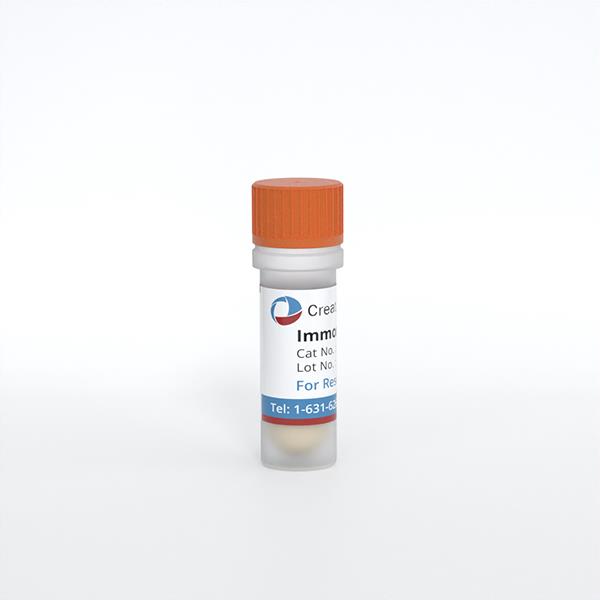
Immortalized Human Nasopharyngeal Epithelial Cells (NP69SV40T)
Cat.No.: CSC-I9324L
Species: Homo sapiens
Source: Nasopharynx
Morphology: Epithelial-like
Culture Properties: Adherent
- Specification
- Background
- Scientific Data
- Q & A
- Customer Review
Note: Never can cells be kept at -20 °C.
CIK-HT003 HT® Lenti-SV40T Immortalization Kit
2) TRAP assay was ultilized to determine telomerase activity.
Immortalized Human Nasopharyngeal Epithelial Cells (NP69SV40T) immortalized by expression of SV40 large T antigen (SV40T) allowing increased proliferative ability while keeping important epithelial features. These cells, originating from normal nasopharyngeal tissue, provide a stable and repeatable in vitro model of the upper respiratory epithelium.
NP69SV40T cells possess a characteristic epithelial shape and retain expression of epithelial markers related with the function of nasopharyngeal mucosa. They are commonly employed to research the biology of nasopharyngeal epithelial cells, epithelial barrier function and host responses to environmental stimuli and pathogenic pathogens.
This cell culture is particularly useful for the study of Epstein-Barr virus (EBV)-associated nasopharyngeal cancer, respiratory viral infections, inflammation and epithelial-mesenchymal transition (EMT). Furthermore, NP69SV40T cells are widely used in toxicology and drug screening studies in the upper airway epithelium.
**LINC00887 Promotes Nasopharyngeal Carcinoma Progression via ceRNA Mechanism **
Nasopharyngeal carcinoma (NPC) is a prevalent malignancy with poor prognosis, necessitating deeper understanding of its molecular drivers. Long non-coding RNAs (lncRNAs) are increasingly recognized as critical regulators in cancer progression, yet the role of LINC00887 in NPC remains unclear. Yue's team elucidated the regulatory effect of LINC00887 on NPC progression and uncover the underlying competitive endogenous RNA (ceRNA) mechanism.
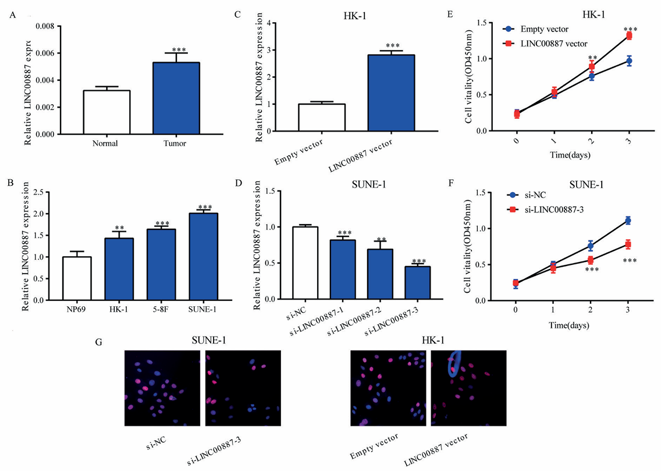
LINC00887 expression was significantly elevated in 36 nasopharyngeal carcinoma (NPC) tissues compared to adjacent normal tissues (Figure 1A) and correlated with advanced T stage, N stage, and clinical stage, but not with age, gender, relapse, or survival. High expression was also confirmed in NPC cell lines versus immortalized nasopharyngeal epithelial cells (Figure 1B).
Functional assays showed that LINC00887 overexpression in HK-1 cells markedly increased cell viability and EdU incorporation, whereas knockdown in SUNE-1 cells suppressed these proliferative phenotypes (Figures 1C-G). These findings suggest that LINC00887 acts as an oncogenic lncRNA in NPC, likely through a competitive endogenous RNA (ceRNA) network modulating tumor progression.
Ask a Question
Write your own review
Description: Nasal epithelial cells form the outermost protective layer against environmental factors. They clean, humidify, and warm inhaled air. They produces mucus, which binds particles that are subsequently ...
Description: Immortalized Human Splenic Endothelial Cells-SV40 have been obtained immortalizing Human Splenic Endothelial Cells with SV40LT expressing lentiviral particles. Immortalized cells were controlled ...
Description: Immortalized Human Corneal Epithelial Cells-SV40 have been obtained immortalizing Human Corneal Epithelial Cells with Lenti-SV40 Lentivirus. Immortalized cells were controlled passaging side by side ...
Description: Immortalized Human Lymphatic Endothelial Cells-SV40 were developed from human tissues transduced with a lentiviral expression vector containing the SV40T gene. The cell line was continuously cultured ...
- Adipose Tissue-Derived Stem Cells
- Human Neurons
- Mouse Probe
- Whole Chromosome Painting Probes
- Hepatic Cells
- Renal Cells
- In Vitro ADME Kits
- Tissue Microarray
- Tissue Blocks
- Tissue Sections
- FFPE Cell Pellet
- Probe
- Centromere Probes
- Telomere Probes
- Satellite Enumeration Probes
- Subtelomere Specific Probes
- Bacterial Probes
- ISH/FISH Probes
- Exosome Isolation Kit
- Human Adult Stem Cells
- Mouse Stem Cells
- iPSCs
- Mouse Embryonic Stem Cells
- iPSC Differentiation Kits
- Mesenchymal Stem Cells
- Immortalized Human Cells
- Immortalized Murine Cells
- Cell Immortalization Kit
- Adipose Cells
- Cardiac Cells
- Dermal Cells
- Epidermal Cells
- Peripheral Blood Mononuclear Cells
- Umbilical Cord Cells
- Monkey Primary Cells
- Mouse Primary Cells
- Breast Tumor Cells
- Colorectal Tumor Cells
- Esophageal Tumor Cells
- Lung Tumor Cells
- Leukemia/Lymphoma/Myeloma Cells
- Ovarian Tumor Cells
- Pancreatic Tumor Cells
- Mouse Tumor Cells