
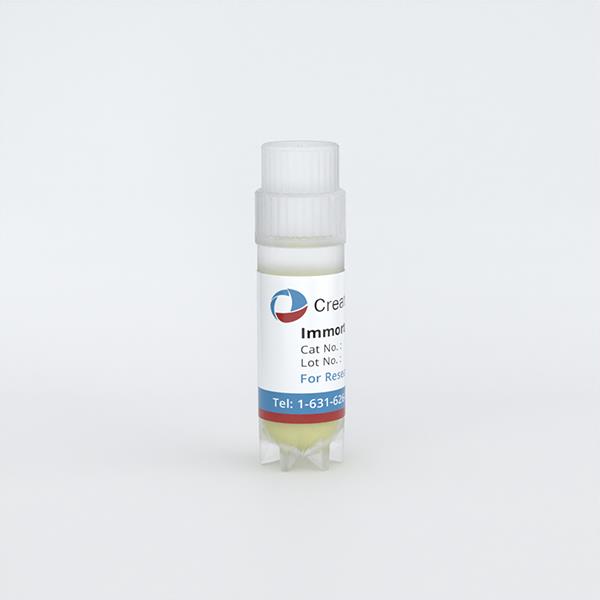
Immortalized Human Retinal Microvascular Endothelial Cells-hTERT
Cat.No.: CSC-I1903Z
Species: homo sapiens
Morphology: Polygonal
Culture Properties: Adherent
- Specification
- Background
- Scientific Data
- Q & A
- Customer Review
CIK-HT013 HT? Lenti-hTERT Immortalization Kit
Note: Never can cells be kept at -20 °C.
Immortalized human retinal microvascular endothelial cells-hTERT (HRMEC/hTERT) are generated by ectopic expression of human telomerase reverse transcriptase (hTERT) in primary HRMECs. Unlike SV40 large T antigen, hTERT extends telomeres without directly inactivating p53 or Rb, thereby preserving more normal cell-cycle checkpoints, stress responses, and genomic stability. This yields an extended lifespan while maintaining core endothelial features, including CD31/PECAM-1, VE-cadherin, VEGFR2, CD34, and blood-retinal barrier (BRB) junctional proteins such as claudin-5, occludin, and ZO-1. Functionally, HRMEC/hTERT respond to VEGF and inflammatory stimuli and support proliferation, migration, tube formation, and barrier assays.
Compared with primary HRMECs, HRMEC/hTERT provide a scalable, reproducible, and cost-effective source with reduced donor variability and consistent batch performance, enabling high-throughput screening, gene perturbation (siRNA/CRISPR), and long-term studies. They are widely used to model retinal angiogenesis and BRB dysfunction in diabetic retinopathy, retinopathy of prematurity, retinal vein occlusion, and macular edema, and to evaluate anti-VEGF agents, corticosteroids, and metabolic or inflammatory modulators.
Limitations: hTERT immortalization can still permit gradual phenotypic drift, and barrier tightness or inflammatory responses may differ from low-passage primary cells. Validation against primary HRMECs is recommended when physiological fidelity is critical. Overall, HRMEC/hTERT offer a human-relevant, reproducible, and ethically favorable platform for retinal vascular biology and translational drug discovery.
Endothelial UNC5B Regulates Blood‑Retinal Barrier Homeostasis
The blood‑retinal barrier (BRB), a critical component of the retinal neurovascular unit (NVU), is essential for maintaining retinal homeostasis. UNC5B, an endothelial receptor, has been implicated in vascular and neural regulation, but its role in BRB and NVU homeostasis remains unclear. The present study aimed to investigate the function of endothelial UNC5B in maintaining BRB integrity and NVU homeostasis, using both in vitro cell cultures, and in vivo DR and RVO mouse models.
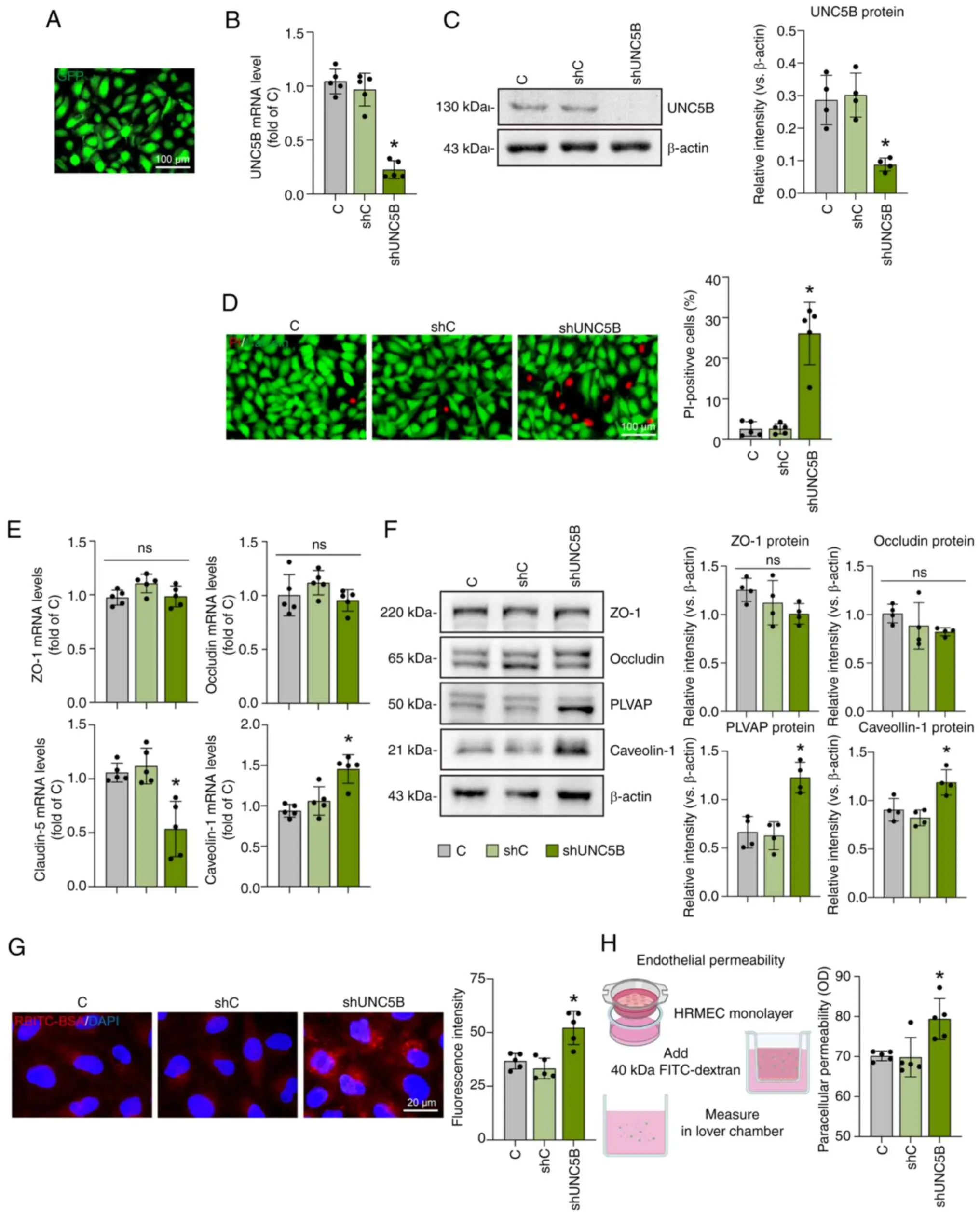
UNC5B was knocked down in immortalized human retinal microvascular endothelial cells (HRMECs) by transfection with lentivirus-encapsulated UNC5B shRNA (Fig. 1A-C). PI/calcein-AM staining showed that cell death was significantly increased after UNC5B knockdown (Fig. 1D). Functional assays demonstrated that transcellular transport was elevated after UNC5B knockdown (Fig. 1G), and the paracellular leakage of monolayer endothelial cells was also increased (Fig. 1H). On the basis of these results, it was inferred that UNC5B serves a key role in maintaining endothelial cell barrier function.
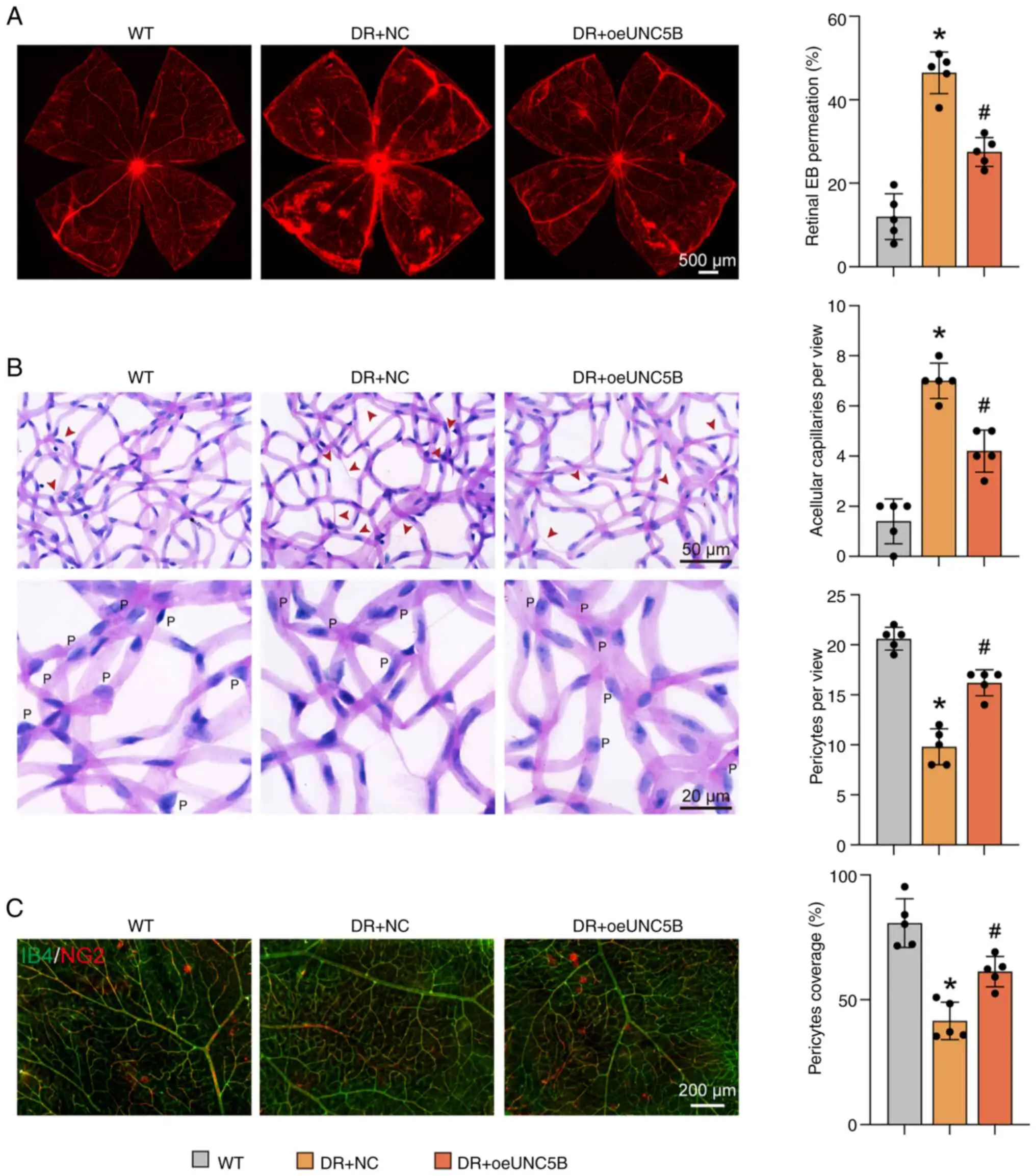
Given the protective role of UNC5B in retinal endothelial cells, it was evaluated whether endothelial-specific overexpression preserved the integrity of the BRB in DR mice. The results showed that specific UNC5B overexpression in the endothelial cells of DR mice significantly reduced retinal vascular leakage (Fig. 2A), alleviated the formation of acellular capillaries and preserved pericyte number (Fig. 2B) and coverage (Fig. 2C). These findings highlighted the therapeutic potential of targeting endothelial-cell UNC5B to maintain the BRB integrity in DR.
Ask a Question
Write your own review

Description: Immortalized Human Gastric Epithelial Cells-SV40 have been obtained immortalizing Human Gastric Epithelial Cells with Lenti-SV40 Lentivirus. Immortalized cells were controlled passaging side by side ...
Description: Immortalized Human Kidney Podocytes-SV40 have been obtained immortalizing Human Kidney Podocytes with Lenti-SV40 Lentivirus. Immortalized cells were controlled passaging side by side with the primary ...
Description: Nasal epithelial cells form the outermost protective layer against environmental factors. They clean, humidify, and warm inhaled air. They produces mucus, which binds particles that are subsequently ...

Description: Immortalized Human Splenic Endothelial Cells-SV40 have been obtained immortalizing Human Splenic Endothelial Cells with SV40LT expressing lentiviral particles. Immortalized cells were controlled ...
Description: Immortalized Human Corneal Epithelial Cells-SV40 have been obtained immortalizing Human Corneal Epithelial Cells with Lenti-SV40 Lentivirus. Immortalized cells were controlled passaging side by side ...
- Adipose Tissue-Derived Stem Cells
- Human Neurons
- Mouse Probe
- Whole Chromosome Painting Probes
- Hepatic Cells
- Renal Cells
- In Vitro ADME Kits
- Tissue Microarray
- Tissue Blocks
- Tissue Sections
- FFPE Cell Pellet
- Probe
- Centromere Probes
- Telomere Probes
- Satellite Enumeration Probes
- Subtelomere Specific Probes
- Bacterial Probes
- ISH/FISH Probes
- Exosome Isolation Kit
- Human Adult Stem Cells
- Mouse Stem Cells
- iPSCs
- Mouse Embryonic Stem Cells
- iPSC Differentiation Kits
- Mesenchymal Stem Cells
- Immortalized Human Cells
- Immortalized Murine Cells
- Cell Immortalization Kit
- Adipose Cells
- Cardiac Cells
- Dermal Cells
- Epidermal Cells
- Peripheral Blood Mononuclear Cells
- Umbilical Cord Cells
- Monkey Primary Cells
- Mouse Primary Cells
- Breast Tumor Cells
- Colorectal Tumor Cells
- Esophageal Tumor Cells
- Lung Tumor Cells
- Leukemia/Lymphoma/Myeloma Cells
- Ovarian Tumor Cells
- Pancreatic Tumor Cells
- Mouse Tumor Cells