
H-1339
Cat.No.: CSC-C0516
Species: Homo sapiens (Human)
Source: Pleural Effusion Metastasis
Morphology: adherent epitheloid cells growing in monolayers
Culture Properties: monolayer
- Specification
- Scientific Data
- Q & A
- Customer Review
Functional characterization of the ATOH1 molecular subtype indicates a pro-metastatic role in small cell lung cancer
Background
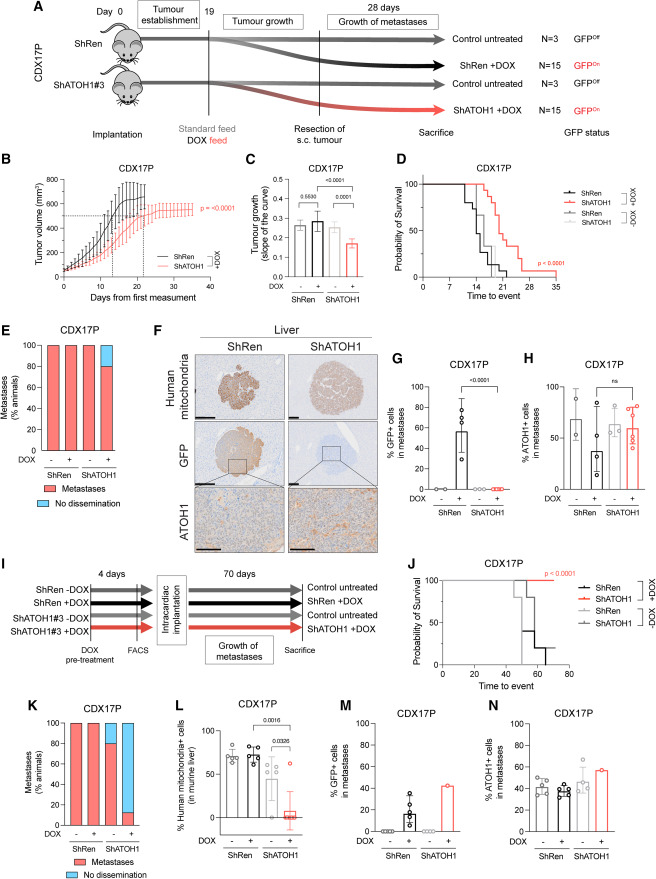
Catozzi et al. investigate the ATOH1 molecular subtype of small cell lung cancer (SCLC). ATOH1 protein was detected in a minority of preclinical models and clinical samples, often co-expressed with NEUROD1 and occasionally ASCL1. In circulating tumor cell-derived explant models, ATOH1 directly regulates neurogenesis and differentiation programs. ATOH1 is required for cell survival ex vivo, and its depletion slows tumor growth and suppresses liver metastasis in vivo. These findings validate ATOH1 as a lineage-defining transcription factor with pro-tumorigenic and pro-metastatic functions in SCLC.
Key Findings
ATOH1 defines a transcriptionally distinct SCLC subtype detected in 7/81 preclinical models and 16/102 clinical samples, alone or with ASCL1/NEUROD1. ATOH1-expressing CDX models are chemoresistant, aggressive, and harbor MYCL amplification/overexpression. ChIP-seq and RNA-seq show ATOH1 binds E-box motifs at promoters and distal regulatory regions, directly regulating neurogenesis, neuronal differentiation, and inner ear hair cell-like programs, with conserved target genes across CDX, PDX, and patient tumors. ATOH1 depletion reduces cell viability and induces caspase-3-independent cell death in ex vivo cultures, and delays subcutaneous tumor growth in vivo. In metastasis assays, ATOH1 knockdown suppresses liver metastatic dissemination and prolongs survival, with residual metastases showing selective pressure to retain/re-express ATOH1. The study establishes ATOH1 as a bona fide lineage-defining TF that supports SCLC cell survival, tumor growth, and liver metastasis, suggesting subtype-specific vulnerabilities.
Contribution
Creative Bioarray supplied the H1339 human SCLC cell line (Cat# CSC-C0516; RRID:CVCL_A472). This validated cell line was cultured under standard conditions and used as an established SCLC model in the study, supporting comparative analyses of SCLC cell lines and experimental assays.
Ask a Question
Write your own review
- You May Also Need
Description: Lung small cell carcinoma producing insulin-like growth factor II. Cell growth is slow.
Description: Lung Cancer-1/squamous. Parent cell line of LC-1/sq-SF, the same patient as LC-F. Cell growth is slow.
Description: Established in 1979 from the bone marrow aspirated from a 55-year-old white man with small cell lung carcinoma prior to treatment; corresponds to NCI-H209; described as expressing neuroendocrine ...
Description: Derived from the lung of a 56-year-old black man with small cell lung carcinoma prior to treatment in 1988
- Adipose Tissue-Derived Stem Cells
- Human Neurons
- Mouse Probe
- Whole Chromosome Painting Probes
- Hepatic Cells
- Renal Cells
- In Vitro ADME Kits
- Tissue Microarray
- Tissue Blocks
- Tissue Sections
- FFPE Cell Pellet
- Probe
- Centromere Probes
- Telomere Probes
- Satellite Enumeration Probes
- Subtelomere Specific Probes
- Bacterial Probes
- ISH/FISH Probes
- Exosome Isolation Kit
- Human Adult Stem Cells
- Mouse Stem Cells
- iPSCs
- Mouse Embryonic Stem Cells
- iPSC Differentiation Kits
- Mesenchymal Stem Cells
- Immortalized Human Cells
- Immortalized Murine Cells
- Cell Immortalization Kit
- Adipose Cells
- Cardiac Cells
- Dermal Cells
- Epidermal Cells
- Peripheral Blood Mononuclear Cells
- Umbilical Cord Cells
- Monkey Primary Cells
- Mouse Primary Cells
- Breast Tumor Cells
- Colorectal Tumor Cells
- Esophageal Tumor Cells
- Lung Tumor Cells
- Leukemia/Lymphoma/Myeloma Cells
- Ovarian Tumor Cells
- Pancreatic Tumor Cells
- Mouse Tumor Cells