
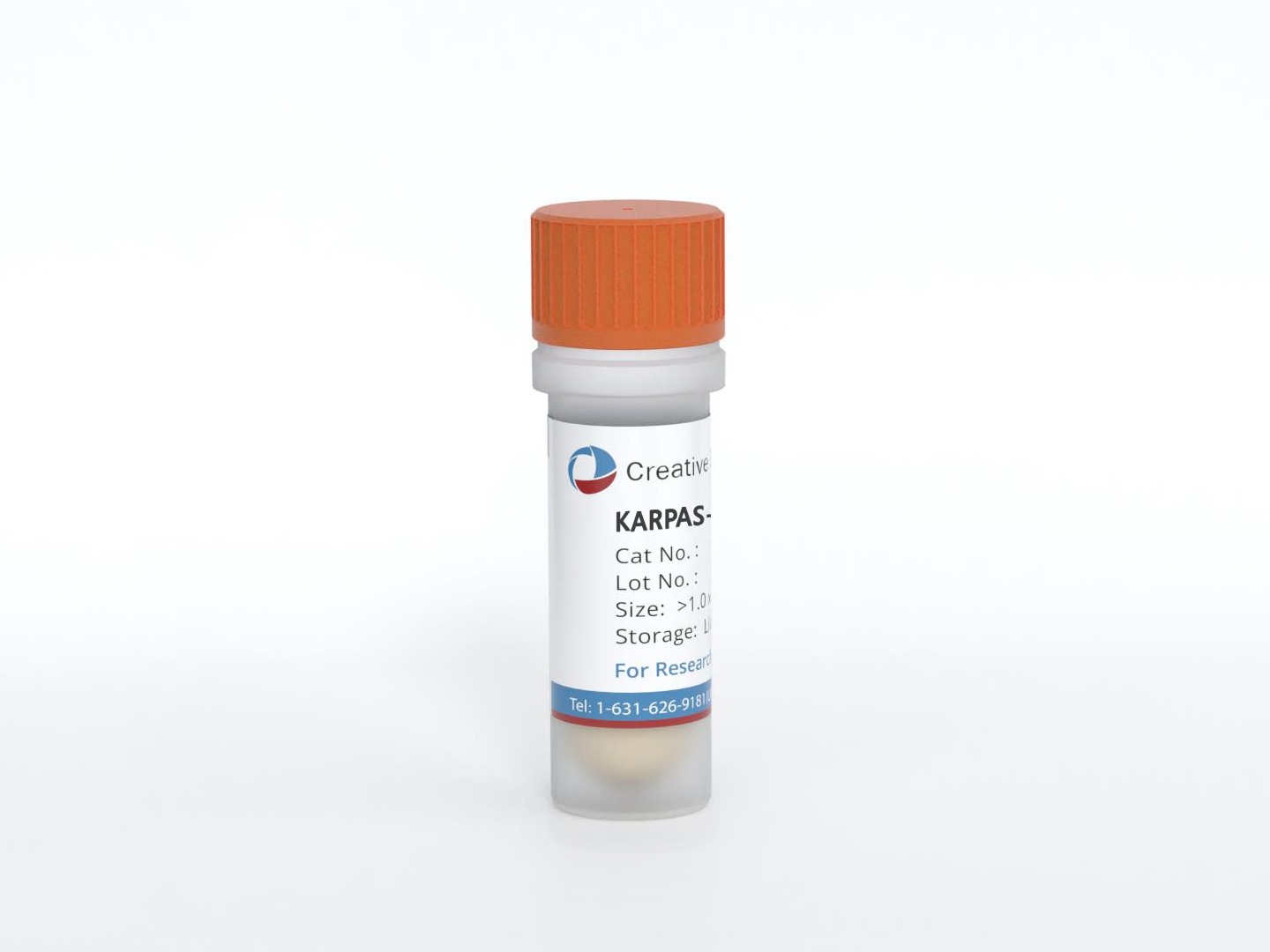
KARPAS-422
Cat.No.: CSC-C7117J
Species: Homo sapiens (Human)
Source: Pleural Effusion
Morphology: Round polygonal cells growing singly or in small clusters
Culture Properties: Suspension
- Specification
- Background
- Scientific Data
- Q & A
- Customer Review
KARPAS-422 is a well-characterized human B-cell non-Hodgkin's lymphoma cell line established in 1987 from the pleural effusion of a 73-year-old female patient with chemotherapy-refractory diffuse large B-cell lymphoma (DLBCL). It represents the germinal center B-cell-like (GCB) molecular subtype, one of the two major DLBCL classifications, and displays a classic GCB immunophenotype with expression of CD19, CD20, CD22, BCL6, and LMO2.
The cell line harbors the pathognomonic t(14;18)(q32;q21) chromosomal translocation, resulting in constitutive BCL2 overexpression and enhanced resistance to apoptosis. Notably, KARPAS-422 also carries the t(4;11)(q21.3;q23.1) translocation-the first documented occurrence of this abnormality in a t(14;18)-positive lymphoma-along with several other chromosomal rearrangements. Genetically, the cell line possesses the EZH2 Y641N gain-of-function mutation, which drives aberrant histone methylation and transcriptional repression of differentiation-associated genes. The combination of BCL2 overexpression and EZH2 mutation renders KARPAS-422 highly responsive to inhibitors targeting both apoptotic and epigenetic pathways.
KARPAS-422 is widely employed in preclinical studies evaluating BCL2 inhibitors, EZH2 inhibitors, and combination strategies. Its xenograft models demonstrate consistent tumor engraftment and reproducible growth kinetics, enabling robust assessment of drug efficacy and resistance mechanisms. The cell line has also been extensively characterized at the genomic, transcriptomic, and epigenomic levels, making it a valuable tool for dissecting the molecular pathogenesis of GCB-DLBCL and for developing novel therapeutic interventions.
GSK-3β Inhibitor 9-ING-41 Potentiate the Antitumor Effects of Venetoclax in Double-Hit Lymphoma (DHL)
Double-hit lymphoma (DHL) exhibits aggressive behavior due to dysregulated proliferation and resistance to apoptosis. Current therapies, including R-CHOP, show limited efficacy, necessitating novel strategies. 9-ING-41, a novel ATP-competitive small-molecule inhibitor that targets glycogen synthase kinase-3β (GSK-3β), has emerged as a promising therapeutic agent because of its ability to disrupt oncogenic signaling pathways associated with tumor progression and treatment resistance.
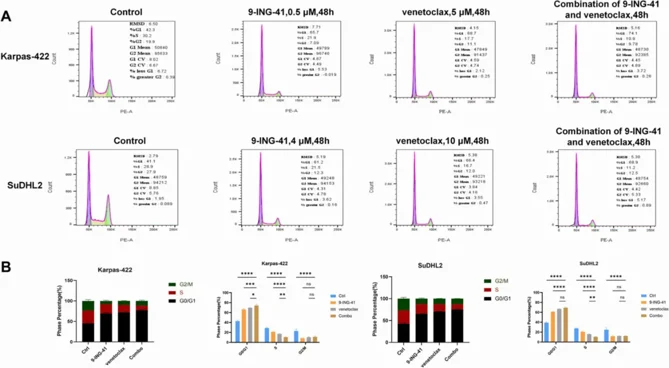
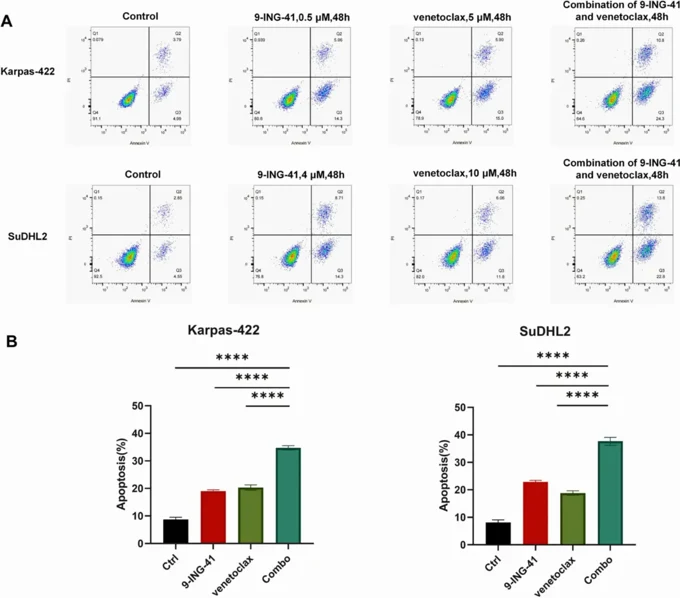
DHL cell lines (Karpas-422 and SuDHL2) were treated with venetoclax and 9-ING-41, either alone or in combination. Cell viability in cytotoxicity assays was assessed using the CCK-8 assay, while apoptosis and cell cycle changes were analyzed via flow cytometry. Western blotting was employed to evaluate alterations in the levels of GSK-3β and WNT/β-catenin pathway proteins following treatment.
In preclinical studies utilizing DHL cell models, the single agent 9-ING-41 demonstrated robust biological activity through inducing significant G1/S phase cell cycle arrest and triggering apoptosis. When co-administered with venetoclax, a clinically approved BCL-2 inhibitor, the combination exhibited marked synergistic cytotoxicity in DHL cells, achieving superior inhibitory effects compared to either agent alone. The combined treatment enhanced cell cycle arrest, significantly reducing the number of S-phase cells and reinforcing G0/G1 arrest. Further mechanistic studies revealed that the combination modulated key proteins in the GSK-3 pathway and downstream WNT/β-catenin pathway, revealing a potential synergistic mechanism.
Ask a Question
Write your own review
Description: Established in 2007 from the bone marrow mononuclear cells of an 82-year-old Japanese man with diffuse large B-cell lymphoma in the leukemic phase
Description: Established from the bone marrow of a 28-year-old man who developed the terminal leukemic phase of lymphosarcoma in 1976
Description: This cell line was derived from the bone marrow aspirate of a 59 year old male with erythroleukemia that became acute myelogenous leukaemia.The cells form colonies in soft-agar in the presence of ...
Description: Established from the pleural effusion of a 24-year-old woman with recurrent anaplastic large cell lymphoma (ALCL); cells were described to clonally derive from T-lineage lymphoid cells and to be ...
Description: Established from a 37-year-old man at second (refractory/terminal) relapse of Hodgkin lymphoma (nodular sclerosing -> lymphocyte depleted/stage IIISA -> stage IV) after both combined chemo- and ...
Description: Established from the peripheral blood of a 10-year-old Caucasian boy with acute lymphoblastic leukemia (pre B-ALL) at diagnosis in 1993
- Adipose Tissue-Derived Stem Cells
- Human Neurons
- Mouse Probe
- Whole Chromosome Painting Probes
- Hepatic Cells
- Renal Cells
- In Vitro ADME Kits
- Tissue Microarray
- Tissue Blocks
- Tissue Sections
- FFPE Cell Pellet
- Probe
- Centromere Probes
- Telomere Probes
- Satellite Enumeration Probes
- Subtelomere Specific Probes
- Bacterial Probes
- ISH/FISH Probes
- Exosome Isolation Kit
- Human Adult Stem Cells
- Mouse Stem Cells
- iPSCs
- Mouse Embryonic Stem Cells
- iPSC Differentiation Kits
- Mesenchymal Stem Cells
- Immortalized Human Cells
- Immortalized Murine Cells
- Cell Immortalization Kit
- Adipose Cells
- Cardiac Cells
- Dermal Cells
- Epidermal Cells
- Peripheral Blood Mononuclear Cells
- Umbilical Cord Cells
- Monkey Primary Cells
- Mouse Primary Cells
- Breast Tumor Cells
- Colorectal Tumor Cells
- Esophageal Tumor Cells
- Lung Tumor Cells
- Leukemia/Lymphoma/Myeloma Cells
- Ovarian Tumor Cells
- Pancreatic Tumor Cells
- Mouse Tumor Cells