

Immortalized Mouse Kidney Epithelial Cells-SV40 (TCMK-1)
Cat.No.: CSC-I2119Z
Species: mouse
Morphology: Polygonal
Culture Properties: Adherent
- Specification
- Background
- Scientific Data
- Q & A
- Customer Review
free from contaminations (bacteria incl. mycoplasma, fungi, HIV, HAV, HBV, HCV, Parvo-B19) and cross-contaminations
Note: Never can cells be kept at -20°C.
The TCMK-1 cell line, derived from the renal tissue of Mus musculus and immortalized via the stable integration of the Simian Virus 40 (SV40) Large T antigen, is a gold-standard in vitro model for nephrology and epithelial cell biology. While primary renal epithelial cells are prone to rapid phenotypic dedifferentiation and replicative senescence, the TCMK-1 line provides a robust, continuous system that faithfully recapitulates the physiological complexities of the kidney's tubular architecture.
- Robust Proliferative Capacity: By bypassing the p53 and pRb-mediated cell cycle checkpoints, TCMK-1 cells offer an indefinite replicative lifespan. This ensures an inexhaustible cell source, providing the high-level reproducibility and lot-to-lot consistency required for large-scale, longitudinal studies.
- Maintenance of Epithelial Fidelity: These cells retain essential epithelial characteristics, including a characteristic cobblestone morphology, the formation of polarized monolayers, and the expression of kidney-specific markers. This makes them a high-fidelity surrogate for investigating renal transport mechanisms and barrier function.
- Validated Model for Nephrotoxicity: TCMK-1 is widely utilized as a screening platform for Drug-Induced Kidney Injury (DIKI). Its standardized growth kinetics and metabolic profile allow for precise evaluation of nephrotoxic compounds, bridging the gap between early-stage discovery and in vivo preclinical validation.
- Versatile Research Applications: Beyond toxicology, these cells serve as a premier model for studying renal fibrogenesis, electrolyte homeostasis, and the cellular response to acute kidney injury (AKI) or chronic kidney disease (CKD) pathways.
Designed for the rigorous requirements of biopharmaceutical R&D, our Immortalized Mouse Kidney Epithelial Cells (TCMK-1) eliminate the variability and technical challenges associated with primary cell isolation. By providing a stable and biologically relevant "assay-ready" system, this product is an indispensable asset for researchers aiming to accelerate the development of novel renal therapeutics and diagnostic strategies.
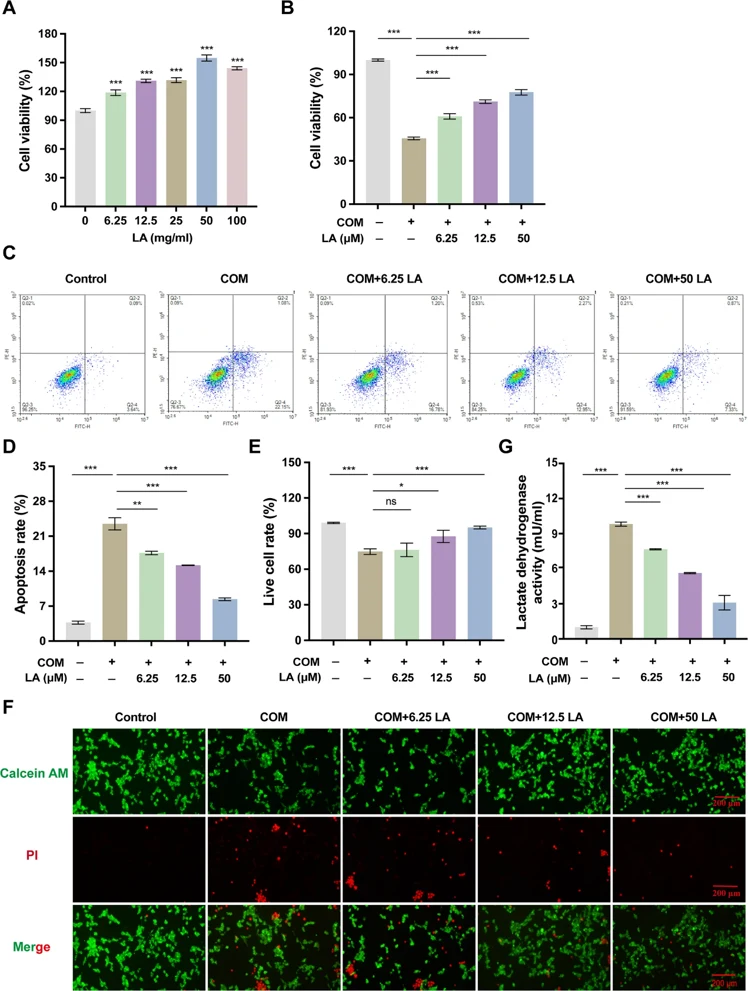
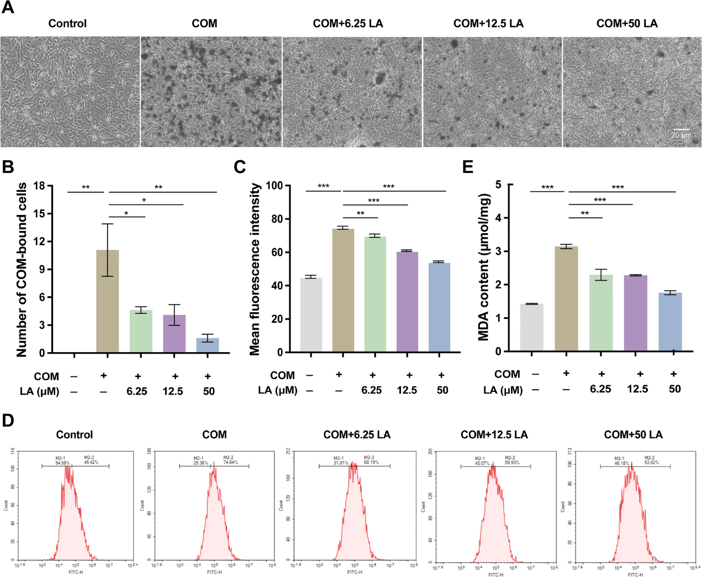
Linoelaidic Acid Alleviates COM-Induced Kidney Injury and Crystal Deposition
Renal injury and calcium oxalate crystal deposition are the core pathological processes underlying kidney stone formation; however, their molecular mechanisms remain incompletely elucidated, and available clinical interventions are limited. Many studies have shown that the intestinal microbiota can produce various metabolites that affect renal function through the gut-kidney axis and participate in the formation of kidney stones. This study aims to identify the microbial metabolites associated with kidney stone patients and explore their mechanism of action in kidney stones.
Microbiome and metabolome analyses are used to search for microbial-related metabolites in the intestines of kidney stone patients. Using COM crystal-treated TCMK-1 cells as a model, the functions of metabolites are evaluated by detecting cell viability, apoptosis rate, cell-crystal adhesion, reactive oxygen species and MDA levels in vitro.
It is found that linoelaidic acid is significantly decreased in kidney stone patients. Supplementing linoelaidic acid in vitro can significantly reduce COM crystal-induced cell apoptosis, crystal adhesion, ROS and MDA levels, and increase cell viability. Mechanistically, linoelaidic acid upregulates the expression of PPARγ in kidney stones to inhibit the activation of the MAPK signaling pathway. Linoelaidic acid can alleviate renal injury, oxidative stress and crystal deposition by regulating the PPARγ/MAPK signaling pathway, and may be a useful strategy for the treatment of kidney stones.
Ask a Question
Write your own review
Description: Immortalized Mouse Primary Artery Fibroblasts-GFP provided by Creative Bioarray have been developed by immortalizing mouse artery fibroblasts with SV40 Large T antigen and transfecting with tGFP. The ...
Description: Immortalized MHC II -/- Mouse Macrophage Cells (C2D) is derived from the knockout mice negative for MHCII molecule. They are stable in culture and survived through crisis in which they spontaneously ...

Description: The bone morphogenetic proteins (BMPs) produced by calvarial cells are crucial in osteoblastic differentiation and bone regeneration, however the limited lifespan of primary cells diminishes their ...
Description: The Immortalized Mouse Atrioventricular Cushion Mesenchymal Cells (tsA58-AVM) were derived from atrioventricular (AV) cushions of H-2Kb -tsA58 embryos at E9.5 and were conditionally immortalized in ...
Description: IDG-SW3 represent a non-homogenous population progressing from early osteoblasts to late osteocytic. These cells express functional SV40 large T antigen that is induced in the presence of IFN γ under ...
Description: The Immortalized Mouse Spleen Dendritic Cell (SRDC) line is functionally and phenotypically similar to dendritic cells; specifically, in its antigen presentation, T cell priming, and dendritic cell ...
- Adipose Tissue-Derived Stem Cells
- Human Neurons
- Mouse Probe
- Whole Chromosome Painting Probes
- Hepatic Cells
- Renal Cells
- In Vitro ADME Kits
- Tissue Microarray
- Tissue Blocks
- Tissue Sections
- FFPE Cell Pellet
- Probe
- Centromere Probes
- Telomere Probes
- Satellite Enumeration Probes
- Subtelomere Specific Probes
- Bacterial Probes
- ISH/FISH Probes
- Exosome Isolation Kit
- Human Adult Stem Cells
- Mouse Stem Cells
- iPSCs
- Mouse Embryonic Stem Cells
- iPSC Differentiation Kits
- Mesenchymal Stem Cells
- Immortalized Human Cells
- Immortalized Murine Cells
- Cell Immortalization Kit
- Adipose Cells
- Cardiac Cells
- Dermal Cells
- Epidermal Cells
- Peripheral Blood Mononuclear Cells
- Umbilical Cord Cells
- Monkey Primary Cells
- Mouse Primary Cells
- Breast Tumor Cells
- Colorectal Tumor Cells
- Esophageal Tumor Cells
- Lung Tumor Cells
- Leukemia/Lymphoma/Myeloma Cells
- Ovarian Tumor Cells
- Pancreatic Tumor Cells
- Mouse Tumor Cells