
Immortalized Human Lens Epithelial Cells-SV40
Cat.No.: CSC-I9160L
Species: Homo sapiens
Source: Infant lens
Morphology: Polygonal
Culture Properties: Adherent
- Specification
- Background
- Scientific Data
- Q & A
- Customer Review
Note: Never can cells be kept at -20 °C.
CIK-HT003 HT® Lenti-SV40T Immortalization Kit
Immortalized Human Lens Epithelial Cells-SV40 (HLE-SV40) are a human epithelial cell line, which have been immortalized with SV40 large T antigen and are derived from the anterior lens capsule of human donor tissue. HLE-SV40 cells preserve a majority of the native lens epithelial cell biological properties, including polygonal epithelial morphology and expression of cytokeratins, E-cadherin, and lens-specific crystallins (αA- and β-crystallin). In addition, the immortalized HLE-SV40 cells are proliferatively stable in culture and have a well-defined and reproducible gene expression profile.
HLE-SV40 cells physiologically serve as the anterior-most cell layer of the lens that are crucial for maintenance of lens transparency, ion homeostasis, and fiber cell differentiation. In addition, they are highly responsive to oxidative stress, ultraviolet irradiation, and a number of growth factors and cytokines, many of which are related to or directly stimulate cataractogenesis in vivo. The cells have also been used to investigate epithelial-mesenchymal transition (EMT) in response to TGF-β stimulation. HLE-SV40 cells are therefore frequently used in studies focused on processes related to cataractogenesis and especially the study of posterior capsule opacification (PCO) or fibrosis following cataract surgery.
HLE-SV40 cells have become a staple model system for research focused on cataract, oxidative injury, drug toxicity, regulation of crystallins, and screening anti-cataract therapeutics. Their physiological relevance combined with their robust proliferative capacity in 2D monolayer cultures has made them a widely used cell line in biochemical assays and imaging-based approaches.
Hesperetin (Hst) Treatment and AGE Formation in vitro
Cataracts and presbyopia are age-related conditions linked to increased AGEs in lens proteins. Hesperetin (Hst) has antioxidant and anti-inflammatory properties and has been shown to prevent cataracts and presbyopia. Here, Doki et al. used in vitro human lens epithelial cell lines and ex vivo mouse lens organ cultures to assess Hst's effects on AGE formation and lens protein modification.
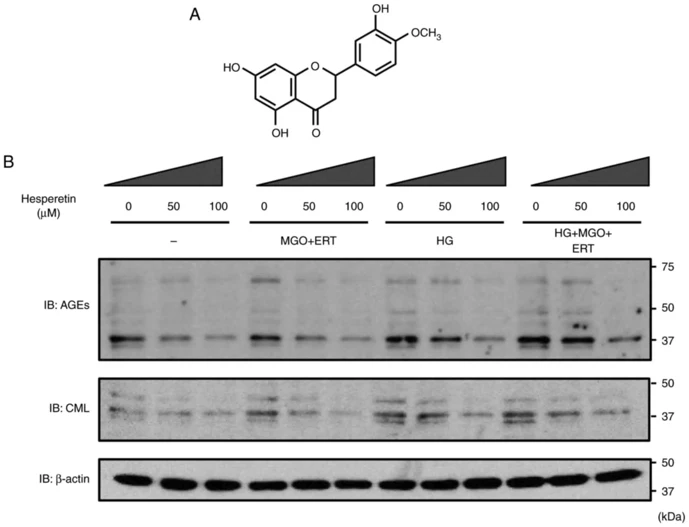
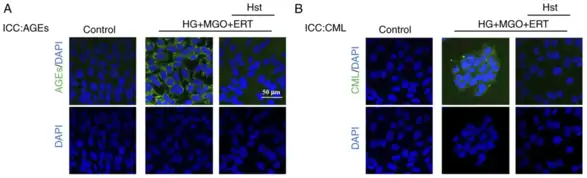
The study examined if Hst treatment could affect AGE formation in immortalized human lens epithelial cells (ihLECs). The structural formula of Hst is shown in Fig. 1A. CML, a major AGE compound binding to ihLECs proteins, was detected. High-glucose medium with MGO and ERT stimulated AGE and CML binding to proteins. ihLECs treated with MGO and ERT in high-glucose medium showed significantly increased AGE formation, but Hst treatment inhibited this in a dose-dependent manner (Fig. 1B). Immunohistochemistry staining revealed that high-glucose stimulation increased AGE and CML signals in ihLECs, which were cancelled by Hst treatment (Fig. 2A and B). Thus, Hst can prevent AGE and CML formation in the lens.
Ask a Question
Write your own review
Description: Nasal epithelial cells form the outermost protective layer against environmental factors. They clean, humidify, and warm inhaled air. They produces mucus, which binds particles that are subsequently ...

Description: Immortalized Human Corneal Epithelial Cells-SV40 have been obtained immortalizing Human Corneal Epithelial Cells with Lenti-SV40 Lentivirus. Immortalized cells were controlled passaging side by side ...
Description: Immortalized Human Lymphatic Endothelial Cells-SV40 were developed from human tissues transduced with a lentiviral expression vector containing the SV40T gene. The cell line was continuously cultured ...

Description: Immortalized Human Retinal Pigment Epithelial Cells were isolated from neonatal human globes and spontaneously immortalized in culture bypassing crisis. They retained typical morphology of the ...
- Adipose Tissue-Derived Stem Cells
- Human Neurons
- Mouse Probe
- Whole Chromosome Painting Probes
- Hepatic Cells
- Renal Cells
- In Vitro ADME Kits
- Tissue Microarray
- Tissue Blocks
- Tissue Sections
- FFPE Cell Pellet
- Probe
- Centromere Probes
- Telomere Probes
- Satellite Enumeration Probes
- Subtelomere Specific Probes
- Bacterial Probes
- ISH/FISH Probes
- Exosome Isolation Kit
- Human Adult Stem Cells
- Mouse Stem Cells
- iPSCs
- Mouse Embryonic Stem Cells
- iPSC Differentiation Kits
- Mesenchymal Stem Cells
- Immortalized Human Cells
- Immortalized Murine Cells
- Cell Immortalization Kit
- Adipose Cells
- Cardiac Cells
- Dermal Cells
- Epidermal Cells
- Peripheral Blood Mononuclear Cells
- Umbilical Cord Cells
- Monkey Primary Cells
- Mouse Primary Cells
- Breast Tumor Cells
- Colorectal Tumor Cells
- Esophageal Tumor Cells
- Lung Tumor Cells
- Leukemia/Lymphoma/Myeloma Cells
- Ovarian Tumor Cells
- Pancreatic Tumor Cells
- Mouse Tumor Cells