

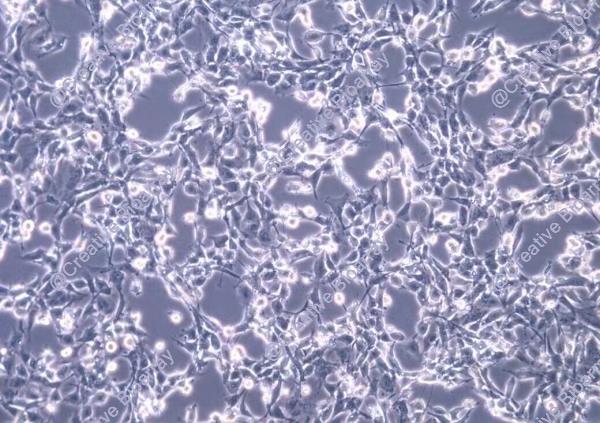
12Z Immortalized Human Endometrial Epithelial Cell Line
Cat.No.: CSC-I2304Z
Species: homo sapiens
Morphology: Polygonal
Culture Properties: Adherent
- Specification
- Background
- Scientific Data
- Q & A
- Customer Review
- Documents
Endometriosis is a chronic condition prevalent in reproductive age women, defined as the growth of endometrial tissue outside the uterine cavity, most commonly on the pelvic peritoneum. Ectopic endometrial lesions exist within a unique microenvironment created by the interaction of epithelial, stromal, endothelial, glandular, and immune cell components, dominated by inflammatory, angiogenic, and endocrine signals. Current research focuses on understanding the complex microenvironment of the lesions and its relationship with different endometriosis stages, phenotypes, and symptoms, and on developing novel diagnostic and therapeutic approaches to minimalize the undesirable side effects of current medical management. Recreating pathophysiological cellular and molecular mechanisms and identifying clinically relevant indicators to assess drug efficacy is a great challenge for the experimental disease models.
Several endometriotic cell lines were developed by researchers from Goethe University Frankfurt in Germany. One of these is the 12Z cell line, derived from the endometrial peritoneum of a 37-year-old female who underwent laparoscopic surgery. The 12Z cell line was immortalized using SV40 plasmid transfection. This cell line expresses both pan-cytokeratin and N-Cadherin.
The 12Z immortalized human endometrial epithelial cell line is an established model for endometriosis as it is derived from endometriotic tissue that is positive for N-Cadherin, a marker for invasiveness. This makes the 12Z cell line a suitable model for studying disease progression or therapeutic development. The 12Z cell line is frequently used in 2D or 3D invasion assays, as well as in biochemical assays to study the pathophysiology of endometriosis.
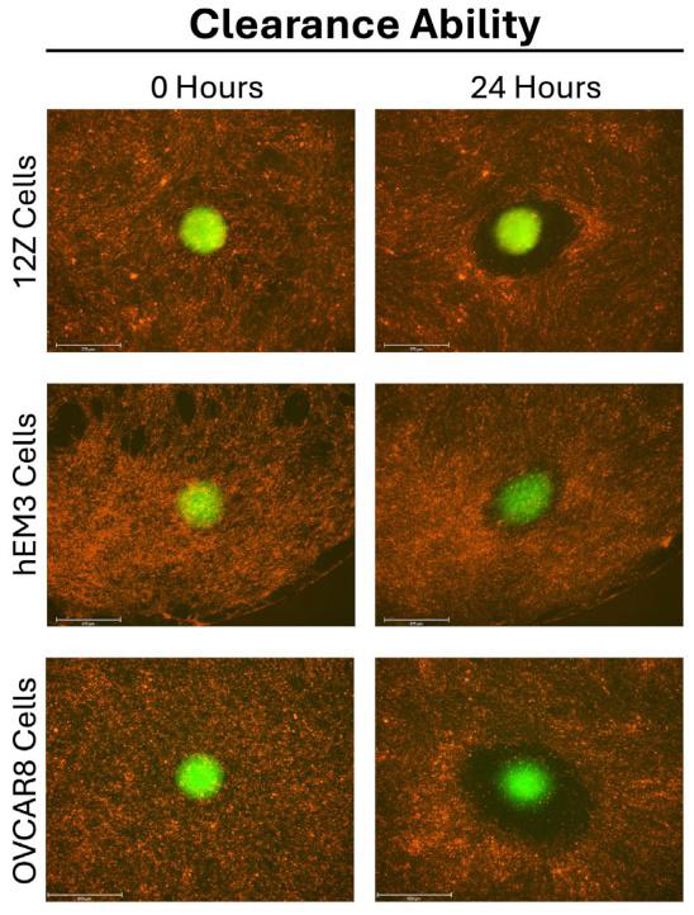
Endometriosis Cell Spheroids Undergo Mesothelial Clearance in a Similar Manner to Ovarian Cancer Cell Spheroids
Endometriosis is a gynecological disease characterized by the presence of endometrium-like cells located outside the uterus. Similar to ovarian cancer, endometriosis cells can interact with the mesothelial cells of the peritoneal cavity. During ovarian cancer metastasis, ovarian cancer cell spheroids attach and push away the mesothelial cells lining the peritoneal cavity, clearing the mesothelial layer. Since endometriosis cells are known to interact with the mesothelium, we hypothesized that endometriosis cells would be able to form spheroids capable of undergoing mesothelial clearance. To test this, we designed an in vitro mesothelial clearance assay using endometriosis spheroids and a mesothelial cell monolayer. An immortalized endometriosis cell line, 12Z, along with an immortalized endometrium cell line, hEM3, were used to generate 3D spheroids. Spheroids were also made using the ovarian cancer cell line OVCAR8 as a positive control for mesothelial clearance.
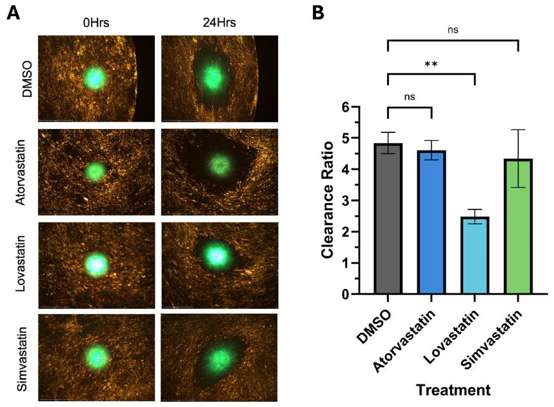
Our results demonstrate that normal and endometriotic epithelial cell spheroids can perform mesothelial clearance similar to ovarian cancer spheroids, though normal endometrial cells do not clear as well as endometriosis cells. Additionally, we demonstrated that our mesothelial clearance assay can test potential pharmacological therapies for endometriosis prior to clinical trials. These results give insight into the development of endometriosis lesions, but further research is needed to determine the mechanisms behind mesothelial clearance in endometriosis.
Ask a Question
Write your own review
 12Z Immortalized Human Endometrial Epithelial Cell Line
Description: Nasal epithelial cells form the outermost protective layer against environmental factors. They clean, humidify, and warm inhaled air. They produces mucus, which binds particles that are subsequently ...
Description: Immortalized Human Corneal Epithelial Cells-SV40 have been obtained immortalizing Human Corneal Epithelial Cells with Lenti-SV40 Lentivirus. Immortalized cells were controlled passaging side by side ...

Description: Immortalized Human Lymphatic Endothelial Cells-SV40 were developed from human tissues transduced with a lentiviral expression vector containing the SV40T gene. The cell line was continuously cultured ...
Description: Immortalized Human Retinal Pigment Epithelial Cells were isolated from neonatal human globes and spontaneously immortalized in culture bypassing crisis. They retained typical morphology of the ...
- Adipose Tissue-Derived Stem Cells
- Human Neurons
- Mouse Probe
- Whole Chromosome Painting Probes
- Hepatic Cells
- Renal Cells
- In Vitro ADME Kits
- Tissue Microarray
- Tissue Blocks
- Tissue Sections
- FFPE Cell Pellet
- Probe
- Centromere Probes
- Telomere Probes
- Satellite Enumeration Probes
- Subtelomere Specific Probes
- Bacterial Probes
- ISH/FISH Probes
- Exosome Isolation Kit
- Human Adult Stem Cells
- Mouse Stem Cells
- iPSCs
- Mouse Embryonic Stem Cells
- iPSC Differentiation Kits
- Mesenchymal Stem Cells
- Immortalized Human Cells
- Immortalized Murine Cells
- Cell Immortalization Kit
- Adipose Cells
- Cardiac Cells
- Dermal Cells
- Epidermal Cells
- Peripheral Blood Mononuclear Cells
- Umbilical Cord Cells
- Monkey Primary Cells
- Mouse Primary Cells
- Breast Tumor Cells
- Colorectal Tumor Cells
- Esophageal Tumor Cells
- Lung Tumor Cells
- Leukemia/Lymphoma/Myeloma Cells
- Ovarian Tumor Cells
- Pancreatic Tumor Cells
- Mouse Tumor Cells