
- Specification
- Background
- Scientific Data
- Q & A
- Customer Review
Lu-134-A-H is an established human small cell lung carcinoma (SCLC) cell line derived from an 80-year-old male patient. It is classified as classic-type small cell carcinoma and grows predominantly as floating cell aggregates in suspension. This aggregate-forming growth pattern enables investigation of tumor-cell behavior in a clustered culture environment. This format supports comparative treatment studies, although aggregate size and incomplete dissociation can affect cell counting and assay interpretation. Standardizing these variables helps improve consistency across experimental conditions.
Lu-134-A-H also has demonstrated utility in studies of neurotransmitter receptor-associated cancer biology. A published investigation included this line in a six-model SCLC panel examining α-amino-3-hydroxy-5-methyl-4-isoxazolepropionic acid receptor (AMPAR) expression and pharmacological responses. AMPAR proteins were detected across the panel, and the antagonists talampanel and CNQX inhibited Lu-134-A-H proliferation under the tested conditions. These findings support its use in exploring links between neuronal signaling components and malignant growth, while requiring complementary experiments to establish target-specific mechanisms. Its inclusion in comparative SCLC studies further allows researchers to examine differences in compound sensitivity across cellular backgrounds. Cell-counting and viability endpoints can be combined with protein-expression measurements to assess treatment effects from complementary perspectives.
AMPAR Receptor Inhibitors Suppress Proliferation of Human Small Cell Lung Cancer Cell Lines
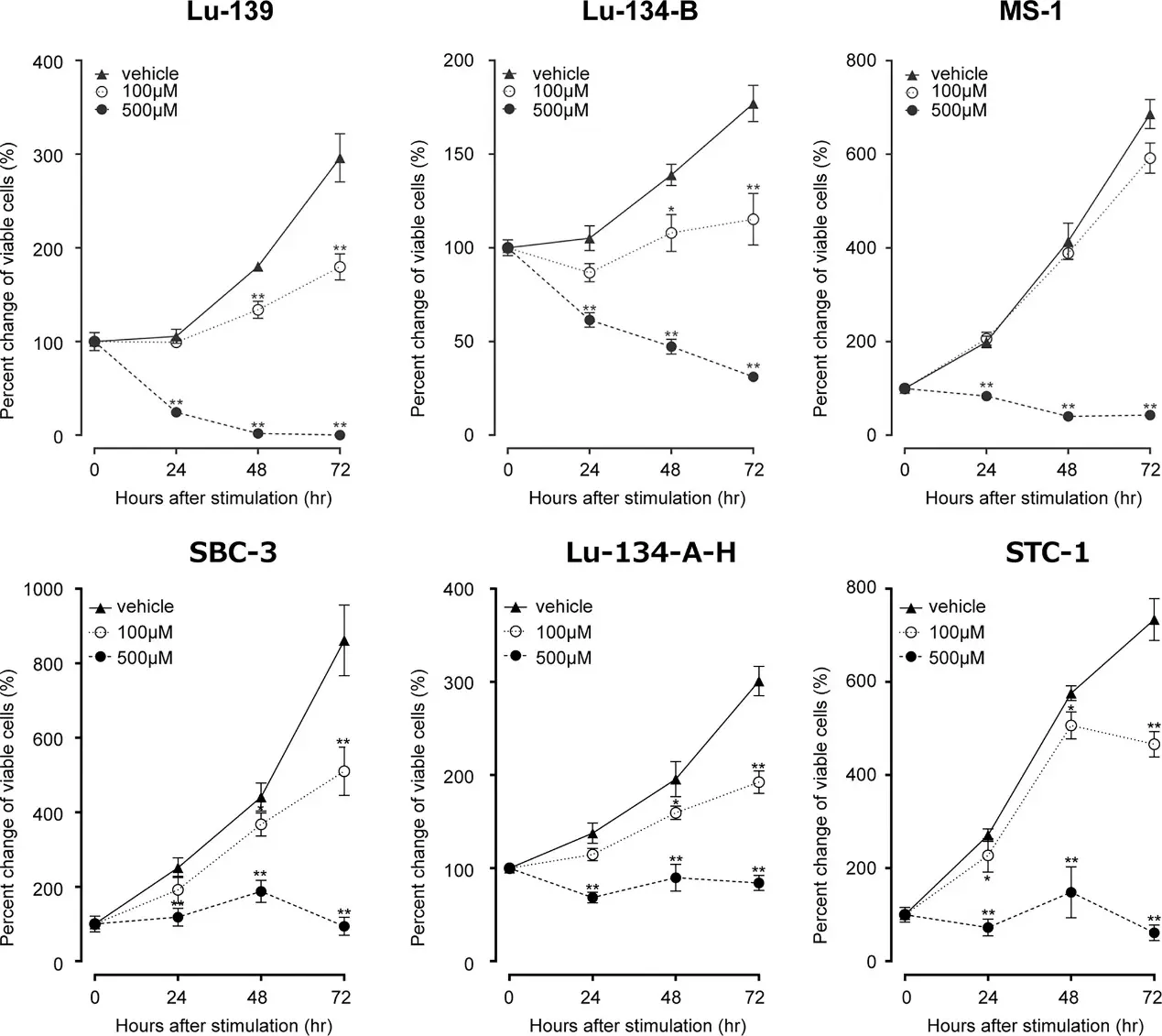
This study aimed to investigate the antitumor effects of AMPAR antagonists (talampanel and cyanquixaline) in human small cell lung cancer (SCLC) cell lines. The time course of the cell count normalized to the cell number on day 0 is shown in Figure 1. Talampanel inhibited the proliferation of Lu-139, Lu-134B, SBC-3, Lu-134-A-H, and STC-1 cells at 100 μM; however, this dose did not inhibit proliferation in the MS-1 cell line. Nonetheless, talampanel treatment at 500 μM inhibited the proliferation of all six SCLC cell lines tested (Figure 1).
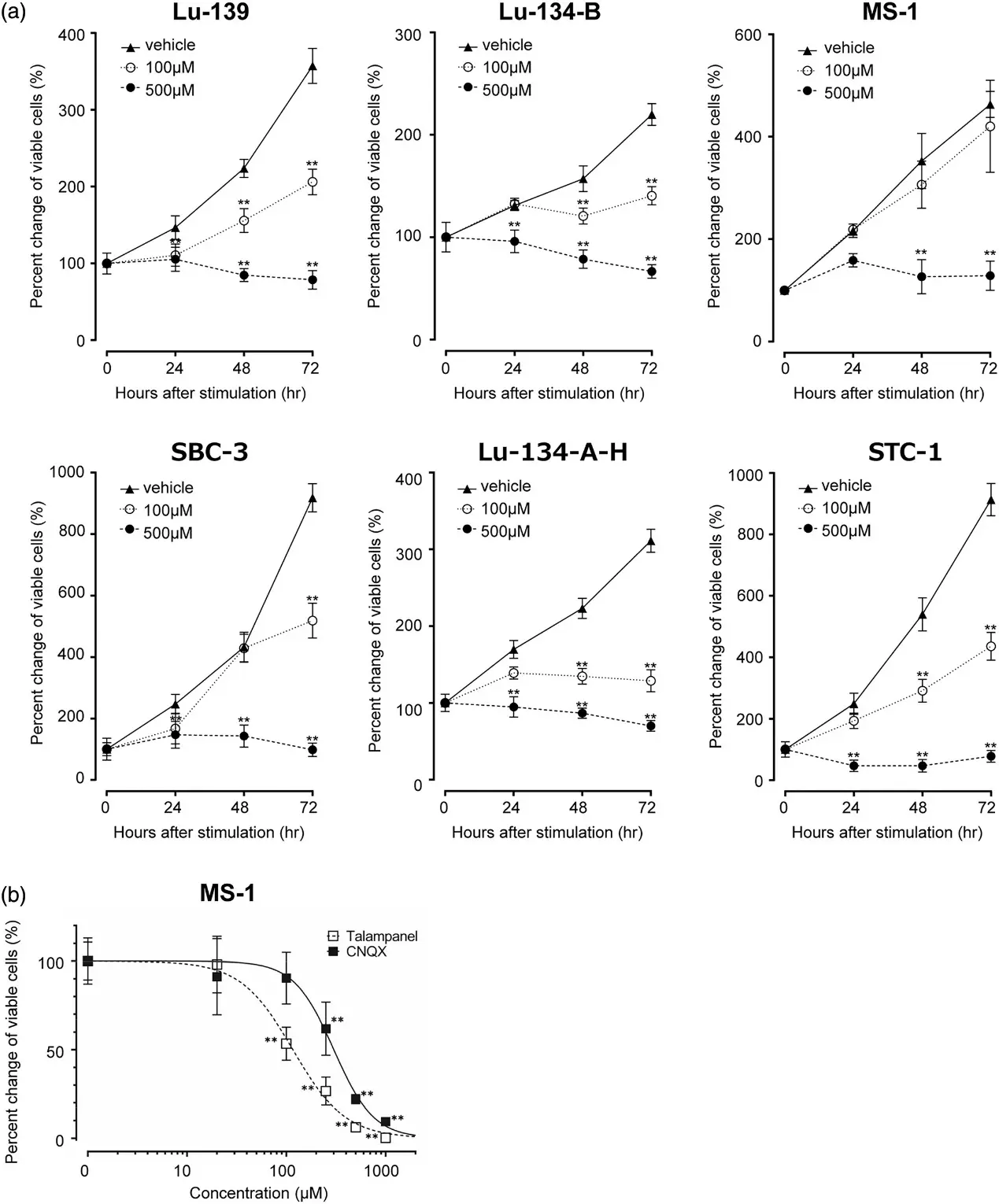
To further prove that AMPAR inhibition prevents SCLC proliferation we tested cyanquixaline (CNQX), another AMPAR antagonist. As observed with talampanel, CNQX inhibited proliferation in all six cell lines examined (Figure 2). However, the MS-1 cell line needed higher concentration, only 500 μM worked. These findings suggest that AMPAR antagonists inhibit the proliferation of fast-proliferating SCLC cells at high doses.
Ask a Question
Write your own review
- You May Also Need
Description: Lung small cell carcinoma producing insulin-like growth factor II. Cell growth is slow.
Description: Lung Cancer-1/squamous. Parent cell line of LC-1/sq-SF, the same patient as LC-F. Cell growth is slow.
Description: Established in 1979 from the bone marrow aspirated from a 55-year-old white man with small cell lung carcinoma prior to treatment; corresponds to NCI-H209; described as expressing neuroendocrine ...
Description: Derived from the lung of a 56-year-old black man with small cell lung carcinoma prior to treatment in 1988
- Adipose Tissue-Derived Stem Cells
- Human Neurons
- Mouse Probe
- Whole Chromosome Painting Probes
- Hepatic Cells
- Renal Cells
- In Vitro ADME Kits
- Tissue Microarray
- Tissue Blocks
- Tissue Sections
- FFPE Cell Pellet
- Probe
- Centromere Probes
- Telomere Probes
- Satellite Enumeration Probes
- Subtelomere Specific Probes
- Bacterial Probes
- ISH/FISH Probes
- Exosome Isolation Kit
- Human Adult Stem Cells
- Mouse Stem Cells
- iPSCs
- Mouse Embryonic Stem Cells
- iPSC Differentiation Kits
- Mesenchymal Stem Cells
- Immortalized Human Cells
- Immortalized Murine Cells
- Cell Immortalization Kit
- Adipose Cells
- Cardiac Cells
- Dermal Cells
- Epidermal Cells
- Peripheral Blood Mononuclear Cells
- Umbilical Cord Cells
- Monkey Primary Cells
- Mouse Primary Cells
- Breast Tumor Cells
- Colorectal Tumor Cells
- Esophageal Tumor Cells
- Lung Tumor Cells
- Leukemia/Lymphoma/Myeloma Cells
- Ovarian Tumor Cells
- Pancreatic Tumor Cells
- Mouse Tumor Cells