
KYSE770
Cat.No.: CSC-C6777J
Species: Homo sapiens (Human)
Source: Esophagus
Morphology: Epithelial-Like
- Specification
- Background
- Scientific Data
- Q & A
- Customer Review
KYSE770, also designated KYSE-770, is an established human esophageal squamous cell carcinoma (ESCC) cell line derived from a moderately differentiated tumor in a 46-year-old male patient. The cells exhibit epithelial-like morphology and adherent growth. Their defined tissue origin and histological background provide a relevant experimental model for investigating esophageal squamous carcinoma biology and evaluating tumor-associated molecular targets.
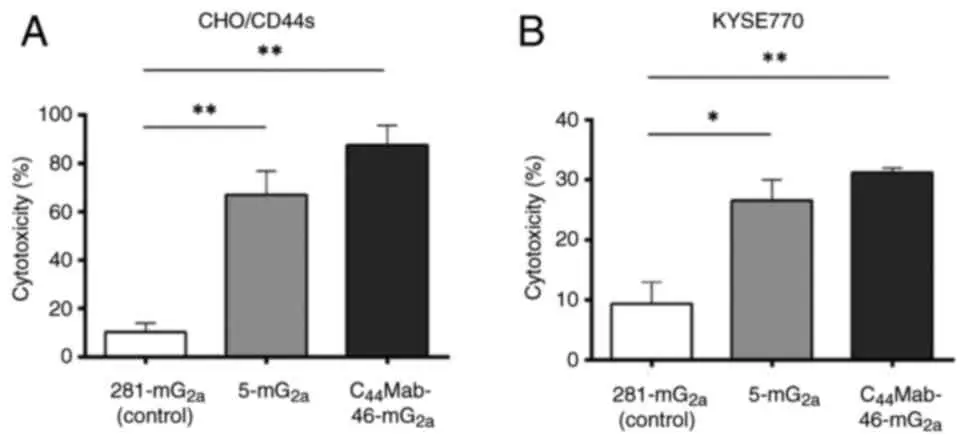
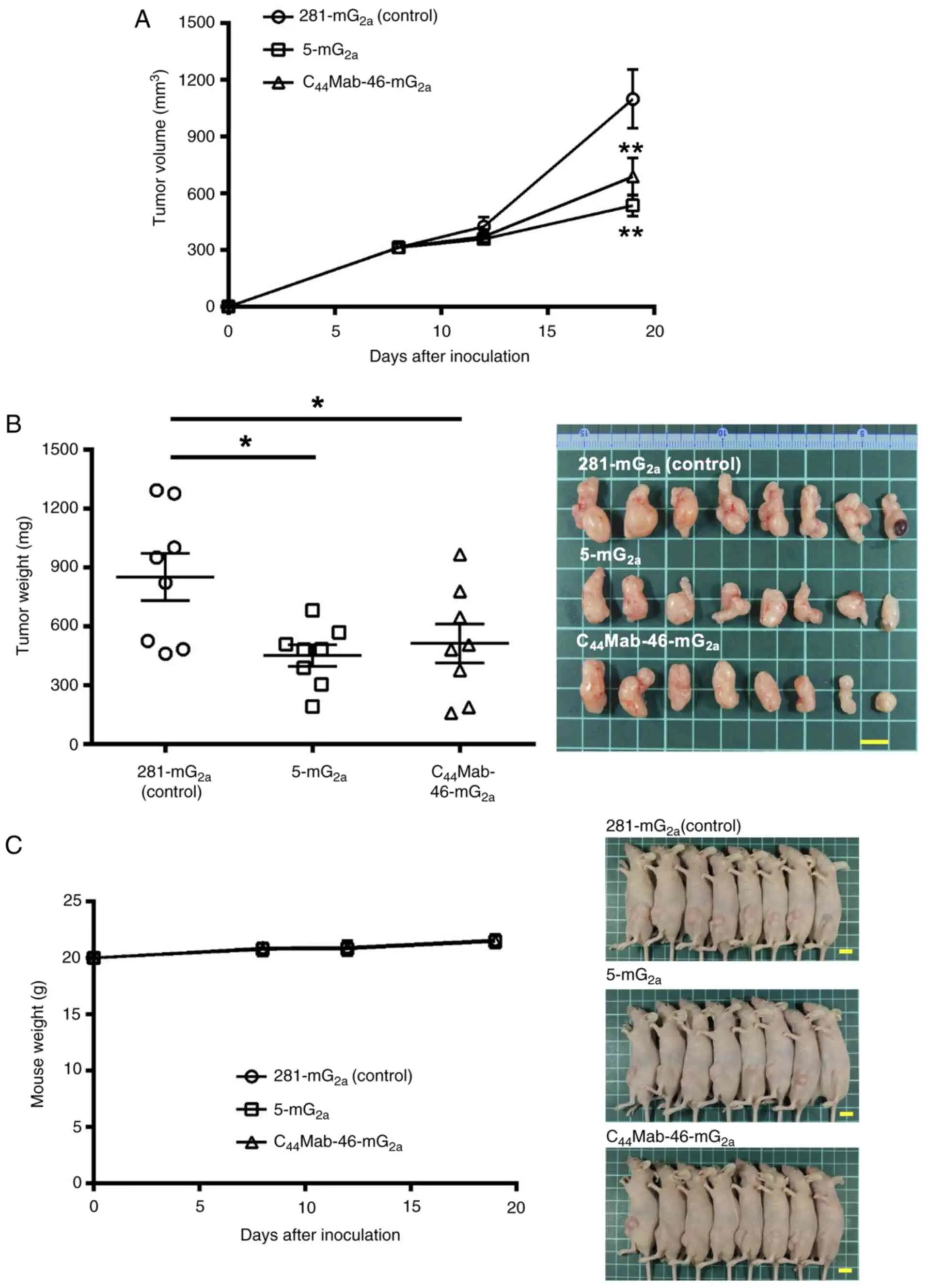
A distinctive research advantage is their documented endogenous CD44 expression. This provides a practical basis for investigating antibody binding, epitope accessibility, and CD44-associated tumor phenotypes in a human cancer-cell context. KYSE770 also supports complementary assessment of antibody function in vitro and antitumor activity in vivo. A published study reported complement-dependent cytotoxicity against KYSE770 cells following treatment with two anti-CD44 antibodies and suppression of KYSE770 xenograft growth in mice. The antibodies differed in their ability to activate an FcγRIIIa-dependent reporter pathway in the presence of KYSE770 cells, illustrating the model’s value for distinguishing antigen recognition from downstream effector activity. These findings support comparative evaluation of antibody formats and mechanisms under defined experimental conditions.
Antitumor Activities of Anti‑CD44 Monoclonal Antibodies in Mouse Xenograft Models of Esophageal Cancer
Since CD44 plays a critical role in tumor development by regulating cell adhesion, survival, proliferation and stemness, it has been considered a target for tumor therapy. Anti‑CD44 monoclonal antibodies (mAbs) have been developed and applied to antibody‑drug conjugates and chimeric antigen receptor‑T cell therapy. Anti-pan‑CD44 mAbs, C44Mab‑5 and C44Mab‑46, which recognize both CD44 standard (CD44s) and variant isoforms were previously developed. The present study generated a mouse IgG2a version of the anti‑pan‑CD44 mAbs (5‑mG2a and C44Mab‑46‑mG2a) to evaluate the antitumor activities against CD44‑positive cells.
Both 5‑mG2a and C44Mab‑46‑mG2a recognized CD44s‑overexpressed CHO‑K1 (CHO/CD44s) cells and esophageal tumor cell line (KYSE770) in flow cytometry. Furthermore, both 5‑mG2a and C44Mab‑46‑mG2a could activate effector cells in the presence of CHO/CD44s cells and exhibited complement-dependent cytotoxicity (CDC) against both CHO/CD44s and KYSE770 cells. Furthermore, the administration of 5‑mG2a and C44Mab‑46‑mG2a significantly suppressed CHO/CD44s and KYSE770 xenograft tumor development compared with the control mouse IgG2a. These results indicate that 5‑mG2a and C44Mab‑46‑mG2a could exert antitumor activities against CD44‑positive cancers and be a promising therapeutic regimen for tumors.
Ask a Question
Write your own review
- You May Also Need
Description: Human moderately differentiated squamous cell carcinoma cell line established from esophageal cancer.
Description: Human moderately differentiated squamous cell carcinoma cell line established from esophageal cancer.
Description: Human squamous cell carcinoma from oral cavity via mouse transplantation.
Description: Human squamous cell carcinoma cell line established from recurrent cancer (esophageal cancer).
Description: Human moderately differentiated squamous cell carcinoma cell line established from esophageal cancer.
- Adipose Tissue-Derived Stem Cells
- Human Neurons
- Mouse Probe
- Whole Chromosome Painting Probes
- Hepatic Cells
- Renal Cells
- In Vitro ADME Kits
- Tissue Microarray
- Tissue Blocks
- Tissue Sections
- FFPE Cell Pellet
- Probe
- Centromere Probes
- Telomere Probes
- Satellite Enumeration Probes
- Subtelomere Specific Probes
- Bacterial Probes
- ISH/FISH Probes
- Exosome Isolation Kit
- Human Adult Stem Cells
- Mouse Stem Cells
- iPSCs
- Mouse Embryonic Stem Cells
- iPSC Differentiation Kits
- Mesenchymal Stem Cells
- Immortalized Human Cells
- Immortalized Murine Cells
- Cell Immortalization Kit
- Adipose Cells
- Cardiac Cells
- Dermal Cells
- Epidermal Cells
- Peripheral Blood Mononuclear Cells
- Umbilical Cord Cells
- Monkey Primary Cells
- Mouse Primary Cells
- Breast Tumor Cells
- Colorectal Tumor Cells
- Esophageal Tumor Cells
- Lung Tumor Cells
- Leukemia/Lymphoma/Myeloma Cells
- Ovarian Tumor Cells
- Pancreatic Tumor Cells
- Mouse Tumor Cells