
HKBMM
Cat.No.: CSC-C6466J
Species: Homo sapiens (Human)
Source: Brain
Morphology: other
Culture Properties: Adherent cells
- Specification
- Background
- Scientific Data
- Q & A
- Customer Review
Store in liquid nitrogen.
HKBMM is a human malignant meningioma cell line established from a high-grade meningioma, a tumor originating in the meninges, the protective membranes surrounding the brain and spinal cord. This cell line provides a valuable in vitro model to study the biology of aggressive meningiomas, which are characterized by rapid growth, invasiveness, and potential for recurrence.
HKBMM cells exhibit adherent growth with polygonal to spindle-shaped morphology typical of meningeal tumor cells. They express markers consistent with meningioma identity, including vimentin and EMA (epithelial membrane antigen), and retain key molecular features of high-grade meningiomas, making them suitable for mechanistic studies of tumor progression, cell proliferation, and migration.
This cell line is widely used in neuro-oncology research to investigate tumor biology, including signaling pathways, tumor-microenvironment interactions, and resistance mechanisms. HKBMM is also applied in preclinical studies for evaluating therapeutic strategies, such as chemotherapeutic agents, targeted treatments, and novel anti-tumor compounds. Its human origin and malignant phenotype make HKBMM a highly relevant tool for advancing our understanding of meningioma pathogenesis and supporting the development of improved therapies.
Dose-Dependent and ROS Mediated Anti-cancer Effects of Avenaciolide
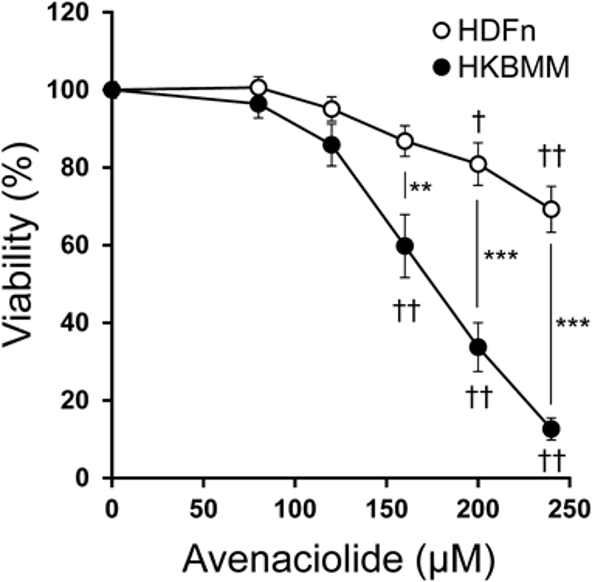
Anti-cancer effects of avenaciolide, a water-insoluble natural product of Aspergillus avenaceus, was examined using human malignant meningioma cells (HKBMM) and normal dermal fibroblasts (HDFn). Avenaciolide had dose-dependent anti-cancer effects on HKBMM cells, showing significant effects at 160 µM or higher concentrations (Fig. 1). The cell death-inducing concentration of avenaciolide on HDFn cells was 200 µM or higher. Higher concentrations of avenaciolide caused less cell death in HDFn cells than in HKBMM cells, suggesting the possibility that avenaciolide might be a targeted anti-cancer drug.
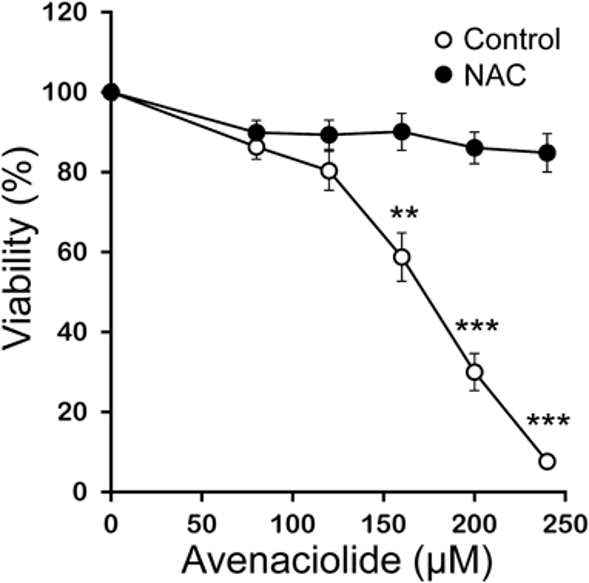
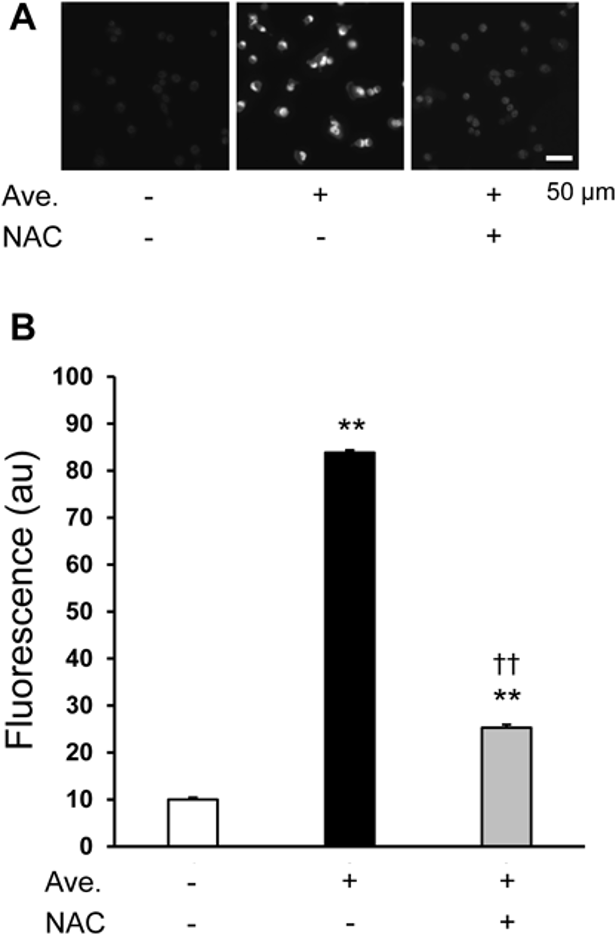
Katsuzawa et al. then examined the mechanism of avenaciolide-induced cell death. Pretreatment with 5 mM NAC significantly reduced avenaciolide-induced cell death in HKBMM cells (Fig. 2). ROS production by avenaciolide was visualized using CellROX green, showing strong fluorescence after 1-1.5 hours of exposure to 200 µM avenaciolide (Fig. 3). NAC pretreatment significantly suppressed ROS production. These findings suggest that avenaciolide induces ROS production and subsequent cell death in HKBMM cells.
Ask a Question
Write your own review
- You May Also Need
Description: Subline of GOTO. Protein-free medium adapted. Cell growth is slow.
Description: Established from the adrenal tumor tissue resected after treatment from a 20-month-old boy of European origin with neuroblastoma (stage III) in 1991
Description: established from the bone marrow metastasis of a 1-year-old female patient with adrenal gland neuroblastoma negative
Description: The line is resistant to infection and focus formation by ecotropic MuLV.
Description: Established from the primary adrenal tumor resected prior to treatment from a 3-year-old boy with rapidly progressing Stage III neuroblastoma in 1989; described to lack MYCN (NMYC, N-myc) ...
- Adipose Tissue-Derived Stem Cells
- Human Neurons
- Mouse Probe
- Whole Chromosome Painting Probes
- Hepatic Cells
- Renal Cells
- In Vitro ADME Kits
- Tissue Microarray
- Tissue Blocks
- Tissue Sections
- FFPE Cell Pellet
- Probe
- Centromere Probes
- Telomere Probes
- Satellite Enumeration Probes
- Subtelomere Specific Probes
- Bacterial Probes
- ISH/FISH Probes
- Exosome Isolation Kit
- Human Adult Stem Cells
- Mouse Stem Cells
- iPSCs
- Mouse Embryonic Stem Cells
- iPSC Differentiation Kits
- Mesenchymal Stem Cells
- Immortalized Human Cells
- Immortalized Murine Cells
- Cell Immortalization Kit
- Adipose Cells
- Cardiac Cells
- Dermal Cells
- Epidermal Cells
- Peripheral Blood Mononuclear Cells
- Umbilical Cord Cells
- Monkey Primary Cells
- Mouse Primary Cells
- Breast Tumor Cells
- Colorectal Tumor Cells
- Esophageal Tumor Cells
- Lung Tumor Cells
- Leukemia/Lymphoma/Myeloma Cells
- Ovarian Tumor Cells
- Pancreatic Tumor Cells
- Mouse Tumor Cells