
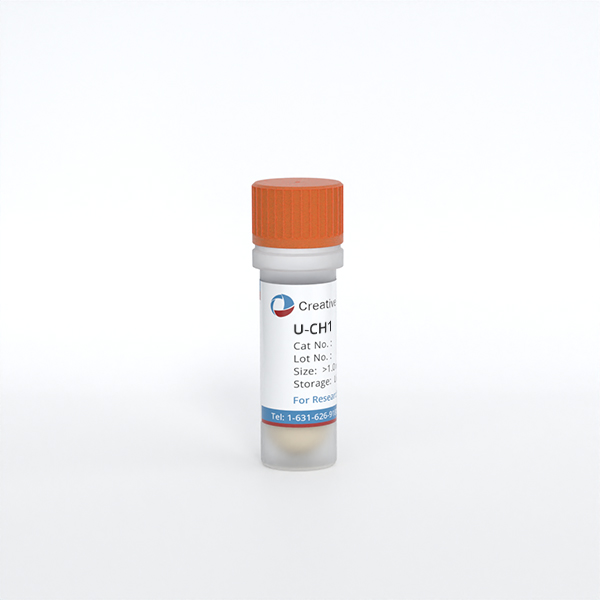
U-CH1
Cat.No.: CSC-C9258W
Species: Homo sapiens (Human)
Source: Bone
Morphology: mesenchymal like
- Specification
- Background
- Scientific Data
- Q & A
- Customer Review
U-CH1 is the first validated human chordoma cell line, originally established from a recurrent sacral chordoma of a 56-year-old male patient. As the foundational model in chordoma research, U-CH1 retains classical physaliferous morphology and faithfully recapitulates the defining molecular hallmarks of chordoma. It exhibits robust nuclear expression of brachyury (TBXT)—the lineage-specific transcription factor and definitive diagnostic marker—at approximately 10-fold higher levels than U-CH2, alongside strong CD24 surface expression (13-fold higher than U-CH2). These features ensure authentic representation of chordoma biology and pathophysiology.
Genetically, U-CH1 maintains wild-type SMARCB1 status and HLA-A2 typing, with comprehensive genomic resources including publicly available whole-genome, exome, and transcriptome sequencing data. Extensively characterized and widely adopted across the research community, U-CH1 has served as the critical benchmark for establishing and authenticating subsequent chordoma cell lines.
Functionally, U-CH1 supports robust in vitro proliferation and reliably forms xenografts in immunodeficient mice, enabling integrated preclinical evaluation from mechanistic studies to in vivo drug efficacy assessment. It has been instrumental in high-throughput compound screening and in elucidating therapeutic vulnerabilities of brachyury-driven transcriptional addiction, particularly through CDK-targeted inhibition. With its authenticated origin, extensively characterized molecular profile, and proven versatility across diverse experimental platforms, U-CH1 remains the gold standard cell model for advancing chordoma biology and therapeutic development.
REGγ Promotes Proliferation and Inhibits Apoptosis of Chordoma Cells
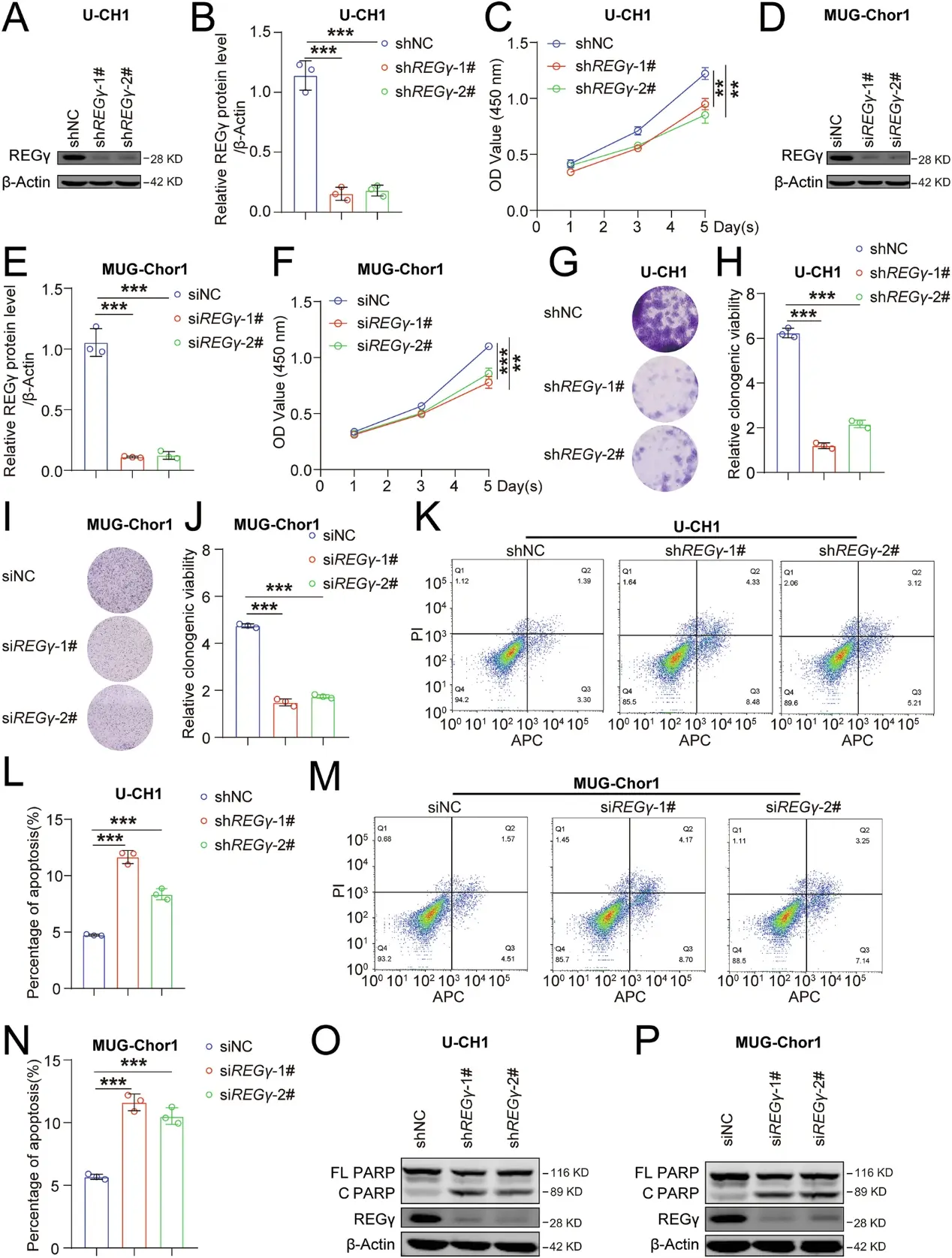
REGγ, a proteasome activator, mediates ubiquitin-, and ATP-independent protein degradation and is overexpressed in various cancers. To determine whether REGγ regulates the occurrence and development of chordoma, Chen, Hui, et al. first established stable U-CH1 cell lines with shNC, shREGγ-1#, and shREGγ-2# (Fig. 1A, B). CCK8 assay showed that REGγ knockdown significantly inhibited U-CH1 cell proliferation (Fig. 1C). Similarly, silencing REGγ in MUG-Chor1 cells yielded the same result (Fig. 1D–F). The colony formation assay, which is commonly used to assess cell proliferation and self-renewal ability, confirmed that REGγ knockdown suppresses the proliferation of chordoma cells (Fig. 1G–J). These findings suggest that REGγ plays a key role in the occurrence and development of chordoma by modulating cell proliferation.
To investigate whether REGγ regulates chordoma by inhibiting apoptosis, they performed a cell apoptosis analysis. Using an Annexin V-APC/PI apoptosis detection kit combined with flow cytometry analysis, they observed that REGγ knockdown promoted apoptosis in U-CH1 cells (Fig. 1K, L). Western blotting revealed increased accumulation of cleaved PARP, an apoptosis marker, in REGγ-knockdown U-CH1 cells (Fig. 1O). They also observed the same phenomenon in MUG-Chor1 cells with REGγ knockdown (Fig. 1M, N). These data indicate that REGγ knockdown inhibits proliferation and promotes apoptosis in chordoma cells.
Ask a Question
Write your own review
- You May Also Need
Description: Species: human female; Tissue: lymphocyte, B; Pathology: paroxysmal nocturnal hemoglobinuria; Transformed by: Epstein-Barr
Description: Human cell line derived from malignant peripheral nerve sheath tumor.
Description: Species: human female; Tissue: lymphocyte, B; Pathology: paroxysmal nocturnal hemoglobinuria; Transformed by: Epstein-Barr
Description: Established from the primary lesion resected from a 76-year-old woman with bulky, moderately differentiated squamous cell carcinoma of the vulva in 1984; cells were reported to express an elevated ...
- Adipose Tissue-Derived Stem Cells
- Human Neurons
- Mouse Probe
- Whole Chromosome Painting Probes
- Hepatic Cells
- Renal Cells
- In Vitro ADME Kits
- Tissue Microarray
- Tissue Blocks
- Tissue Sections
- FFPE Cell Pellet
- Probe
- Centromere Probes
- Telomere Probes
- Satellite Enumeration Probes
- Subtelomere Specific Probes
- Bacterial Probes
- ISH/FISH Probes
- Exosome Isolation Kit
- Human Adult Stem Cells
- Mouse Stem Cells
- iPSCs
- Mouse Embryonic Stem Cells
- iPSC Differentiation Kits
- Mesenchymal Stem Cells
- Immortalized Human Cells
- Immortalized Murine Cells
- Cell Immortalization Kit
- Adipose Cells
- Cardiac Cells
- Dermal Cells
- Epidermal Cells
- Peripheral Blood Mononuclear Cells
- Umbilical Cord Cells
- Monkey Primary Cells
- Mouse Primary Cells
- Breast Tumor Cells
- Colorectal Tumor Cells
- Esophageal Tumor Cells
- Lung Tumor Cells
- Leukemia/Lymphoma/Myeloma Cells
- Ovarian Tumor Cells
- Pancreatic Tumor Cells
- Mouse Tumor Cells