
SuperQuick® Skin-PAMPA Kit
- Specification
- Scientific Data
- Q & A
- Customer Review
Skin Mimic Solution:2.0 mL;
Acceptor plate: 1 plate;
High permeability control: 120 uL;
Medium permeability control: 120 uL;
Low permeability control: 120uL
Simple and cost-effective;
High-throughput.
Lipid Biomimetic Models as Simple Yet Complex Tools to Predict Skin Permeation and Drug–Membrane Biophysical Interactions
Background
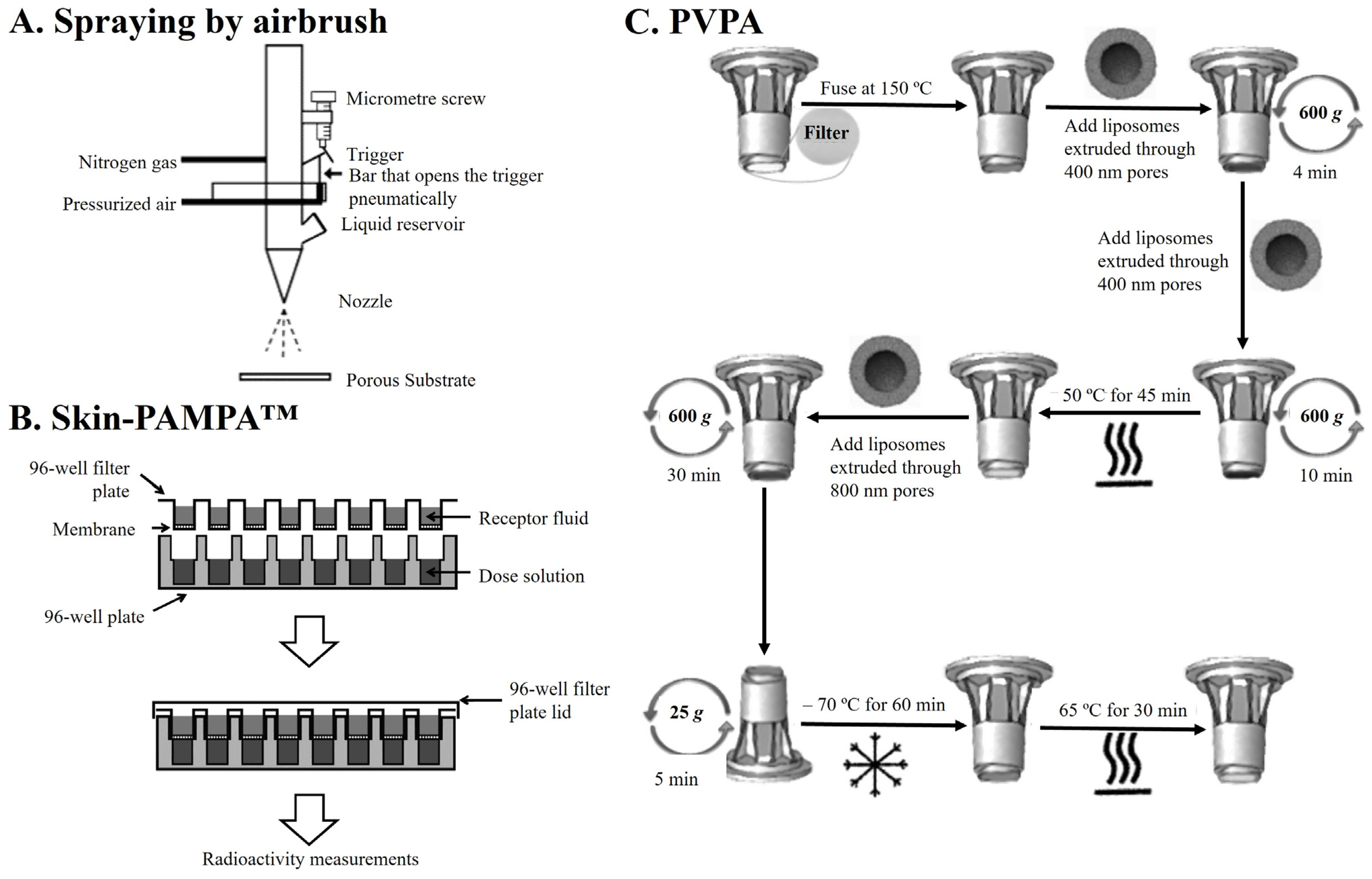
This review systematically examines lipid biomimetic models that mimic the stratum corneum intercellular lipid matrix for predicting skin permeation and drug–membrane biophysical interactions. It details lipid composition, lamellar organization, and phase behavior, focusing on ceramides, cholesterol, and free fatty acids. It then evaluates their translation into stratum corneum surrogates, including airbrush-sprayed models, Skin-PAMPA, and phospholipid vesicle-based permeation assays, discussing advantages, limitations, and commercial or patented skin models for pharmaceutical and cosmetic testing.
Key Findings
The review finds that SC lipid models must balance orthorhombic packing, hydrogen bonding, and lipid miscibility to reproduce barrier function. Ceramide acyl chain length distribution, coexistence of sphingosine, phytosphingosine, and 6-hydroxysphingosine bases, acylceramides (especially Cer[EOS]), and C16–C26 free fatty acids are critical. Cholesterol promotes long periodicity phase formation and orthorhombic packing. The most promising stratum corneum surrogates are airbrush deposition onto porous filters, Skin-PAMPA, and phospholipid vesicle-based permeation assay (PVPA). Airbrush models can closely mimic human SC permeability; Skin-PAMPA correlates with full-thickness skin but lacks acylceramides and unsaturated chains; PVPA offers stability but incorporates phosphatidylcholine. Overall, lipid-based SC surrogates offer tunable, ethical, and cost-effective alternatives for permeation testing, with future needs including keratin incorporation, high-throughput microfluidics, and diseased-skin models.
Contribution
Creative Bioarray is cited as the supplier of the SuperQuick® Skin-PAMPA Kit, a commercial 96-well plate system using a certramide-based stratum corneum lipid model. The review notes its donor/acceptor plate format and HPLC-compatible bottom plate, positioning it as one of few available cell-free high-throughput skin permeation screening tools.
Ask a Question
Write your own review
- Adipose Tissue-Derived Stem Cells
- Human Neurons
- Mouse Probe
- Whole Chromosome Painting Probes
- Hepatic Cells
- Renal Cells
- In Vitro ADME Kits
- Tissue Microarray
- Tissue Blocks
- Tissue Sections
- FFPE Cell Pellet
- Probe
- Centromere Probes
- Telomere Probes
- Satellite Enumeration Probes
- Subtelomere Specific Probes
- Bacterial Probes
- ISH/FISH Probes
- Exosome Isolation Kit
- Human Adult Stem Cells
- Mouse Stem Cells
- iPSCs
- Mouse Embryonic Stem Cells
- iPSC Differentiation Kits
- Mesenchymal Stem Cells
- Immortalized Human Cells
- Immortalized Murine Cells
- Cell Immortalization Kit
- Adipose Cells
- Cardiac Cells
- Dermal Cells
- Epidermal Cells
- Peripheral Blood Mononuclear Cells
- Umbilical Cord Cells
- Monkey Primary Cells
- Mouse Primary Cells
- Breast Tumor Cells
- Colorectal Tumor Cells
- Esophageal Tumor Cells
- Lung Tumor Cells
- Leukemia/Lymphoma/Myeloma Cells
- Ovarian Tumor Cells
- Pancreatic Tumor Cells
- Mouse Tumor Cells