

Sq-1979
Cat.No.: CSC-C6597J
Species: Mus musculus (Mouse)
Morphology: Epithelial-like
Culture Properties: Adherent
- Specification
- Background
- Scientific Data
- Q & A
- Customer Review
Shipping: Dry Ice, Frozen
Sq-1979 Cells are mouse squamous cell carcinoma cells isolated from a tumor that originated from the oral cavity of a mouse. Sq-1979 cells are used as an in vitro model system for oral squamous cell carcinoma (OSCC). Given their epithelial heritage, Sq-1979 cells are likely to mirror key biological characteristics of oral squamous cell carcinomas. Sq-1979 cells can therefore be used as a model system to study mechanisms of oral tumor initiation, progression and therapeutic response in mice.
Sq-1979 cells typically grow as adherent cells with polygonal morphology in culture, which is typical of epithelial cells. The cells often grow as compact cell colonies with clearly defined cell-cell junctions. Sq-1979 cells express multiple squamous epithelial markers as well as carcinoma-associated markers, including cytokeratins (CK5/6 and CK14), E-cadherin and p63. In addition to epithelial markers, Sq-1979 cells can also express markers associated with epithelial-mesenchymal transition (EMT), such as vimentin and N-cadherin, and become highly motile under specific conditions. Sq-1979 cells have been used extensively to study oral cancer cell proliferation, differentiation, migration, invasion, tumor microenvironment and signaling. Sq-1979 cells are frequently used to study EGFR signaling in OSCC, MAPK signaling, NF-κB and inflammatory responses, as well as mechanisms of immune-related functions in oral tumors.
Antitumor Effect of Z-100 on Sq-1979 Tumor Model
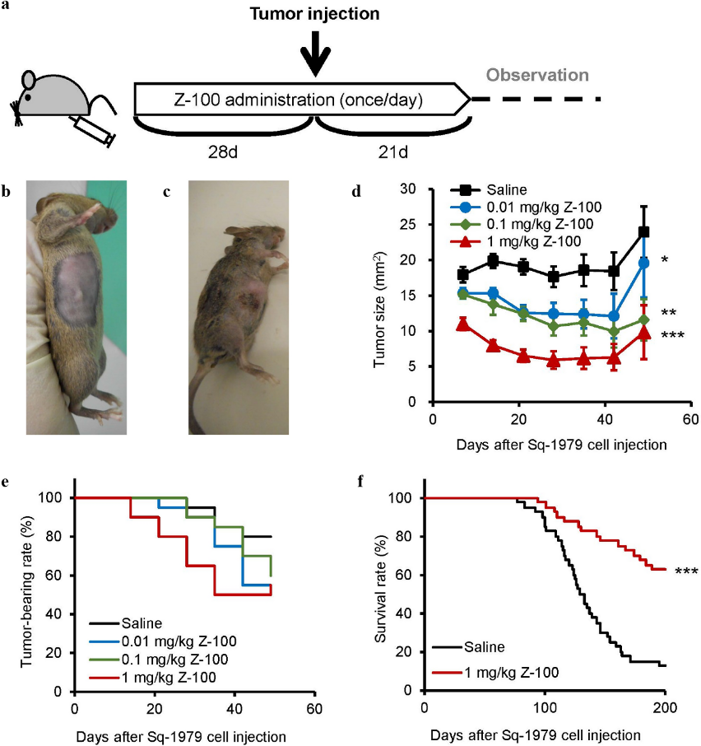
The tumor microenvironment critically determines cancer immunotherapy efficacy, with "hot" tumors showing greater T-cell infiltration and better responses. Z-100, extracted from Mycobacterium tuberculosis Aoyama B strain, increases immune cell cytokine production. Horii et al. examined whether Z-100 can induce hot tumors and enhance antitumor immunity.
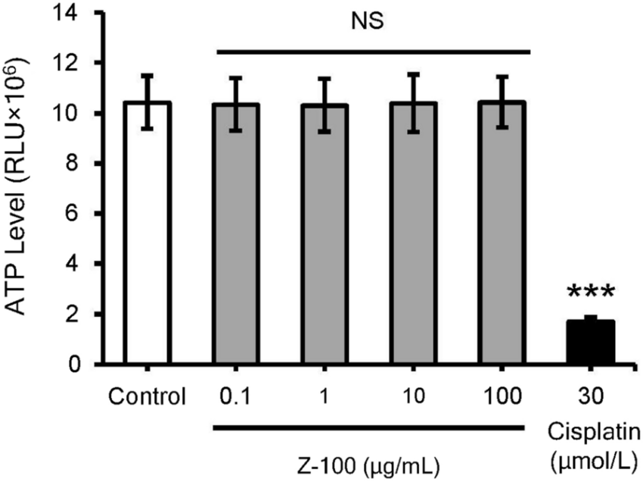
Z-100 has been examined in clinical trials for cervical squamous cell carcinoma, but no standard mouse cervical cancer cell line exists. Therefore, they used Sq-1979, a mouse oral squamous cell carcinoma cell line, for subcutaneous tumor modeling (Fig. 1a-c). Treatment with Z-100 dose-dependently suppressed tumor growth and tumor-bearing rate (Fig. 1d, e). A dosage of 1 mg/kg of Z-100 significantly prolonged survival (Fig. 1f) and decreased tumor size compared to controls. Here we only show comparison of Saline vs. 1 mg/kg Z-100 because of low sample number for the other groups. They also performed ATP assays in vitro and demonstrated that unlike positive control cisplatin, Z-100 did not directly decrease Sq-1979 cell viability (Fig. 2).
Ask a Question
Write your own review
- You May Also Need
Description: Described as secreting a mouse monoclonal antibody (IgG2a) detecting all fibers in skeletal muscle and myosin heavy chains on Western blots and detecting mammalian, chicken, zebrafish, axolotl, ...

Description: Animals were immunized with the B6.1 mouse cytotoxic T cell line.



Description: neuroglial and neuronal character coexpressing ependymoma cell line.
Description: Established by irradiation of the adherent cells in long-term bone marrow cultures derived from C3H/HeNSlc strain mice
- Adipose Tissue-Derived Stem Cells
- Human Neurons
- Mouse Probe
- Whole Chromosome Painting Probes
- Hepatic Cells
- Renal Cells
- In Vitro ADME Kits
- Tissue Microarray
- Tissue Blocks
- Tissue Sections
- FFPE Cell Pellet
- Probe
- Centromere Probes
- Telomere Probes
- Satellite Enumeration Probes
- Subtelomere Specific Probes
- Bacterial Probes
- ISH/FISH Probes
- Exosome Isolation Kit
- Human Adult Stem Cells
- Mouse Stem Cells
- iPSCs
- Mouse Embryonic Stem Cells
- iPSC Differentiation Kits
- Mesenchymal Stem Cells
- Immortalized Human Cells
- Immortalized Murine Cells
- Cell Immortalization Kit
- Adipose Cells
- Cardiac Cells
- Dermal Cells
- Epidermal Cells
- Peripheral Blood Mononuclear Cells
- Umbilical Cord Cells
- Monkey Primary Cells
- Mouse Primary Cells
- Breast Tumor Cells
- Colorectal Tumor Cells
- Esophageal Tumor Cells
- Lung Tumor Cells
- Leukemia/Lymphoma/Myeloma Cells
- Ovarian Tumor Cells
- Pancreatic Tumor Cells
- Mouse Tumor Cells