
Sprague-Dawley (SD) Rat Adipose-Derived Mesenchymal Stem Cells
- Specification
- Scientific Data
- Q & A
- Customer Review
Enhanced Mesenchymal Stromal Cells or Erythropoietin Provide Long-Term Functional Benefit After Neonatal Stroke
Background
Perinatal stroke causes lifelong neurobehavioral deficits, and effective delayed therapies are needed. This study tested intranasal mesenchymal stromal cells (MSCs), MSCs preexposed to erythropoietin (MSC/EPO), and multidose systemic EPO in a postnatal day 10 rat transient middle cerebral artery occlusion model. Treatments were given 3 or 7 days after injury, with behavioral and histological assessment at 2 months. MSC, MSC/EPO, and EPO improved brain volume; MSC/EPO and EPO improved recognition memory. Multidose EPO provided the broadest long-term benefit, including reduced anxiety and improved exploration.
Key Findings
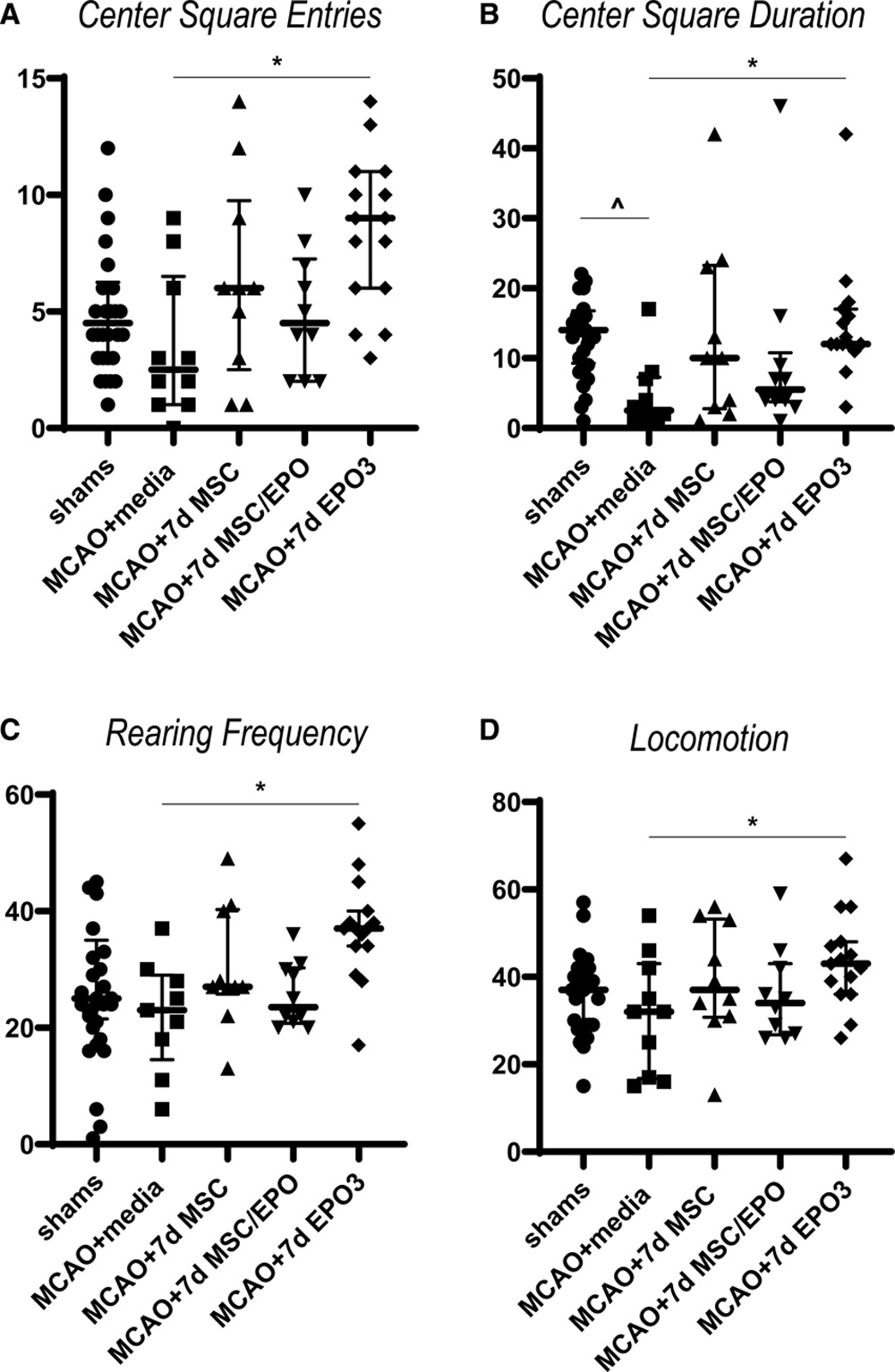
Delayed single-dose intranasal MSC/EPO and multidose systemic EPO both produced long-term functional and histological benefit after neonatal stroke. At 2 months, MSC, MSC/EPO, and EPO3 all improved hemispheric brain volume when administered 3 or 7 days after middle cerebral artery occlusion, though injured volumes remained below sham. MSC/EPO enhanced recognition memory at both day 3 and day 7. Standard MSC showed limited sensorimotor benefit (improved cylinder rearing at day 7) and no consistent cognitive improvement. Multidose EPO (EPO3) had the most consistent long-term benefit: it improved recognition memory at both time points and, with day 7 treatment, increased open-field center entries, center duration, rearing, and locomotion while reducing anxiety. Cell-free conditioned media from MSC/EPO improved brain volume at day 3 but not behavior. No sex-based differences were observed. The authors conclude that EPO may represent a final common pathway for long-term repair, though mechanisms remain unclear.
Contribution
Creative Bioarray provided the rat Sprague-Dawley adipose-derived MSCs used for intranasal MSC and MSC/EPO therapies. These cells were characterized for differentiation potential and surface markers (CD29/CD44/CD90/CD105 positive; CD11b/CD34/CD45 negative), supporting the study’s comparison of standard and EPO-preexposed MSC treatment after neonatal stroke.
Ask a Question
Write your own review
- Adipose Tissue-Derived Stem Cells
- Human Neurons
- Mouse Probe
- Whole Chromosome Painting Probes
- Hepatic Cells
- Renal Cells
- In Vitro ADME Kits
- Tissue Microarray
- Tissue Blocks
- Tissue Sections
- FFPE Cell Pellet
- Probe
- Centromere Probes
- Telomere Probes
- Satellite Enumeration Probes
- Subtelomere Specific Probes
- Bacterial Probes
- ISH/FISH Probes
- Exosome Isolation Kit
- Human Adult Stem Cells
- Mouse Stem Cells
- iPSCs
- Mouse Embryonic Stem Cells
- iPSC Differentiation Kits
- Mesenchymal Stem Cells
- Immortalized Human Cells
- Immortalized Murine Cells
- Cell Immortalization Kit
- Adipose Cells
- Cardiac Cells
- Dermal Cells
- Epidermal Cells
- Peripheral Blood Mononuclear Cells
- Umbilical Cord Cells
- Monkey Primary Cells
- Mouse Primary Cells
- Breast Tumor Cells
- Colorectal Tumor Cells
- Esophageal Tumor Cells
- Lung Tumor Cells
- Leukemia/Lymphoma/Myeloma Cells
- Ovarian Tumor Cells
- Pancreatic Tumor Cells
- Mouse Tumor Cells