
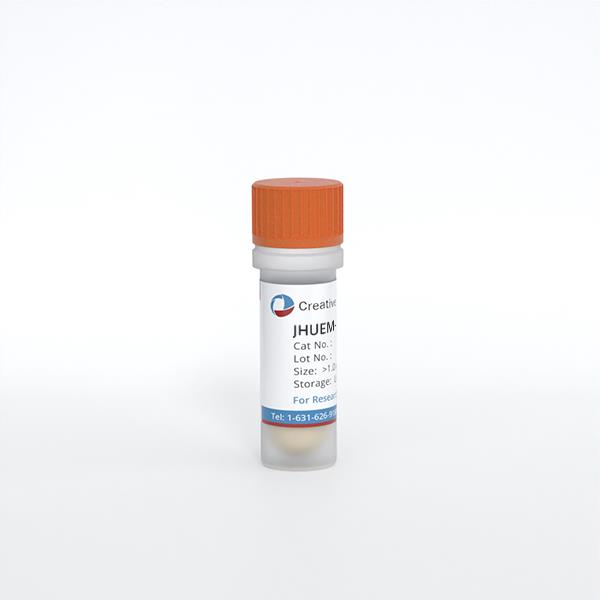
JHUEM-1
Cat.No.: CSC-C6607J
Species: Homo sapiens (Human)
Source: Uterus; Endometrium
Morphology: Epithelial-like
Culture Properties: Adherent
- Specification
- Background
- Scientific Data
- Q & A
- Customer Review
Shipping: Dry Ice, Frozen
JHUEM-1 is a patient-derived endometrial cancer cell line established from the primary, malignant ascites fluid of a patient with advanced stage, high-grade endometrioid endometrial carcinoma (EEC). Unlike traditional models, it was developed and characterized using modern, well-annotated protocols, ensuring its genetic and phenotypic fidelity to the original patient tumor. This places it among a newer generation of highly representative in vitro models. Its most significant defining feature is the presence of a pathogenic, ultra-mutator mutation in the DNA polymerase epsilon exonuclease domain (POLE gene, P286R variant). This places JHUEM-1 within the clinically important POLE-ultramutated (POLEmut) molecular subgroup of endometrial cancer, a subtype characterized by an exceptionally high tumor mutational burden (TMB) and a generally favorable prognosis when detected early.
JHUEM-1 cells exhibit an epithelial morphology. Their defining molecular characteristic is the heterozygous driver mutation in POLE (c.857C>G, p.Pro286Arg), which results in defective proofreading during DNA replication. This leads to an extraordinarily high somatic mutation rate (TMB-H) and the generation of a vast repertoire of potential neoantigens. Consistent with its POLE mutation, the cell line is microsatellite stable (MSS) and estrogen receptor (ER) positive, reflecting a distinct biology separate from the microsatellite instability-high (MSI-H) or copy-number high (serous-like) subtypes. JHUEM-1 is tumorigenic in immunocompromised mice, forming xenografts, and has undergone extensive genomic and transcriptomic profiling.
Proteomic Changes Associated with Endogenous FBXW7 Mutations in Moderately Differentiated Endometrial Cancer Cells
The FBXW7 tumor suppressor gene is frequently mutated in all molecular subtypes of endometrial cancer (EC). The encoded protein is part of a ubiquitin ligase complex that targets substrate proteins for ubiquitination and, in most instances, proteasome-mediated degradation. The purpose of this investigation was to identify the proteomic changes associated with endogenous FBXW7 mutations in EC.
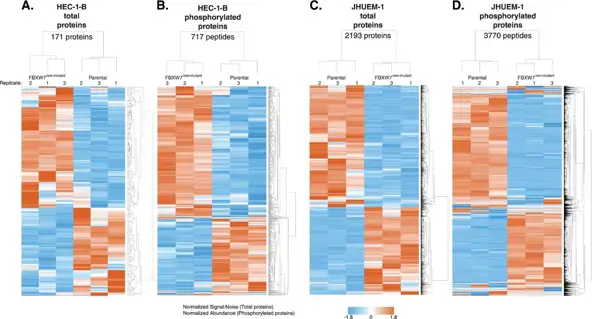
Quantitative LC-MS/MS was used to identify significant differences in the proteomes and phosphoproteomes of two FBXW7-mutated EC cell lines, HEC-1-BFBXW7-R367X and JHUEM-1FBXW7-R505C, as compared to isogenic mutation-corrected cell lines. Western blotting was performed to orthogonally validate a subset of protein changes.
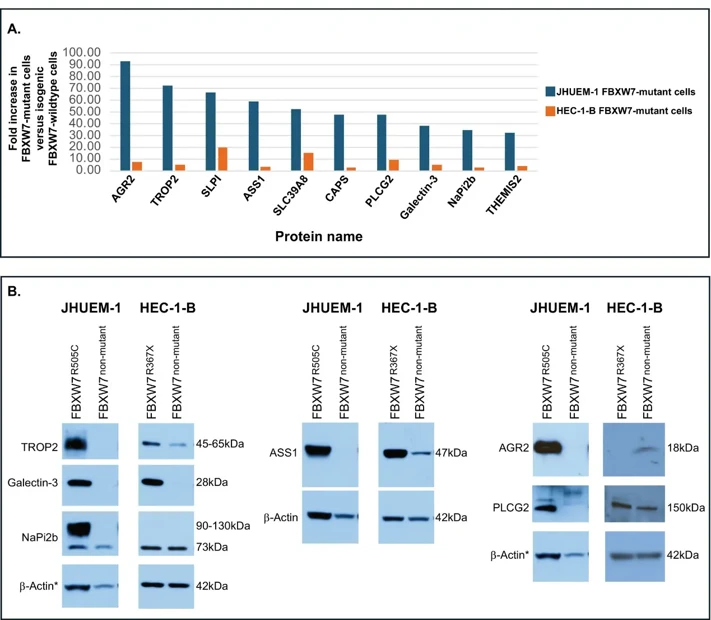
Analysis of LC-MS/MS results identified 397 total proteins and/or phosphoproteins with significantly different levels in both HEC-1-BFBXW7-R367X and JHUEM-1FBXW7-R505C, as compared to isogenic mutation-corrected cell lines. This protein set included increased levels of TROP2, galectin-3, ASS1, and PLCG2 in both HEC-1-BFBXW7-R367X and JHUEM-1FBXW7-R505C cells; these perturbations orthogonally validated by western blotting.
This study provides novel insights into the proteomic and phosphoproteomic effects of the endogenous FBXW7-R367X and FBXW7-R505C mutations in EC cells, including increased levels of galectin-3, a potentially druggable target, and of TROP2, which is a druggable target in EC.
Ask a Question
Write your own review
- You May Also Need
Description: Uterine adenosquamous carcinoma. Said CEA and CA125 producing. Cell growth is slow.
Description: Established from tumor tissue from a 77-year-old woman with recurrence of endometrial carcinoma (adenomatous, partly papillary, grade G3) in 1990; described as forming heterotransplantable tumors in ...
Description: Glassy cell carcinoma. TA-4, CA125, neuron-specific enolase producing.
Description: The cells possess alpha keratin, well defined junctional complexes, tonofilaments and surface microvilli.
- Adipose Tissue-Derived Stem Cells
- Human Neurons
- Mouse Probe
- Whole Chromosome Painting Probes
- Hepatic Cells
- Renal Cells
- In Vitro ADME Kits
- Tissue Microarray
- Tissue Blocks
- Tissue Sections
- FFPE Cell Pellet
- Probe
- Centromere Probes
- Telomere Probes
- Satellite Enumeration Probes
- Subtelomere Specific Probes
- Bacterial Probes
- ISH/FISH Probes
- Exosome Isolation Kit
- Human Adult Stem Cells
- Mouse Stem Cells
- iPSCs
- Mouse Embryonic Stem Cells
- iPSC Differentiation Kits
- Mesenchymal Stem Cells
- Immortalized Human Cells
- Immortalized Murine Cells
- Cell Immortalization Kit
- Adipose Cells
- Cardiac Cells
- Dermal Cells
- Epidermal Cells
- Peripheral Blood Mononuclear Cells
- Umbilical Cord Cells
- Monkey Primary Cells
- Mouse Primary Cells
- Breast Tumor Cells
- Colorectal Tumor Cells
- Esophageal Tumor Cells
- Lung Tumor Cells
- Leukemia/Lymphoma/Myeloma Cells
- Ovarian Tumor Cells
- Pancreatic Tumor Cells
- Mouse Tumor Cells