

Immortalized Porcine Alveolar Macrophages (3D4/21)
Cat.No.: CSC-I2283Z
Morphology: Polygonal
Culture Properties: Adherent
- Specification
- Background
- Scientific Data
- Q & A
- Customer Review
3D4/21 is a continuous, immortalized porcine alveolar macrophage (PAM) cell line derived from primary porcine alveolar macrophages. It provides a stable, reproducible, and readily expandable in vitro model that retains essential macrophage features, including adherent morphology, phagocytic activity, expression of macrophage-associated markers, and responsiveness to microbial stimulation with cytokine and chemokine secretion.
A key advantage of 3D4/21 cells is their susceptibility to porcine reproductive and respiratory syndrome virus (PRRSV). They express macrophage receptors relevant to PRRSV entry and support productive infection, making them a practical platform for viral isolation, propagation, titration, and mechanistic studies of virus–host interactions. They are also valuable for investigating innate immune signaling, inflammatory responses, and macrophage polarization in pigs, as well as for evaluating antiviral compounds, vaccine candidates, and immunomodulators. As a homogeneous line, they reduce variability associated with mixed primary PAM cultures and enable reproducible quantification of infection and immune responses. The line is compatible with common molecular and functional techniques, including transfection, RNA interference, CRISPR-based editing, flow cytometry, ELISA, and high-content imaging, facilitating drug screening and target validation.
Because immortalization can alter some phenotypic and functional properties, results should be validated against primary PAMs when physiological fidelity is critical. Overall, 3D4/21 cells combine macrophage-like biology with the convenience and scalability of a continuous cell line, offering a robust, ethically favorable, and cost-effective tool for swine respiratory disease research, immunology, and antiviral development.
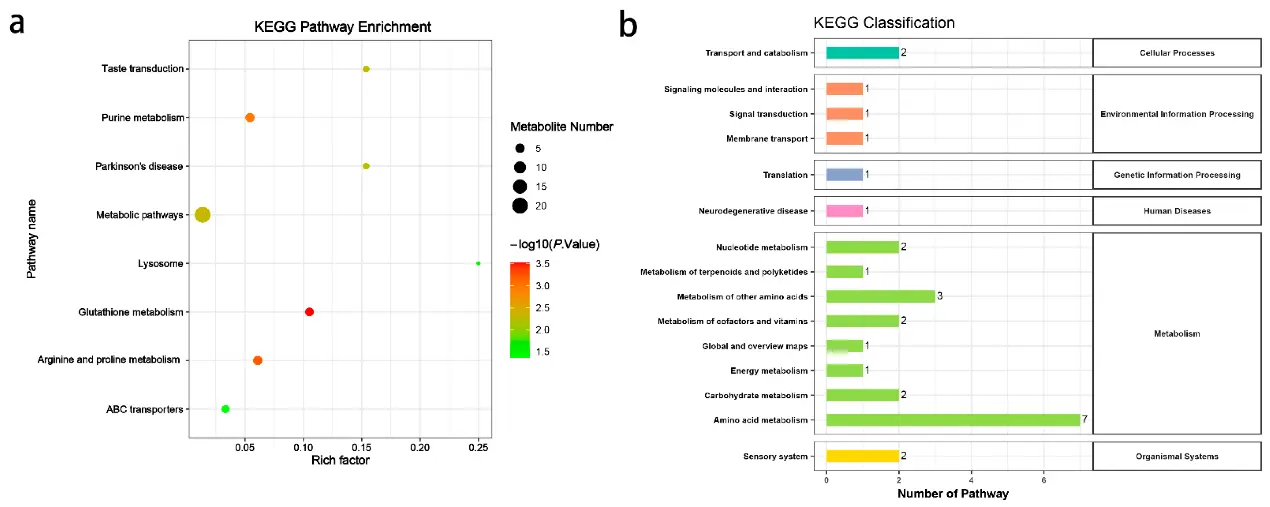
Evaluation of Metabolic Characteristics Induced by Deoxynivalenol in 3D4/21 Cells
Deoxynivalenol (DON) is a common mycotoxin that causes immunosuppression in pigs. Its effects on cellular metabolism remain unclear. In this study, DON-induced metabolic alterations were investigated in porcine alveolar macrophage cell line 3D4/21 using non-targeted metabolomics. MTT assays showed DON reduced cell viability in a concentration- and time-dependent manner. Principal component analysis (PCA) and orthogonal partial least squares discriminant analysis (OPLS-DA) revealed distinct metabolic profiles between control and DON-treated groups. Metabolomic analysis identified 127 differential metabolites, primarily in purine metabolism, glutathione metabolism, and arginine–proline metabolism. Integration with transcriptomic data confirmed that these pathways play key roles in DON-induced immunotoxicity. Specifically, changes in purine metabolism suggested disrupted nucleotide synthesis and energy balance, while glutathione depletion indicated weakened antioxidant defense. These findings provided a systems biology perspective on DON’s metabolic reprogramming of immune cells and identified potential therapeutic targets to reduce mycotoxin-related immunosuppression in swine.
Ask a Question
Write your own review
Description: The Immortalized Drosophila Embryonic Cells (R1) was established by serial passaging of primary cultures from Act5C > UAS-RasV12embryos. The RasV12immortalized cell lines have significantly ...
Description: Immortalized Cynomolgus Monkey Pulmonary Artery Smooth Muscle Cells-GFP provided by Creative Bioarray have been developed by immortalizing cynomolgus monkey pulmonary artery smooth muscle cells with ...
Description: Immortalized Monkey Spleen Fibroblasts-SV40T were developed from monkey tissues transduced with a lentiviral expression vector containing the SV40T gene. The cell line was continuously cultured for ...
Description: Immortalized Cynomolgus Monkey Prostate Smooth Muscle Cells-GFP provided by Creative Bioarray have been developed by immortalizing cynomolgus monkey prostate smooth muscle cells with SV40 Large T ...
Description: Immortalized Cynomolgus Monkey Spleen Epithelial Cells-GFP provided by Creative Bioarray have been developed by immortalizing cynomolgus monkey spleen epithelial cells with SV40 Large T antigen and ...
Description: Immortalized Mouse Esophageal Epithelial Cells-SV40 have been obtained immortalizing Mouse Esophageal Epithelial Cells with Lenti-SV40 Lentivirus. Immortalized cells were controlled passaging side by ...
- Adipose Tissue-Derived Stem Cells
- Human Neurons
- Mouse Probe
- Whole Chromosome Painting Probes
- Hepatic Cells
- Renal Cells
- In Vitro ADME Kits
- Tissue Microarray
- Tissue Blocks
- Tissue Sections
- FFPE Cell Pellet
- Probe
- Centromere Probes
- Telomere Probes
- Satellite Enumeration Probes
- Subtelomere Specific Probes
- Bacterial Probes
- ISH/FISH Probes
- Exosome Isolation Kit
- Human Adult Stem Cells
- Mouse Stem Cells
- iPSCs
- Mouse Embryonic Stem Cells
- iPSC Differentiation Kits
- Mesenchymal Stem Cells
- Immortalized Human Cells
- Immortalized Murine Cells
- Cell Immortalization Kit
- Adipose Cells
- Cardiac Cells
- Dermal Cells
- Epidermal Cells
- Peripheral Blood Mononuclear Cells
- Umbilical Cord Cells
- Monkey Primary Cells
- Mouse Primary Cells
- Breast Tumor Cells
- Colorectal Tumor Cells
- Esophageal Tumor Cells
- Lung Tumor Cells
- Leukemia/Lymphoma/Myeloma Cells
- Ovarian Tumor Cells
- Pancreatic Tumor Cells
- Mouse Tumor Cells