
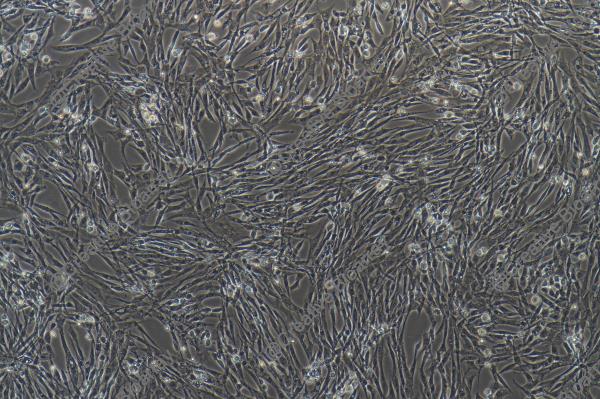
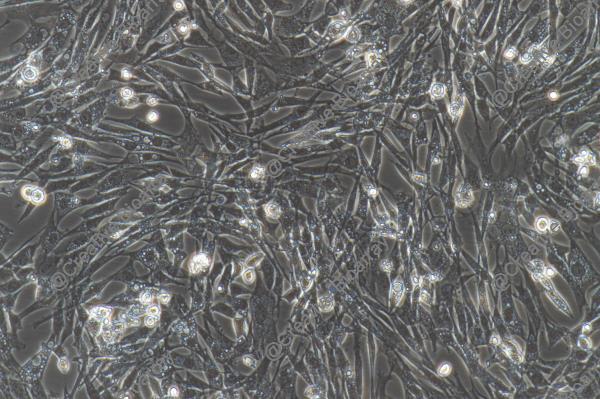
Immortalized Chicken Skeletal Muscle Cells-SV40
Cat.No.: CSC-I9234L
Species: Chicken
Source: Skeletal Muscle
Culture Properties: Adherent
- Specification
- Scientific Data
- Q & A
- Customer Review
Note: Never can cells be kept at -20°C.
3D bioprinting of plant and animal cell-based hybrid food
Background
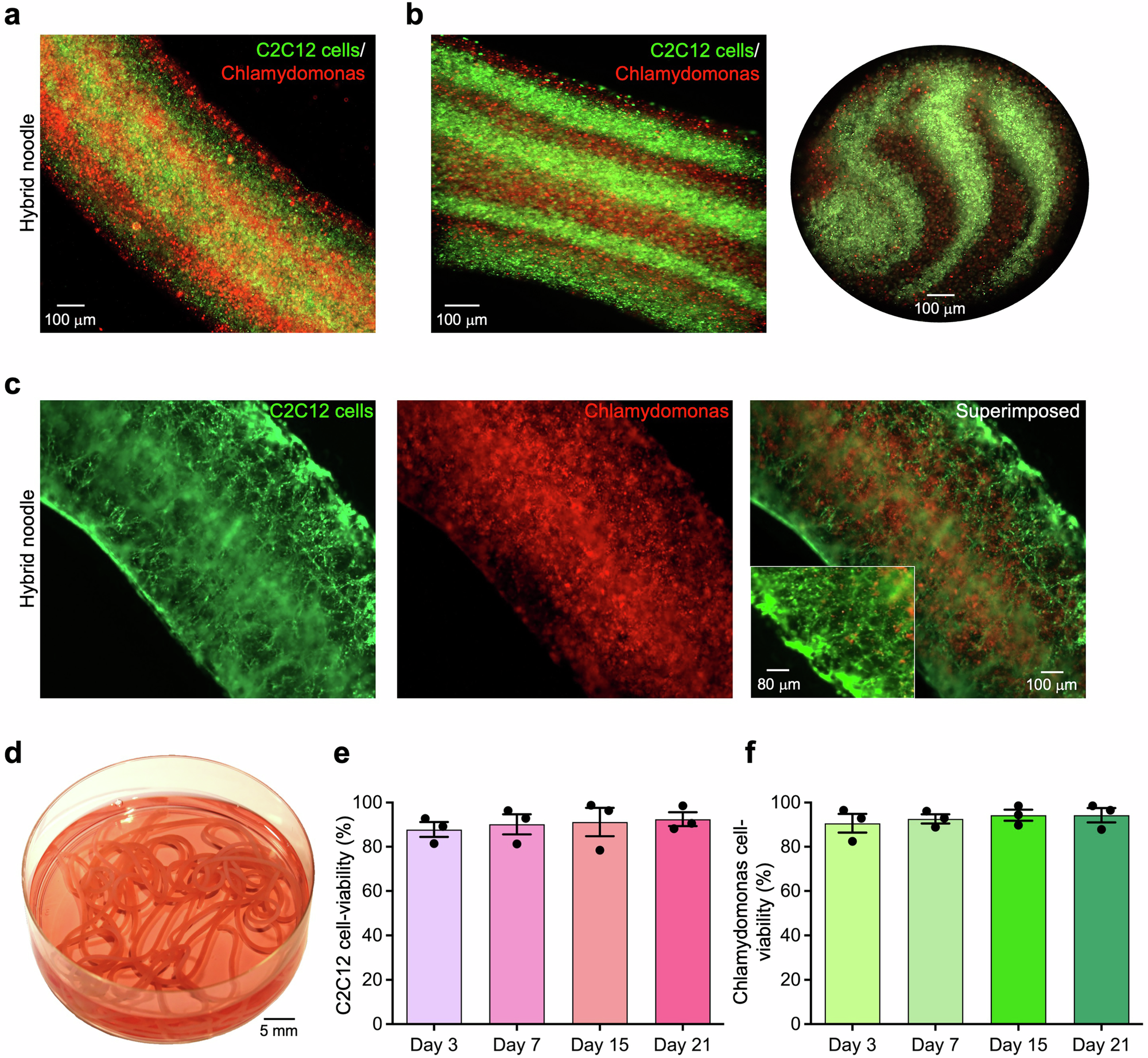
This study introduces fully automated chaotic bioprinting with a custom extrusion setup and an integrated Kenics static mixer printhead to fabricate plant- and animal-cell hybrid foods. Hybrid noodles contain 30–40% microalgae (Chlamydomonas or Chlorella) and 60–70% muscle cells (C2C12 or chicken myoblasts). The authors optimized alginate–gelatin bioinks and co-culture media, bioprinted noodles with aligned lamellar microstructures, and created 3D food designs such as donuts and drumsticks. Textural, nutritional, and cooking behaviors were evaluated, demonstrating a proof-of-concept for customizable, sustainable hybrid foods with precision and efficiency.
Key Findings
A fully automated chaotic bioprinting platform using a Kenics static mixer printhead enabled continuous production of plant–animal hybrid noodles with internally aligned lamellar microstructures. The optimized bioinks, 1% medium-viscosity alginate–5% gelatin for microalgae and 2% low-viscosity alginate–5% gelatin for muscle cells, supported high viability (>95%) and long-term co-culture. A 3:1 DMEM:TAP medium balanced C2C12 myoblast and Chlamydomonas growth, with microalgae-derived O2 reducing LDH activity and enhancing C2C12 proliferation and myogenic differentiation. Differentiated C2C12 cells aligned along the noodle axis and expressed skeletal muscle myosin, sarcomeric α-actinin, and MYH2. The system produced diverse 3D hybrid foods, including donuts, drumsticks, and cuboids, and was extended to chicken muscle cell–microalga noodles. Cooking tests showed boiling decreased and baking increased Young’s modulus. The process achieved ~12 g/min throughput, demonstrating scalable, customizable hybrid food fabrication.
Contribution
Creative Bioarray provided the immortalized chicken skeletal muscle cells (CSC-I9234L) and CMC medium (CM-I9234L) used in this study. These reagents enabled the bioprinting and 21-day culture of chicken cell–microalga hybrid noodles, supporting assessment of chicken cell viability, proliferation, F-actin, MYH2, and skeletal muscle myosin expression.
Immortalized Chicken Skeletal Muscle Cells-SV40 are chicken muscle cells that have been genetically modified with SV40 large T antigen to go beyond 20 passages. This modification enables them to overcome the normal senescence seen in primary cells, allowing for extensive study and experimentation.
These cells are invaluable for consistent, long-term studies in muscle biology. They provide a stable, reproducible platform for applications such as muscle physiology, regenerative medicine research, drug testing, and genetic studies, ensuring more reliable and robust data.
The immortalization process involves introducing the SV40 large T antigen into chicken skeletal muscle cells. This gene promotes continuous cell division while maintaining the essential properties of the muscle cells, facilitating extended research capabilities.
Immortalized Chicken Skeletal Muscle Cells-SV40 (Cat No.: CSC-I9234L) are perfect for a variety of applications, including muscle development and regeneration studies, disease modeling for myopathies, drug screening and toxicity testing, and functional genomic studies focused on muscle-specific genes and pathways.
Immortalized cells provide a constant, renewable source of cells with uniform characteristics, reducing variability typically associated with primary cells. They facilitate long-term experiments without the limitations of primary cell lifespan and donor variability.
Our Immortalized Chicken Skeletal Muscle Cells come with comprehensive culture guidelines, specifying the appropriate media, supplements, and environmental conditions required for optimal growth and maintenance, ensuring the best experimental outcomes.
Ask a Question
Write your own review

Description: Immortalized Cynomolgus Monkey Pulmonary Artery Smooth Muscle Cells-GFP provided by Creative Bioarray have been developed by immortalizing cynomolgus monkey pulmonary artery smooth muscle cells with ...
Description: Immortalized Monkey Spleen Fibroblasts-SV40T were developed from monkey tissues transduced with a lentiviral expression vector containing the SV40T gene. The cell line was continuously cultured for ...
Description: Immortalized Monkey Bronchial Fibroblasts-GFP provided by Creative Bioarray have been developed by immortalizing monkey bronchial fibroblasts with SV40 Large T antigen and transfecting with tGFP. The ...
Description: Immortalized Canine Kidney Fibroblasts-SV40 have been obtained immortalizing Canine Kidney Fibroblasts with Lenti-SV40 Lentivirus. Immortalized cells were controlled passaging side by side with the ...
Description: Immortalized Monkey Primary Aortic Endothelial Cells-GFP provided by Creative Bioarray have been developed by immortalizing primary monkey aortic endothelial cells with SV40 Large T antigen and ...
Description: Immortalized Monkey Pancreatic Epithelial Cells-SV40T were developed from monkey tissues transduced with a lentiviral expression vector containing the SV40T gene. The cell line was continuously ...
- Adipose Tissue-Derived Stem Cells
- Human Neurons
- Mouse Probe
- Whole Chromosome Painting Probes
- Hepatic Cells
- Renal Cells
- In Vitro ADME Kits
- Tissue Microarray
- Tissue Blocks
- Tissue Sections
- FFPE Cell Pellet
- Probe
- Centromere Probes
- Telomere Probes
- Satellite Enumeration Probes
- Subtelomere Specific Probes
- Bacterial Probes
- ISH/FISH Probes
- Exosome Isolation Kit
- Human Adult Stem Cells
- Mouse Stem Cells
- iPSCs
- Mouse Embryonic Stem Cells
- iPSC Differentiation Kits
- Mesenchymal Stem Cells
- Immortalized Human Cells
- Immortalized Murine Cells
- Cell Immortalization Kit
- Adipose Cells
- Cardiac Cells
- Dermal Cells
- Epidermal Cells
- Peripheral Blood Mononuclear Cells
- Umbilical Cord Cells
- Monkey Primary Cells
- Mouse Primary Cells
- Breast Tumor Cells
- Colorectal Tumor Cells
- Esophageal Tumor Cells
- Lung Tumor Cells
- Leukemia/Lymphoma/Myeloma Cells
- Ovarian Tumor Cells
- Pancreatic Tumor Cells
- Mouse Tumor Cells