
FFPE FISH Pretreatment Kit
- Specification
- Scientific Data
- Q & A
- Customer Review
500ml
Modulating Bacteroides to boost anti-PD-1 immunotherapy in HCC
Background
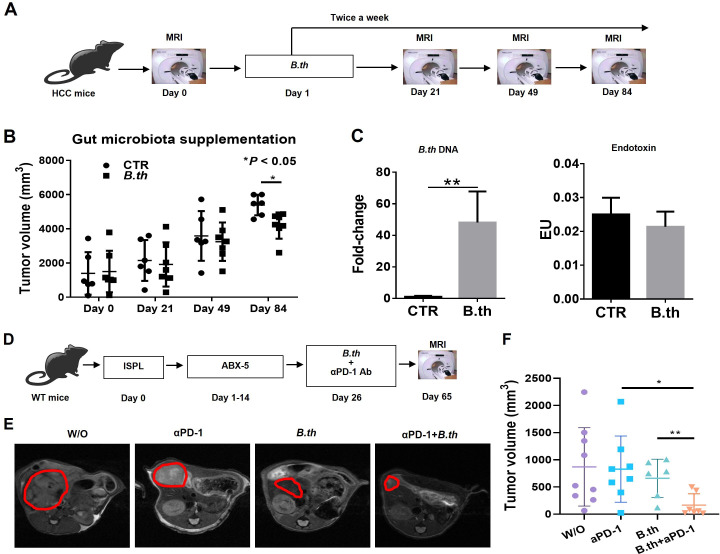
The gut microbiota influences immunotherapy responses in hepatocellular carcinoma (HCC). This study explored whether Bacteroides enrichment enhances anti-PD-1 efficacy. Using murine HCC models, human fecal microbiota transplantation, antibiotic cocktails, and Bacteroides thetaiotaomicron (B.th) supplementation, the authors demonstrated that B.th potentiates anti-PD-1 therapy. Mechanistically, B.th downregulates KLF2 and upregulates TLR9 in dendritic cells, promoting antigen-specific CD8+ T cell activation and tumor regression. These findings suggest that microbiota-targeted strategies could improve immunotherapy outcomes in HCC.
Key Findings
1) Enriched Bacteroides in gut microbiota correlates with improved anti-PD-1 response in HCC patients. 2) Human FMT from responders enhanced anti-PD-1 efficacy in murine HCC. 3) Antibiotic cocktail ABX-3 selectively enriched Bacteroides, delayed HCC initiation, and suppressed established tumors. 4) ABX-3 activated tumor antigen-specific CD8+ T cells and synergized with adoptive T cell transfer. 5) B. thetaiotaomicron (B.th) supplementation alone slowed tumor growth and potentiated anti-PD-1 therapy. 6) Single-cell RNA-seq revealed that B.th plus anti-PD-1 downregulated KLF2 and upregulated TLR9 in plasmacytoid dendritic cells. 7) KLF2 overexpression in dendritic cells abrogated the antitumor effect, while TLR9 deficiency impaired ABX-3-mediated HCC suppression. 8) KLF2 knockdown increased TLR9 expression, and TLR9 knockdown attenuated DC-mediated T cell activation. These findings identify B.th as a key microbial adjuvant that reprograms DCs via KLF2/TLR9 to enhance CD8+ T cell immunity in HCC.
Contribution
Creative Bioarray provided the Cy5-labeled Bacteroides-specific FISH probe BAC1080 and the FFPE FISH Pretreatment Kit. These reagents enabled fluorescence in situ hybridization detection of Bacteroides thetaiotaomicron genomic DNA in liver and tumor tissues, supporting the study's investigation of bacterial translocation and localization within the tumor microenvironment.
Ask a Question
Write your own review
- Adipose Tissue-Derived Stem Cells
- Human Neurons
- Mouse Probe
- Whole Chromosome Painting Probes
- Hepatic Cells
- Renal Cells
- In Vitro ADME Kits
- Tissue Microarray
- Tissue Blocks
- Tissue Sections
- FFPE Cell Pellet
- Probe
- Centromere Probes
- Telomere Probes
- Satellite Enumeration Probes
- Subtelomere Specific Probes
- Bacterial Probes
- ISH/FISH Probes
- Exosome Isolation Kit
- Human Adult Stem Cells
- Mouse Stem Cells
- iPSCs
- Mouse Embryonic Stem Cells
- iPSC Differentiation Kits
- Mesenchymal Stem Cells
- Immortalized Human Cells
- Immortalized Murine Cells
- Cell Immortalization Kit
- Adipose Cells
- Cardiac Cells
- Dermal Cells
- Epidermal Cells
- Peripheral Blood Mononuclear Cells
- Umbilical Cord Cells
- Monkey Primary Cells
- Mouse Primary Cells
- Breast Tumor Cells
- Colorectal Tumor Cells
- Esophageal Tumor Cells
- Lung Tumor Cells
- Leukemia/Lymphoma/Myeloma Cells
- Ovarian Tumor Cells
- Pancreatic Tumor Cells
- Mouse Tumor Cells