
SuperCult® RPMI 1640 Medium
- Specification
- Scientific Data
- Q & A
- Customer Review
RPMI 1640 is unique from other media because it contains the reducing agent glutathione and high concentrations of vitamins. RPMI 1640 contains biotin, vitamin B12 and PABA which are not found in Eagle's Minimal Essential Medium or Dulbecco's Modified Eagle Medium. In addition, the vitamins inositol and choline are present in very high concentrations.
Shipping conditions: Ambient
Shelf life: 12 months from date of manufacture
HOTAIR knockdown impairs metastasis of cervical cancer cells by down-regulating metastasis-related genes
Background
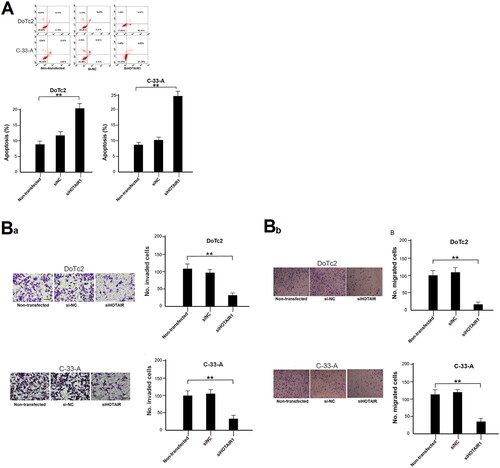
This study investigated the effects of lncRNA HOTAIR knockdown in cervical cancer cells. HOTAIR was silenced by siRNA in DoTc2 and C-33-A cells, followed by assays for proliferation, apoptosis, migration, invasion, and metastasis-related gene expression. HOTAIR knockdown reduced cell viability, increased apoptosis, and suppressed migration and invasion. Notch1, EpCAM, vimentin, and STAT3 were down-regulated, while E-cadherin was up-regulated. Rescue experiments suggested Notch1 and STAT3 contribute to the siHOTAIR-mediated inhibition of migration and invasion. These findings support HOTAIR as a potential therapeutic target in cervical cancer.
Key Findings
HOTAIR knockdown by siHOTAIR1 significantly reduced HOTAIR transcript levels in DoTc2 and C-33-A cervical cancer cells. Compared with controls, siHOTAIR-transfected cells showed decreased viability, increased early and late apoptosis, and significantly reduced migration and invasion. Molecular analysis revealed that Notch1, EpCAM, vimentin, and STAT3 mRNA and protein levels were down-regulated, whereas E-cadherin was up-regulated after HOTAIR silencing. Rescue experiments showed that overexpression of both Notch1 and STAT3, but not either alone, partially restored the reduced migration and invasion caused by siHOTAIR. These results indicate that HOTAIR promotes malignant behaviors in cervical cancer cells, at least partly through Notch1/STAT3-related pathways, and support HOTAIR-targeted siRNA as a potential therapeutic strategy.
Contribution
Creative Bioarray provided the RPMI-1640 medium (M0159, Shirley, NY, USA) used for culturing DoTc2 and C-33-A cervical cancer cells. This reagent supported cell maintenance and the subsequent transfection, proliferation, apoptosis, migration, and invasion experiments, enabling the study's functional and molecular analyses.
Ask a Question
Write your own review
- Adipose Tissue-Derived Stem Cells
- Human Neurons
- Mouse Probe
- Whole Chromosome Painting Probes
- Hepatic Cells
- Renal Cells
- In Vitro ADME Kits
- Tissue Microarray
- Tissue Blocks
- Tissue Sections
- FFPE Cell Pellet
- Probe
- Centromere Probes
- Telomere Probes
- Satellite Enumeration Probes
- Subtelomere Specific Probes
- Bacterial Probes
- ISH/FISH Probes
- Exosome Isolation Kit
- Human Adult Stem Cells
- Mouse Stem Cells
- iPSCs
- Mouse Embryonic Stem Cells
- iPSC Differentiation Kits
- Mesenchymal Stem Cells
- Immortalized Human Cells
- Immortalized Murine Cells
- Cell Immortalization Kit
- Adipose Cells
- Cardiac Cells
- Dermal Cells
- Epidermal Cells
- Peripheral Blood Mononuclear Cells
- Umbilical Cord Cells
- Monkey Primary Cells
- Mouse Primary Cells
- Breast Tumor Cells
- Colorectal Tumor Cells
- Esophageal Tumor Cells
- Lung Tumor Cells
- Leukemia/Lymphoma/Myeloma Cells
- Ovarian Tumor Cells
- Pancreatic Tumor Cells
- Mouse Tumor Cells