
QualiCell® Human Adult Ventricular Cardiac Stem Cells -XLC452
- Specification
- Scientific Data
- Q & A
- Customer Review
Intracellular MMP9 mediates epigenetic modifications and autophagy to regulate differentiation in human cardiac stem cells
Background
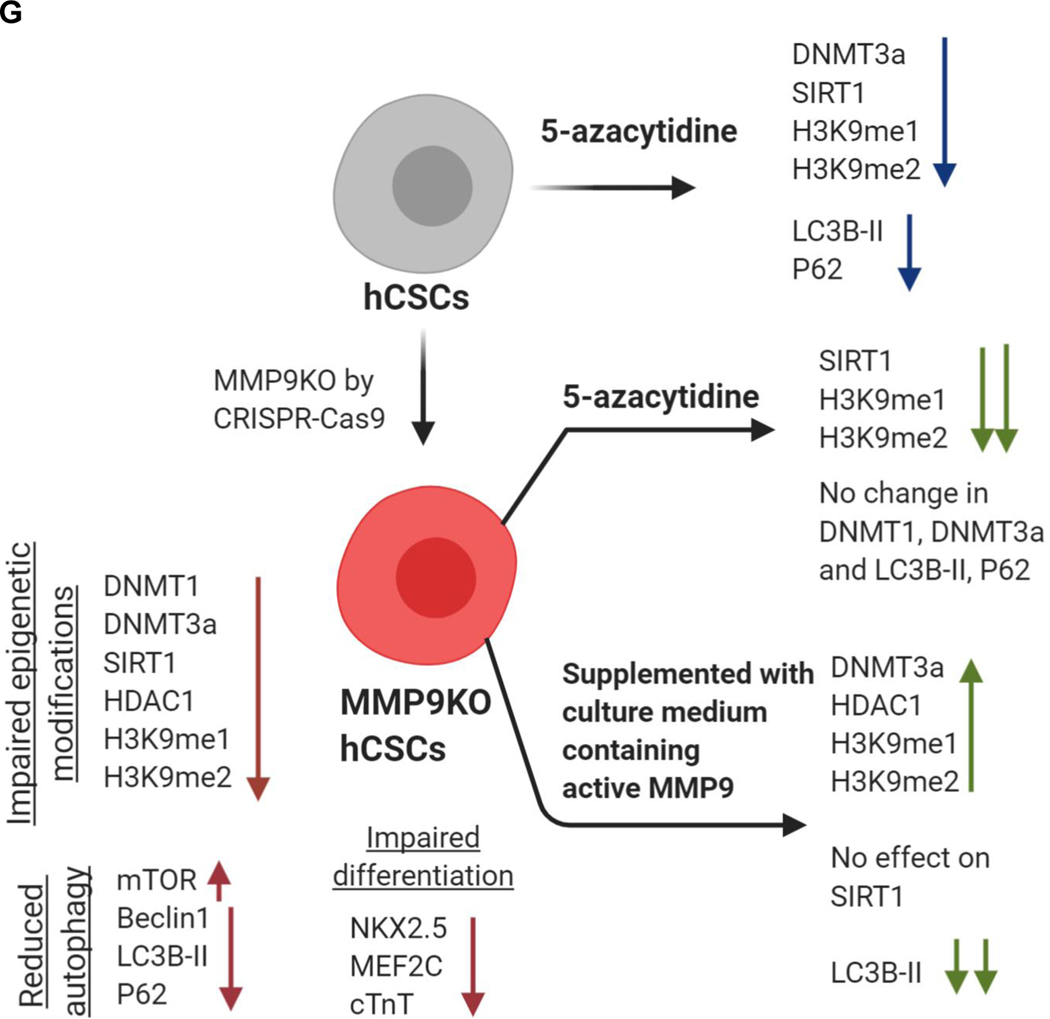
Epigenetic reprogramming and autophagy are critical for stem cell differentiation, but how they are mediated in human cardiac stem cells (hCSCs) remains unclear. This study investigated intracellular matrix metalloproteinase-9 (MMP9) in hCSCs using CRISPR/Cas9-mediated MMP9 knockout, 5-azacytidine, and bafilomycin A1. Loss of MMP9 compromised DNA methylation, histone deacetylation, and histone methylation, reduced autophagosome formation via mTOR/Beclin1, and impaired cardiac lineage differentiation. Paracrine MMP9 restored epigenetic modifiers but further reduced autophagy, indicating differential endocrine/paracrine roles in hCSCs.
Key Findings
MMP9 knockout hCSCs showed decreased DNMT1, DNMT3a, SIRT1, HDAC1, H3K9me1, and H3K9me2, indicating compromised epigenetic modifications. 5-azacytidine reduced DNMT3a, H3K9me1, H3K9me2, LC3BII, and p62, linking DNA methylation inhibition to suppressed autophagy. MMP9-deficient hCSCs exhibited lower LC3BII and p62, reduced Beclin1, increased phospho-mTOR, and no change in autophagic flux after bafilomycin A1, suggesting impaired autophagosome formation rather than flux. Paracrine MMP9 supplementation restored DNMT3a, H3K9me1, H3K9me2, and HDAC1, but not SIRT1, and further decreased LC3BII while restoring p62. Cardiac lineage markers cTnT, MEF2C, and NKX2.5 were downregulated in MMP9KO hCSCs. Thus, intracellular MMP9 mediates epigenetic modifications and autophagy to promote hCSC differentiation; endocrine and paracrine MMP9 have divergent effects on autophagy.
Contribution
Creative Bioarray provided human adult ventricular cardiac stem cells (CSC-00305) and their dedicated culture medium (CM 1330Z), which supplied critical cellular materials and culture support for the establishment of the hCSC model, CRISPR/Cas9-mediated MMP9 knockout, and subsequent analyses of epigenetic modifications, autophagy, and differentiation in this study.
MMP9 mediates acute hyperglycemia-induced human cardiac stem cell death by upregulating apoptosis and pyroptosis in vitro
Background
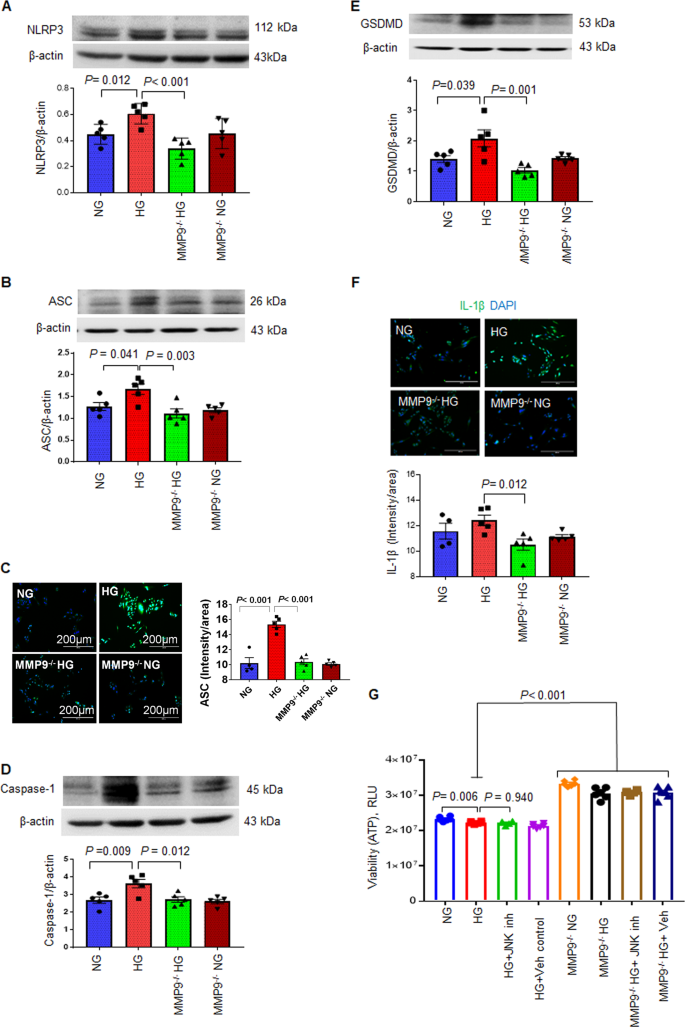
Hyperglycemia impairs cardiac regeneration by promoting stem cell death in diabetic hearts. This study investigated whether MMP9 mediates high glucose-induced death of human cardiac stem cells (hCSCs). Using CRISPR-Cas9 to generate MMP9-/- hCSCs, the authors found that hyperglycemia increases oxidative stress and induces both apoptosis and pyroptosis. MMP9 ablation prevented these effects, improving cell viability. The findings reveal a novel intracellular role of MMP9 in stem cell death and suggest that MMP9 inhibition could enhance hCSC survival in regenerative therapy for diabetic hearts.
Key Findings
Hyperglycemia upregulated MMP9 activity and increased hCSC death via apoptosis and pyroptosis. In MMP9-/- hCSCs, high glucose failed to induce caspase-3 activation, PARP cleavage, BAD upregulation, and cytochrome c release, indicating blocked apoptosis. Similarly, pyroptosis markers NLRP3, ASC, caspase-1, GSDMD, and IL-1β were not upregulated in MMP9-/- cells. MMP9 deletion also prevented hyperglycemia-induced ROS production and SAPK/JNK activation, and improved cell viability. Under H2O2-induced oxidative stress, MMP9-/- hCSCs showed reduced apoptosis and pyroptosis. These results demonstrate that MMP9 mediates hyperglycemia-induced hCSC death through the ROS-JNK pathway, and its absence enhances stem cell survival.
Contribution
Creative Bioarray provided human adult ventricular cardiac stem cells (hCSCs) and the corresponding culture medium (CM 1330Z). These cells expressed Sca1+, MEF2C, and Nkx2.5, and lacked β-MHC, confirming their undifferentiated state. They were essential for generating MMP9-/- hCSCs and investigating hyperglycemia-induced cell death mechanisms.
Ask a Question
Write your own review
- You May Also Need
- Adipose Tissue-Derived Stem Cells
- Human Neurons
- Mouse Probe
- Whole Chromosome Painting Probes
- Hepatic Cells
- Renal Cells
- In Vitro ADME Kits
- Tissue Microarray
- Tissue Blocks
- Tissue Sections
- FFPE Cell Pellet
- Probe
- Centromere Probes
- Telomere Probes
- Satellite Enumeration Probes
- Subtelomere Specific Probes
- Bacterial Probes
- ISH/FISH Probes
- Exosome Isolation Kit
- Human Adult Stem Cells
- Mouse Stem Cells
- iPSCs
- Mouse Embryonic Stem Cells
- iPSC Differentiation Kits
- Mesenchymal Stem Cells
- Immortalized Human Cells
- Immortalized Murine Cells
- Cell Immortalization Kit
- Adipose Cells
- Cardiac Cells
- Dermal Cells
- Epidermal Cells
- Peripheral Blood Mononuclear Cells
- Umbilical Cord Cells
- Monkey Primary Cells
- Mouse Primary Cells
- Breast Tumor Cells
- Colorectal Tumor Cells
- Esophageal Tumor Cells
- Lung Tumor Cells
- Leukemia/Lymphoma/Myeloma Cells
- Ovarian Tumor Cells
- Pancreatic Tumor Cells
- Mouse Tumor Cells