
Mouse Chromosome Y Paint Probe
- Specification
- Scientific Data
- Q & A
- Customer Review
- Documents
 For Research Use Only. Not for use in diagnostic procedures.
Savior Siblings Might Rescue Fetal Lethality But Not Adult Lymphoma in Irf2bp2-Null Mice
Background
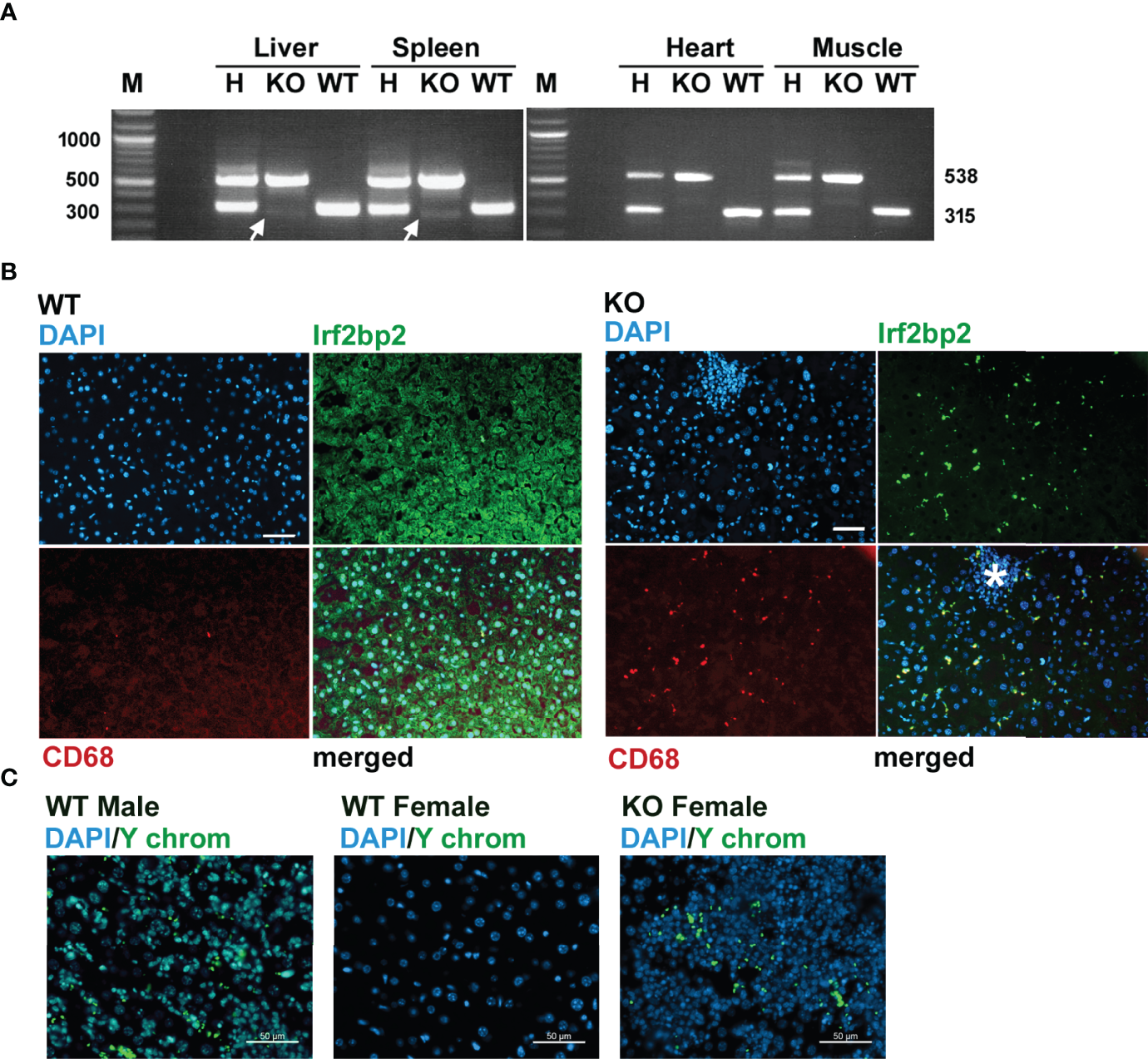
Germline Irf2bp2 ablation causes fetal lethality due to defective erythropoiesis, but some null mice survive in later litters. Adult survivors develop lymphoma. Transcriptome profiling shows interferon-responsive gene upregulation. Unexpectedly, Irf2bp2-positive myeloid cells are found in livers of null mice. In females, these cells carry Y chromosomes; in males, no Barr bodies are detected, indicating they originate from male siblings of prior litters via transmaternal microchimerism. These cells likely rescue fetal erythropoiesis but do not prevent adult lymphoma.
Key Findings
Irf2bp2-null mice exhibit fetal lethality in first litters, with fewer than one-third expected null pups born in subsequent litters and half surviving to adulthood. Adult Irf2bp2-null mice develop lymphoma, showing splenomegaly, hepatomegaly, lymphocytic infiltration, and elevated PD-L1. Transcriptome profiling of liver, heart, and skeletal muscle reveals predominant upregulation of interferon-responsive genes and hematopoietic stem cell transcription factors (Etv6, Fli1, Ikzf1, Runx1) in liver. Intriguingly, Irf2bp2-positive myeloid cells are detected in livers of adult null mice. In female null mice, these cells carry a Y chromosome; in male null livers, no Barr bodies are found, indicating they derive from male siblings of prior litters via transmaternal microchimerism. These chimeric erythromyeloid cells likely rescue the fetal erythropoiesis deficit but do not prevent adult-onset lymphoma caused by Irf2bp2 loss.
Contribution
Creative Bioarray provided the Y chromosome-specific fluorescent probe used for in situ hybridization, enabling detection of male cells in female Irf2bp2-null livers. This reagent was critical for demonstrating transmaternal microchimerism, supporting the conclusion that sibling-derived erythromyeloid cells rescue fetal lethality but not adult lymphoma.
Ask a Question
Write your own review
 Datasheet
- Adipose Tissue-Derived Stem Cells
- Human Neurons
- Mouse Probe
- Whole Chromosome Painting Probes
- Hepatic Cells
- Renal Cells
- In Vitro ADME Kits
- Tissue Microarray
- Tissue Blocks
- Tissue Sections
- FFPE Cell Pellet
- Probe
- Centromere Probes
- Telomere Probes
- Satellite Enumeration Probes
- Subtelomere Specific Probes
- Bacterial Probes
- ISH/FISH Probes
- Exosome Isolation Kit
- Human Adult Stem Cells
- Mouse Stem Cells
- iPSCs
- Mouse Embryonic Stem Cells
- iPSC Differentiation Kits
- Mesenchymal Stem Cells
- Immortalized Human Cells
- Immortalized Murine Cells
- Cell Immortalization Kit
- Adipose Cells
- Cardiac Cells
- Dermal Cells
- Epidermal Cells
- Peripheral Blood Mononuclear Cells
- Umbilical Cord Cells
- Monkey Primary Cells
- Mouse Primary Cells
- Breast Tumor Cells
- Colorectal Tumor Cells
- Esophageal Tumor Cells
- Lung Tumor Cells
- Leukemia/Lymphoma/Myeloma Cells
- Ovarian Tumor Cells
- Pancreatic Tumor Cells
- Mouse Tumor Cells