
Mouse Chromosome 8 Paint Probe
- Specification
- Scientific Data
- Q & A
- Customer Review
- Documents
 For Research Use Only. Not for use in diagnostic procedures.
Replication Stress Response Modifies Sarcomeric Cardiomyopathy Remodeling
Background
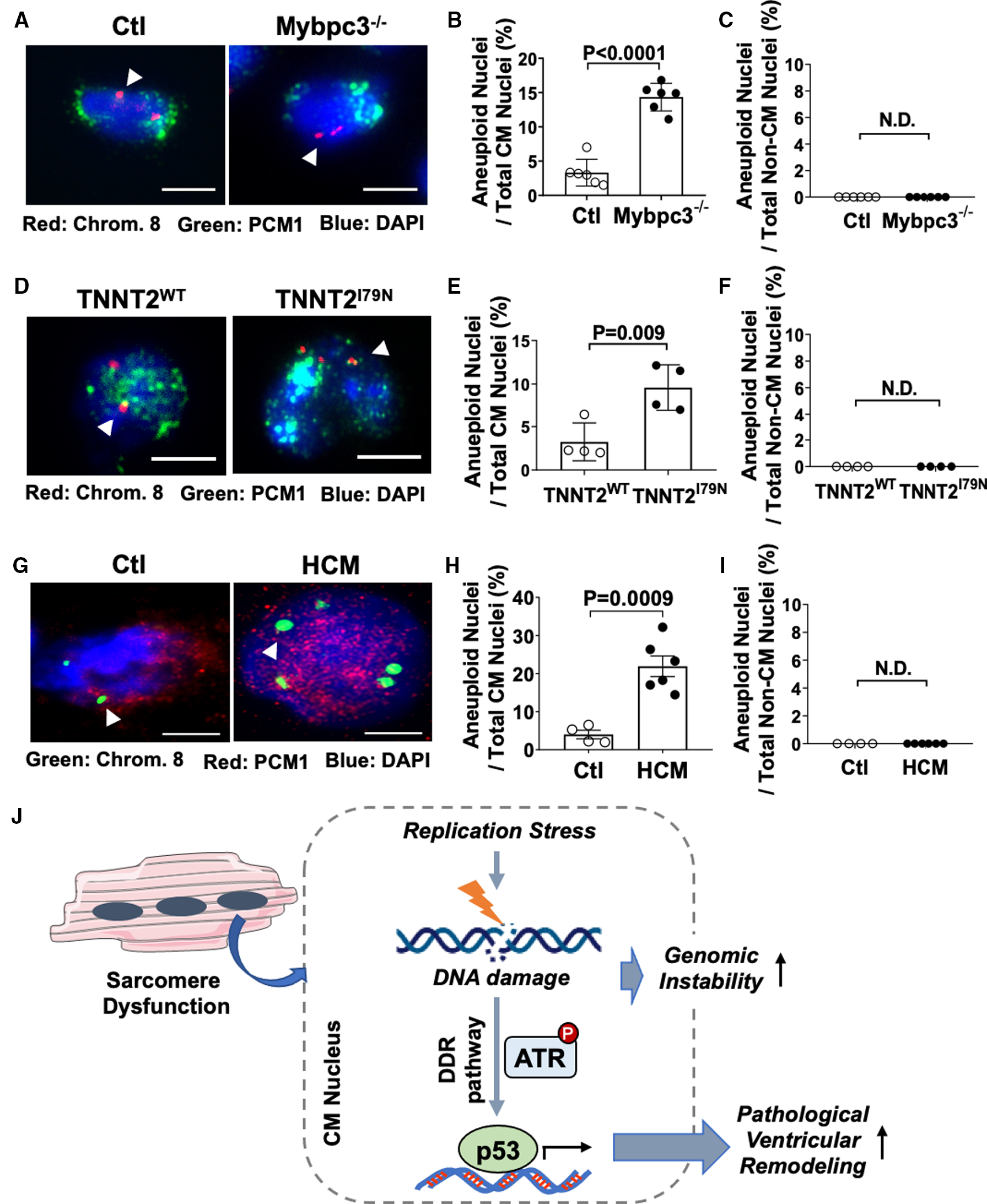
This study investigates how sarcomere gene mutations cause cardiomyocyte DNA damage and replication stress, and whether this modifies pathological remodeling. Using Mybpc3−/− mice, the authors found early nuclear DNA damage, selective ATR activation, and p53 accumulation. Inhibition of ATR or deletion of p53 reduced hypertrophy and improved function. Similar findings were seen in TNNT2 mutant mice and human HCM tissue, with increased cardiomyocyte aneuploidy. These results identify the replication stress response as a modifier of sarcomeric cardiomyopathy.
Key Findings
In Mybpc3−/− cardiomyopathic mice, cardiomyocyte nuclear DNA damage surged early (P7), accompanied by selective ATR phosphorylation and p53 stabilization, without apoptosis. The DNA damage was caused by replication stress due to dysregulated DNA synthesis; CDK4/6 inhibition reduced damage and ATR activation. ATR inhibition with AZD6738 reduced pathological left ventricular remodeling, cardiomyocyte hypertrophy, and p53 levels, while improving systolic function. Cardiomyocyte-specific p53 deletion also modestly reduced remodeling and hypertrophy. Other sarcomere mutations (TNNT2 I79N) and human HCM tissue showed similar DNA damage and ATR activation. Notably, sarcomeric cardiomyopathy was associated with increased cardiomyocyte aneuploidy across models. These findings demonstrate that the replication stress response modifies sarcomeric cardiomyopathy progression.
Contribution
Creative Bioarray provided the mouse chromosome 8 centromere probe (FMCEN-08) used for fluorescence in situ hybridization (FISH) to assess cardiomyocyte aneuploidy in murine models, enabling the detection of chromosomal instability in sarcomeric cardiomyopathy.
Ask a Question
Write your own review
 Datasheet
- Adipose Tissue-Derived Stem Cells
- Human Neurons
- Mouse Probe
- Whole Chromosome Painting Probes
- Hepatic Cells
- Renal Cells
- In Vitro ADME Kits
- Tissue Microarray
- Tissue Blocks
- Tissue Sections
- FFPE Cell Pellet
- Probe
- Centromere Probes
- Telomere Probes
- Satellite Enumeration Probes
- Subtelomere Specific Probes
- Bacterial Probes
- ISH/FISH Probes
- Exosome Isolation Kit
- Human Adult Stem Cells
- Mouse Stem Cells
- iPSCs
- Mouse Embryonic Stem Cells
- iPSC Differentiation Kits
- Mesenchymal Stem Cells
- Immortalized Human Cells
- Immortalized Murine Cells
- Cell Immortalization Kit
- Adipose Cells
- Cardiac Cells
- Dermal Cells
- Epidermal Cells
- Peripheral Blood Mononuclear Cells
- Umbilical Cord Cells
- Monkey Primary Cells
- Mouse Primary Cells
- Breast Tumor Cells
- Colorectal Tumor Cells
- Esophageal Tumor Cells
- Lung Tumor Cells
- Leukemia/Lymphoma/Myeloma Cells
- Ovarian Tumor Cells
- Pancreatic Tumor Cells
- Mouse Tumor Cells