
EUB338 II Probe
- Specification
- Scientific Data
- Q & A
- Customer Review
 For Research Use Only. Not for use in diagnostic procedures.
Genotypic variation in disease susceptibility among cultured stocks of elkhorn and staghorn corals
Background
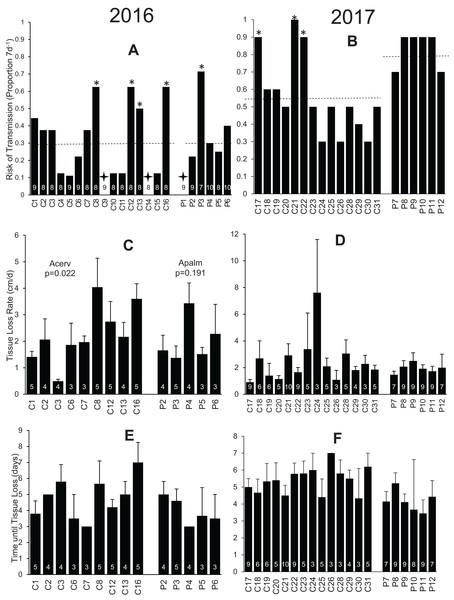
This study investigates genotypic variation in disease susceptibility among cultured stocks of the threatened Caribbean corals Acropora palmata and Acropora cervicornis. Using standardized field-based direct-graft challenge assays, researchers tested 12 A. palmata and 31 A. cervicornis genotypes from three Florida Keys nurseries. They measured disease transmission risk and tissue-loss rates. Significant genotypic variation in susceptibility was detected in both species. The findings suggest relative disease resistance can be incorporated into coral restoration strategies, alongside growth and reproductive traits, to develop more resilient populations while maintaining genetic diversity.
Key Findings
Field challenge assays tested disease susceptibility in cultured Acropora palmata (12 genotypes) and A. cervicornis (31 genotypes) from three Florida Keys nurseries. Significant genotypic variation occurred in both species for risk of transmission and tissue-loss rate. In 2016, some genotypes showed higher-than-expected transmission, while a few had zero transmission; in 2017, overall transmission was higher and three A. cervicornis genotypes had elevated risk, with none of six A. palmata differing from the 82% expected risk. Tissue-loss rates varied significantly among A. cervicornis in 2016 but not 2017, and not among A. palmata in either year. Days to transmission did not differ by genotype. Histopathology and FISH revealed diverse bacteria, ciliates, and Rickettsiales-like organisms in inoculants, and inoculant virulence varied. Results indicate relative, not absolute, disease resistance, and support incorporating resistance alongside other traits into restoration to increase resilience while maintaining genetic diversity.
Contribution
Creative Bioarray provided the AlexaFluor 488- and CY3-tagged eubacterial probes (EUB338-I and EUB338-II) used in fluorescence in situ hybridization (FISH) to examine suspect bacteria in diseased Acropora cervicornis inoculant samples. This enabled visualization of bacterial distributions and morphologies in coral tissue sections during histopathological characterization.
Ask a Question
Write your own review
- Adipose Tissue-Derived Stem Cells
- Human Neurons
- Mouse Probe
- Whole Chromosome Painting Probes
- Hepatic Cells
- Renal Cells
- In Vitro ADME Kits
- Tissue Microarray
- Tissue Blocks
- Tissue Sections
- FFPE Cell Pellet
- Probe
- Centromere Probes
- Telomere Probes
- Satellite Enumeration Probes
- Subtelomere Specific Probes
- Bacterial Probes
- ISH/FISH Probes
- Exosome Isolation Kit
- Human Adult Stem Cells
- Mouse Stem Cells
- iPSCs
- Mouse Embryonic Stem Cells
- iPSC Differentiation Kits
- Mesenchymal Stem Cells
- Immortalized Human Cells
- Immortalized Murine Cells
- Cell Immortalization Kit
- Adipose Cells
- Cardiac Cells
- Dermal Cells
- Epidermal Cells
- Peripheral Blood Mononuclear Cells
- Umbilical Cord Cells
- Monkey Primary Cells
- Mouse Primary Cells
- Breast Tumor Cells
- Colorectal Tumor Cells
- Esophageal Tumor Cells
- Lung Tumor Cells
- Leukemia/Lymphoma/Myeloma Cells
- Ovarian Tumor Cells
- Pancreatic Tumor Cells
- Mouse Tumor Cells