
EUB338 Probe
- Specification
- Scientific Data
- Q & A
- Customer Review
 For Research Use Only. Not for use in diagnostic procedures.
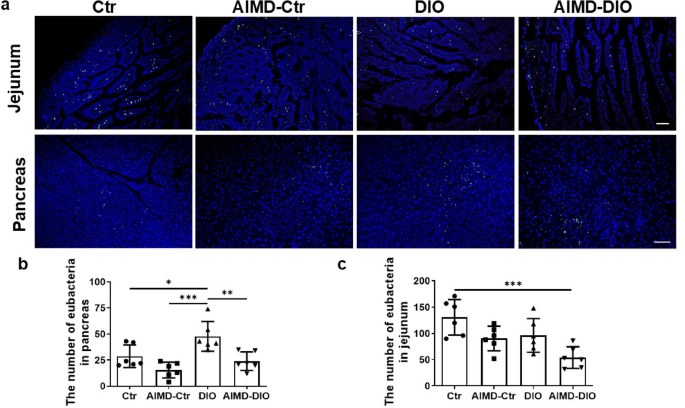
Intestinal bacteria translocation promotes β-cell dysfunction in DIO mice
Background
This study investigated how intestinal bacteria translocation (IBT) from gut to pancreas contributes to β-cell dysfunction in diet-induced obese (DIO) mice. Using FISH, 16S rRNA sequencing, and deep learning-assisted quantification, the authors tracked bacterial migration in DIO and antibiotic-induced microbiota disruption (AIMD)-DIO models. DIO mice showed increased IBT, pancreatic bacterial load, and impaired glucose/insulin function, while AIMD-DIO reduced IBT and improved islet structure. The findings link obesity-driven intestinal barrier damage and lipid accumulation to bacterial translocation and type 2 diabetes progression, highlighting AI for objective bacterial quantification.
Key Findings
The study demonstrated that diet-induced obese (DIO) mice exhibited increased intestinal bacteria translocation (IBT) to the pancreas, likely due to excessive intestinal lipid accumulation and compromised intestinal barrier integrity. Deep learning-assisted quantification enhanced the accuracy and objectivity of bacterial tracking. DIO mice had elevated pancreatic bacterial loads, which correlated with worsened pancreatic function, including higher fasting blood glucose, impaired glucose tolerance, and dysfunctional insulin secretion. In contrast, antibiotic-induced microbiota disruption (AIMD)-DIO mice showed reduced IBT, maintained islet structure, and improved glucose homeostasis. Comparative analysis revealed a strong correlation between the number of translocated bacteria and type 2 diabetes severity. 16S rRNA sequencing showed diet-dependent pancreatic bacterial composition, with increased Prevotella and Bacteroides in DIO mice. These findings provide objective evidence linking bacterial migration from the intestine to the pancreas with pancreatic impairment and dysfunction, and underscore the utility of AI techniques for evaluating IBT.
Contribution
Creative Bioarray provided the FITC-labeled universal eubacterial probe EUB338 (FBPC-10) used in fluorescence in situ hybridization (FISH) to detect indigenous bacteria in jejunum and pancreas. This probe enabled visualization and quantification of bacterial translocation, supporting the study's key findings on gut-pancreas bacterial migration.
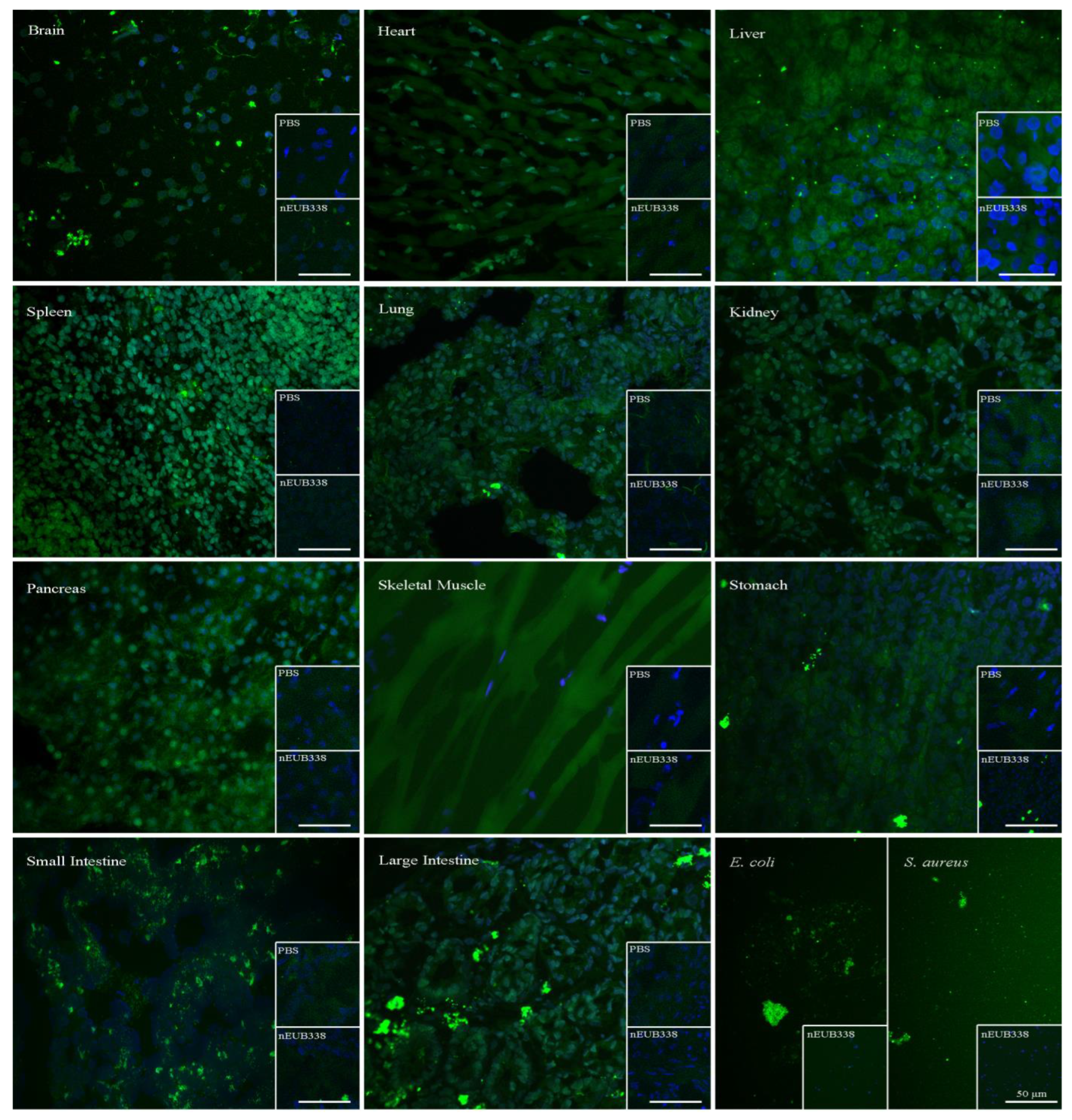
The Cellular Microbiome of Visceral Organs: An Inherent Inhabitant of Parenchymal Cells
Background
This study investigates whether bacteria reside intrinsically within parenchymal cells of visceral organs. Using 16S rRNA gene sequencing in adult, pregnant, newborn, and fetal rats plus placentas, and FISH/immunofluorescence/Western blotting in tissues and cell lines, the authors detected high bacterial abundance. Visceral bacterial OTU counts exceeded feces/ileum; Gram-negative markers (LPS) localized to nuclei, while Gram-positive LTA was mainly cytoplasmic. The findings suggest a cellular microbiome is an inherent cellular component, distinct from the gut microbiome, and potentially inherited.
Key Findings
High bacterial 16S rRNA gene abundance was detected in visceral organs of male adult, pregnant, newborn, and fetal rats and placentas. Visceral bacterial OTUs were higher than fecal and ileal OTUs, and visceral communities differed structurally and functionally from gut microbiota; Proteobacteria/Cupriavidus dominated viscera, whereas Firmicutes/Bacteroidetes/Lactobacillus dominated gut contents. Immunofluorescence and Western blotting showed bacterial 16S rRNA, LPS, and LTA in parenchymal cells, with LPS consistently nuclear and LTA mainly cytoplasmic. Cultured HepG2, Huh-7, Hepa1-6, and HSC-T6 cells also contained nuclear LPS, but LTA was undetected. Newborn rats shared visceral bacteria with milk clots/skin, and fetuses/placentas shared bacteria with mothers, suggesting inheritance. The authors conclude that a cellular microbiome is an intrinsic cell component: Gram-negative bacteria localize to nuclei and Gram-positive bacteria to cytoplasm, distinct from the gut microbiome.
Contribution
Creative Bioarray supplied the EUB338 FISH Probe Kit (#FBPC-10) and non-specific complement probe (#FBPC-13) used for 16S rRNA fluorescence in situ hybridization. These probes enabled in situ detection of bacterial RNA in visceral parenchymal cells, supporting the study’s key conclusion that bacteria reside intracellularly.
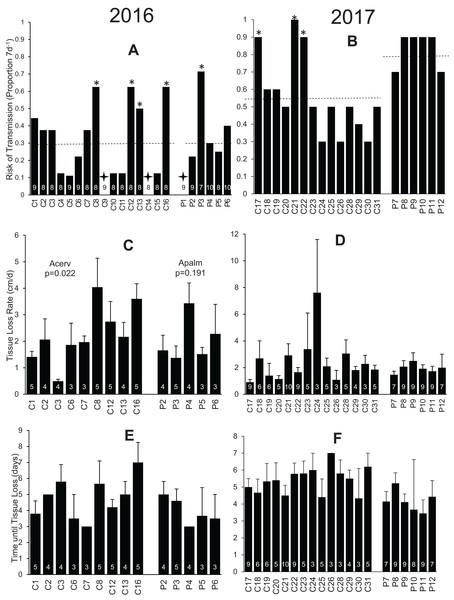
Genotypic variation in disease susceptibility among cultured stocks of elkhorn and staghorn corals
Background
This study investigates genotypic variation in disease susceptibility among cultured stocks of the threatened Caribbean corals Acropora palmata and Acropora cervicornis. Using standardized field-based direct-graft challenge assays, researchers tested 12 A. palmata and 31 A. cervicornis genotypes from three Florida Keys nurseries. They measured disease transmission risk and tissue-loss rates. Significant genotypic variation in susceptibility was detected in both species. The findings suggest relative disease resistance can be incorporated into coral restoration strategies, alongside growth and reproductive traits, to develop more resilient populations while maintaining genetic diversity.
Key Findings
Field challenge assays tested disease susceptibility in cultured Acropora palmata (12 genotypes) and A. cervicornis (31 genotypes) from three Florida Keys nurseries. Significant genotypic variation occurred in both species for risk of transmission and tissue-loss rate. In 2016, some genotypes showed higher-than-expected transmission, while a few had zero transmission; in 2017, overall transmission was higher and three A. cervicornis genotypes had elevated risk, with none of six A. palmata differing from the 82% expected risk. Tissue-loss rates varied significantly among A. cervicornis in 2016 but not 2017, and not among A. palmata in either year. Days to transmission did not differ by genotype. Histopathology and FISH revealed diverse bacteria, ciliates, and Rickettsiales-like organisms in inoculants, and inoculant virulence varied. Results indicate relative, not absolute, disease resistance, and support incorporating resistance alongside other traits into restoration to increase resilience while maintaining genetic diversity.
Contribution
Creative Bioarray provided the AlexaFluor 488- and CY3-tagged eubacterial probes (EUB338-I and EUB338-II) used in fluorescence in situ hybridization (FISH) to examine suspect bacteria in diseased Acropora cervicornis inoculant samples. This enabled visualization of bacterial distributions and morphologies in coral tissue sections during histopathological characterization.
Ask a Question
Write your own review
- Adipose Tissue-Derived Stem Cells
- Human Neurons
- Mouse Probe
- Whole Chromosome Painting Probes
- Hepatic Cells
- Renal Cells
- In Vitro ADME Kits
- Tissue Microarray
- Tissue Blocks
- Tissue Sections
- FFPE Cell Pellet
- Probe
- Centromere Probes
- Telomere Probes
- Satellite Enumeration Probes
- Subtelomere Specific Probes
- Bacterial Probes
- ISH/FISH Probes
- Exosome Isolation Kit
- Human Adult Stem Cells
- Mouse Stem Cells
- iPSCs
- Mouse Embryonic Stem Cells
- iPSC Differentiation Kits
- Mesenchymal Stem Cells
- Immortalized Human Cells
- Immortalized Murine Cells
- Cell Immortalization Kit
- Adipose Cells
- Cardiac Cells
- Dermal Cells
- Epidermal Cells
- Peripheral Blood Mononuclear Cells
- Umbilical Cord Cells
- Monkey Primary Cells
- Mouse Primary Cells
- Breast Tumor Cells
- Colorectal Tumor Cells
- Esophageal Tumor Cells
- Lung Tumor Cells
- Leukemia/Lymphoma/Myeloma Cells
- Ovarian Tumor Cells
- Pancreatic Tumor Cells
- Mouse Tumor Cells