
Immortalized Mouse Granulosa Cells-SV40
Cat.No.: CSC-I2083Z
Species: mouse
Morphology: Polygonal
Culture Properties: Adherent
- Specification
- Background
- Scientific Data
- Q & A
- Customer Review
free from contaminations (bacteria incl. mycoplasma, fungi, HIV, HAV, HBV, HCV, Parvo-B19) and cross-contaminations
Note: Never can cells be kept at -20°C.
Immortalized Mouse Granulosa Cells (GCs) constitute a vital in vitro model system engineered to address the significant experimental limitations of primary granulosa cells. Granulosa cells are somatic cells that surround and nourish the developing oocyte within the ovarian follicle. They are essential for folliculogenesis, steroidogenesis (primarily estrogen production via aromatase activity), and response to pituitary gonadotropins (FSH and LH). Primary GCs, typically isolated from preovulatory follicles, are terminally differentiated, have a very limited proliferative capacity in vitro, and rapidly undergo luteinization or apoptosis in culture. This, combined with inherent heterogeneity from different follicle stages, makes consistent, long-term mechanistic studies challenging. Immortalization, commonly achieved through the introduction of Simian Virus 40 Large T antigen (SV40 T-ag) or similar genetic elements, confers an extended, stable proliferative lifespan while aiming to preserve crucial hormonal responsiveness and steroidogenic function. The core advantage of immortalized mouse GC lines lies in providing a homogeneous, renewable, and genetically manipulable system that replicates key functional aspects of follicular granulosa cells.
IMG-A1: A Novel Immortalized Granulosa Cell Line for Investigating FSH-Dependent Folliculogenesis and Ovarian Pathophysiology
The study of ovarian biology is hampered by the lack of in vitro models that faithfully recapitulate the physiology of granulosa cells (GCs). Primary GCs have a limited lifespan, while most immortalized lines are tumor-derived and exhibit non-physiological hormonal responses. The purpose of this study was to develop and characterize a novel immortalized GC line with a stable, physiologically relevant phenotype.
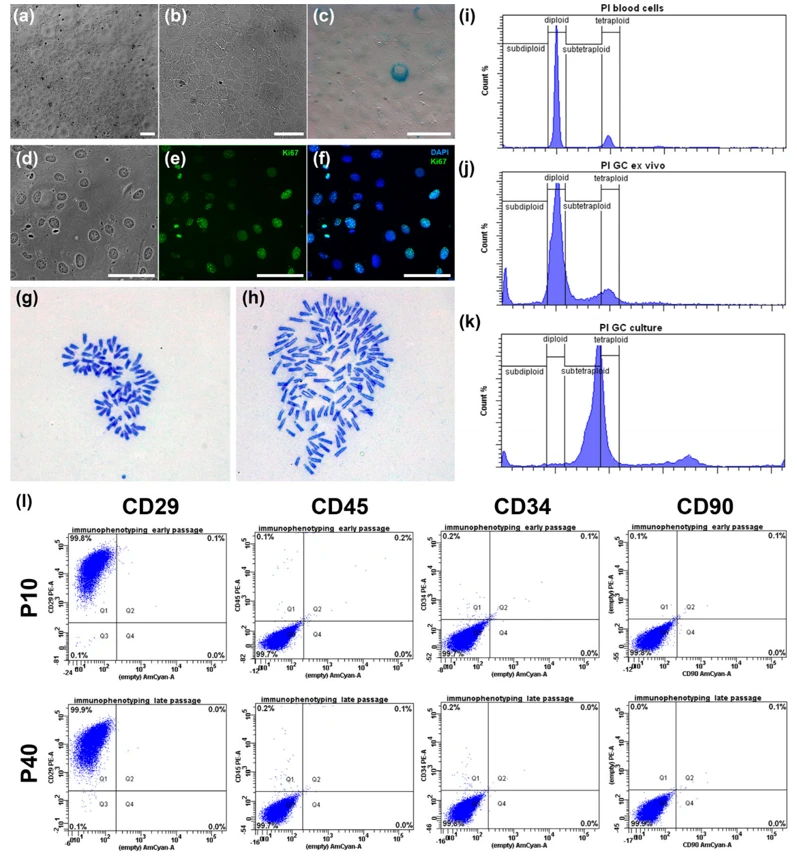
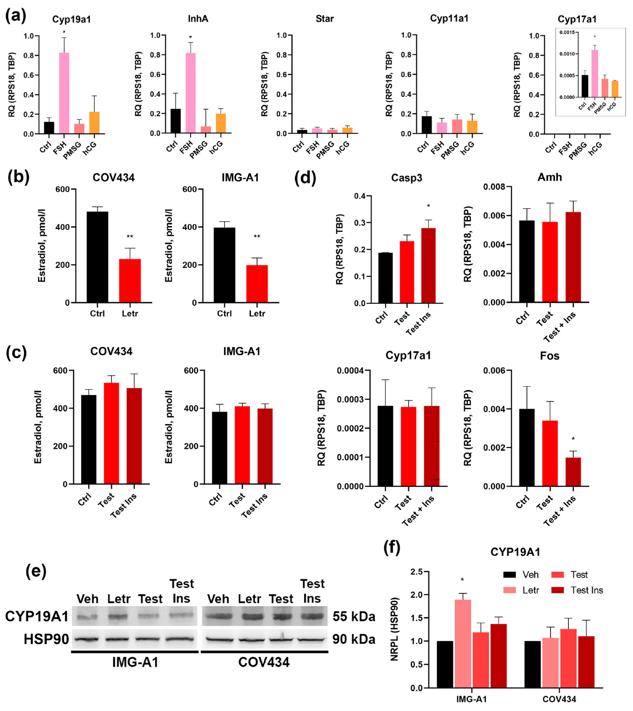
Primary murine GCs from early antral follicles are immortalized using lentiviral vector to introduce human telomerase reverse transcriptase (hTERT) gene to create the IMG-A1 cell line. Exhibiting a non-transformed phenotype, IMG-A1 cell line retains a stable karyotype and express the follicle-stimulating hormone receptor (FSHR) but not the luteinizing hormone/chorionic gonadotropin receptor (LHCGR). Accordingly, they respond to FSH by upregulating steroidogenic genes like aromatase (Cyp19a1) but are unresponsive to LH/hCG. Furthermore, the line exhibits physiologically relevant responses to hormonal stimulation, including a strong induction of aromatase by FSH and its synergistic upregulation in a hyperandrogenic and hyperinsulinemic milieu. The IMG-A1 cell line is a unique and robust model of early antral granulosa cells, offering a valuable new tool for studying FSH-dependent folliculogenesis, cellular aspects of ovarian pathophysiology, and drug discovery.
Ask a Question
Write your own review

Description: Immortalized Mouse Primary Artery Fibroblasts-GFP provided by Creative Bioarray have been developed by immortalizing mouse artery fibroblasts with SV40 Large T antigen and transfecting with tGFP. The ...
Description: Immortalized MHC II -/- Mouse Macrophage Cells (C2D) is derived from the knockout mice negative for MHCII molecule. They are stable in culture and survived through crisis in which they spontaneously ...
Description: The bone morphogenetic proteins (BMPs) produced by calvarial cells are crucial in osteoblastic differentiation and bone regeneration, however the limited lifespan of primary cells diminishes their ...
Description: The Immortalized Mouse Atrioventricular Cushion Mesenchymal Cells (tsA58-AVM) were derived from atrioventricular (AV) cushions of H-2Kb -tsA58 embryos at E9.5 and were conditionally immortalized in ...
Description: IDG-SW3 represent a non-homogenous population progressing from early osteoblasts to late osteocytic. These cells express functional SV40 large T antigen that is induced in the presence of IFN γ under ...
Description: The Immortalized Mouse Spleen Dendritic Cell (SRDC) line is functionally and phenotypically similar to dendritic cells; specifically, in its antigen presentation, T cell priming, and dendritic cell ...
- Adipose Tissue-Derived Stem Cells
- Human Neurons
- Mouse Probe
- Whole Chromosome Painting Probes
- Hepatic Cells
- Renal Cells
- In Vitro ADME Kits
- Tissue Microarray
- Tissue Blocks
- Tissue Sections
- FFPE Cell Pellet
- Probe
- Centromere Probes
- Telomere Probes
- Satellite Enumeration Probes
- Subtelomere Specific Probes
- Bacterial Probes
- ISH/FISH Probes
- Exosome Isolation Kit
- Human Adult Stem Cells
- Mouse Stem Cells
- iPSCs
- Mouse Embryonic Stem Cells
- iPSC Differentiation Kits
- Mesenchymal Stem Cells
- Immortalized Human Cells
- Immortalized Murine Cells
- Cell Immortalization Kit
- Adipose Cells
- Cardiac Cells
- Dermal Cells
- Epidermal Cells
- Peripheral Blood Mononuclear Cells
- Umbilical Cord Cells
- Monkey Primary Cells
- Mouse Primary Cells
- Breast Tumor Cells
- Colorectal Tumor Cells
- Esophageal Tumor Cells
- Lung Tumor Cells
- Leukemia/Lymphoma/Myeloma Cells
- Ovarian Tumor Cells
- Pancreatic Tumor Cells
- Mouse Tumor Cells