
Human iPSC-derived Keratinocytes
- Specification
- Background
- Scientific Data
- Q & A
- Customer Review
Human induced pluripotent stem cell (iPSC)-derived keratinocytes represent a revolutionary alternative to primary human keratinocytes for skin biology, disease modeling, and regenerative medicine. Compared to primary keratinocytes, iPSC-derived counterparts exhibit superior advantages: (1) unlimited self-renewal - they circumvent the limited proliferative capacity and donor-to-donor variability of primary cells; (2) genetic identity preservation - patient-derived lines enable autologous grafts and personalized disease modeling (e.g., epidermolysis bullosa, ichthyosis); (3) scalable and reproducible manufacturing - freeze-thaw stable, standardized batches reduce experimental inconsistencies; (4) ethical compliance - no need for cadaveric or surgical skin biopsies. Moreover, CRISPR-corrected iPSC-derived keratinocytes hold therapeutic promise for genodermatoses. Thus, this innovative platform accelerates drug screening, toxicity testing, and skin tissue engineering, outperforming conventional sources in both research and translational applications.
iPSC-Derived Reconstructed Epidermal Skin Model as an Alternative Model for Skin Irritation
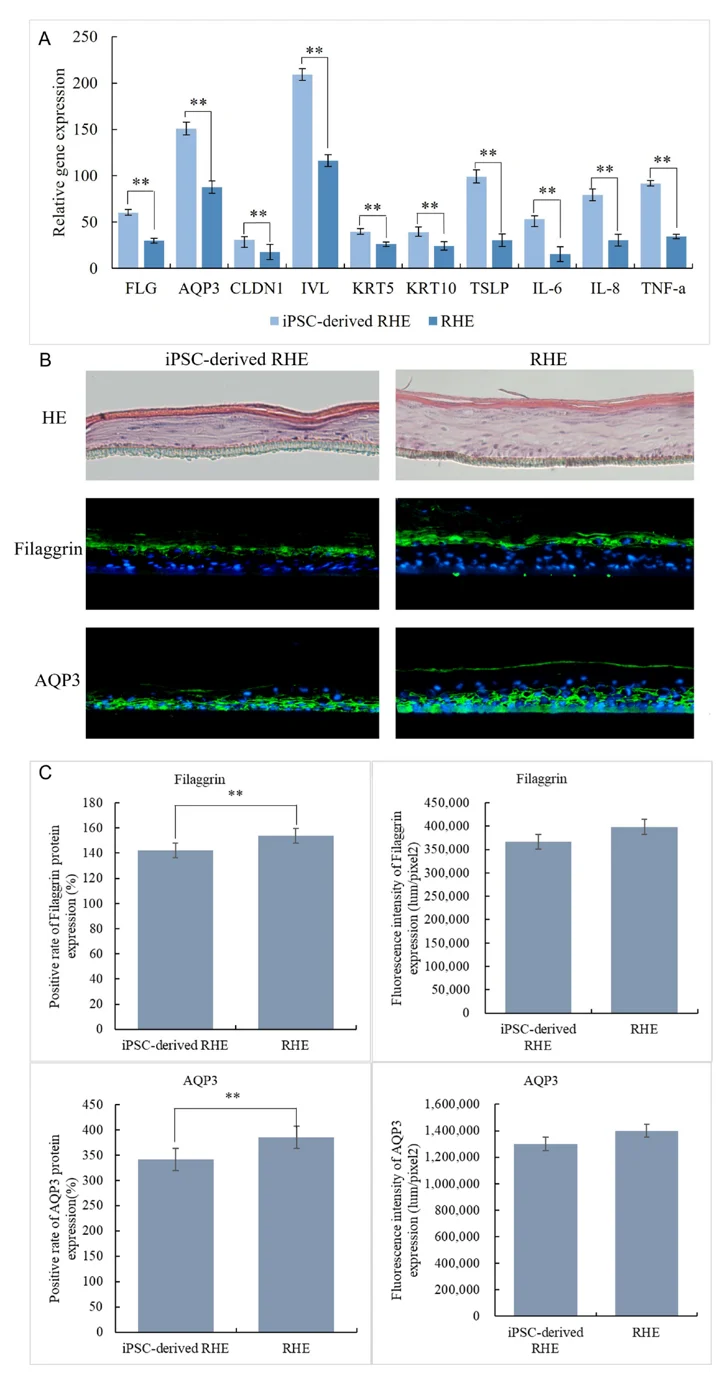
The limited availability of primary normal human epidermal keratinocyte (NHEK) has hampered the large-scale implementation of skin models in biomedical, toxicological, and pharmaceutical research. Therefore, in this study, we developed a reconstructed epidermal skin model using the iPSC-derived keratinocytes (iPSC-derived-RHE). The generated skin model exhibited a multilayered epidermis with a distinct cornified layer at the surface, similar to human epidermis. This indicates that the iPSC-derived keratinocytes had differentiated and organized into a functional epidermal tissue.
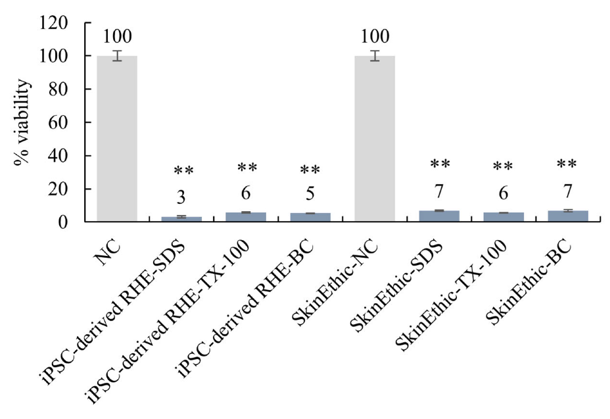
Several test chemicals with known irritation potentials were applied to the surface of the reconstructed skin model for skin irritation tests. The MTT assay was used to evaluate the viability of the keratinocytes after exposure to the test chemicals. The results show that the iPSC-derived-RHE predicted skin irritations in a manner similar to the commercially available SkinEthic system.
These findings demonstrate the successful development of a reconstructed epidermal skin model using iPSC-derived keratinocytes, which can be used for skin irritation testing and cosmetic research.
Ask a Question
Write your own review
- Adipose Tissue-Derived Stem Cells
- Human Neurons
- Mouse Probe
- Whole Chromosome Painting Probes
- Hepatic Cells
- Renal Cells
- In Vitro ADME Kits
- Tissue Microarray
- Tissue Blocks
- Tissue Sections
- FFPE Cell Pellet
- Probe
- Centromere Probes
- Telomere Probes
- Satellite Enumeration Probes
- Subtelomere Specific Probes
- Bacterial Probes
- ISH/FISH Probes
- Exosome Isolation Kit
- Human Adult Stem Cells
- Mouse Stem Cells
- iPSCs
- Mouse Embryonic Stem Cells
- iPSC Differentiation Kits
- Mesenchymal Stem Cells
- Immortalized Human Cells
- Immortalized Murine Cells
- Cell Immortalization Kit
- Adipose Cells
- Cardiac Cells
- Dermal Cells
- Epidermal Cells
- Peripheral Blood Mononuclear Cells
- Umbilical Cord Cells
- Monkey Primary Cells
- Mouse Primary Cells
- Breast Tumor Cells
- Colorectal Tumor Cells
- Esophageal Tumor Cells
- Lung Tumor Cells
- Leukemia/Lymphoma/Myeloma Cells
- Ovarian Tumor Cells
- Pancreatic Tumor Cells
- Mouse Tumor Cells