
Goat Adipose-derived Mesenchymal Stem Cells
- Specification
- Background
- Scientific Data
- Q & A
- Customer Review
Goat Adipose-derived Mesenchymal Stem Cells (gADMSCs) are multipotent stromal cells isolated from the stromal vascular fraction of caprine adipose tissue, representing a highly accessible and clinically versatile cell source for veterinary regenerative medicine and comparative translational research. Compared to bone marrow-derived counterparts, adipose tissue offers substantially higher cell yields per gram of tissue and permits minimally invasive collection—typically from the inguinal or tailhead region—thereby reducing donor-site morbidity, procedural risk, and overall cost.
Phenotypically, gADMSCs conform to International Society for Cellular Therapy (ISCT) criteria, robustly expressing characteristic mesenchymal surface markers including CD44, CD90, and CD105, while remaining negative for hematopoietic lineage markers such as CD45. Functionally, they retain robust trilineage differentiation capacity, readily differentiating into adipogenic, osteogenic, and chondrogenic lineages under appropriate induction conditions, with differentiation efficiency further optimized through basal medium selection.
Critically, gADMSCs exhibit strong in vitro proliferative capacity and sustained self-renewal potential across extended passages, maintaining stable fibroblast-like morphology even during long-term culture. Their relative genetic stability, low immunogenicity, and absence of ethical constraints render them an attractive platform for autologous and allogeneic cell-based therapies. As a physiologically relevant large-animal model, goats provide valuable translational parallels to human orthopedic and regenerative applications, positioning gADMSCs as an essential resource for advancing stem cell biology, tissue engineering, and precision veterinary therapeutics.
Phloretin Protects Goat Adipose-Derived Mesenchymal Stem Cells Against Ferroptosis by Regulating the Nrf2/HO-1/GPX4 Signaling Pathway
Ferroptosis of mesenchymal stem cells (MSCs) is a critical bottleneck restricting the efficiency of ruminant biological breeding. Phloretin, a natural bioactive polyphenol, exhibits potential ferroptosis-inhibitory activity. However, the regulatory effects and underlying mechanisms of phloretin on ruminant MSCs remain poorly understood. This study aimed to investigate the effects of phloretin on ferroptosis and elucidate its underlying molecular mechanisms.
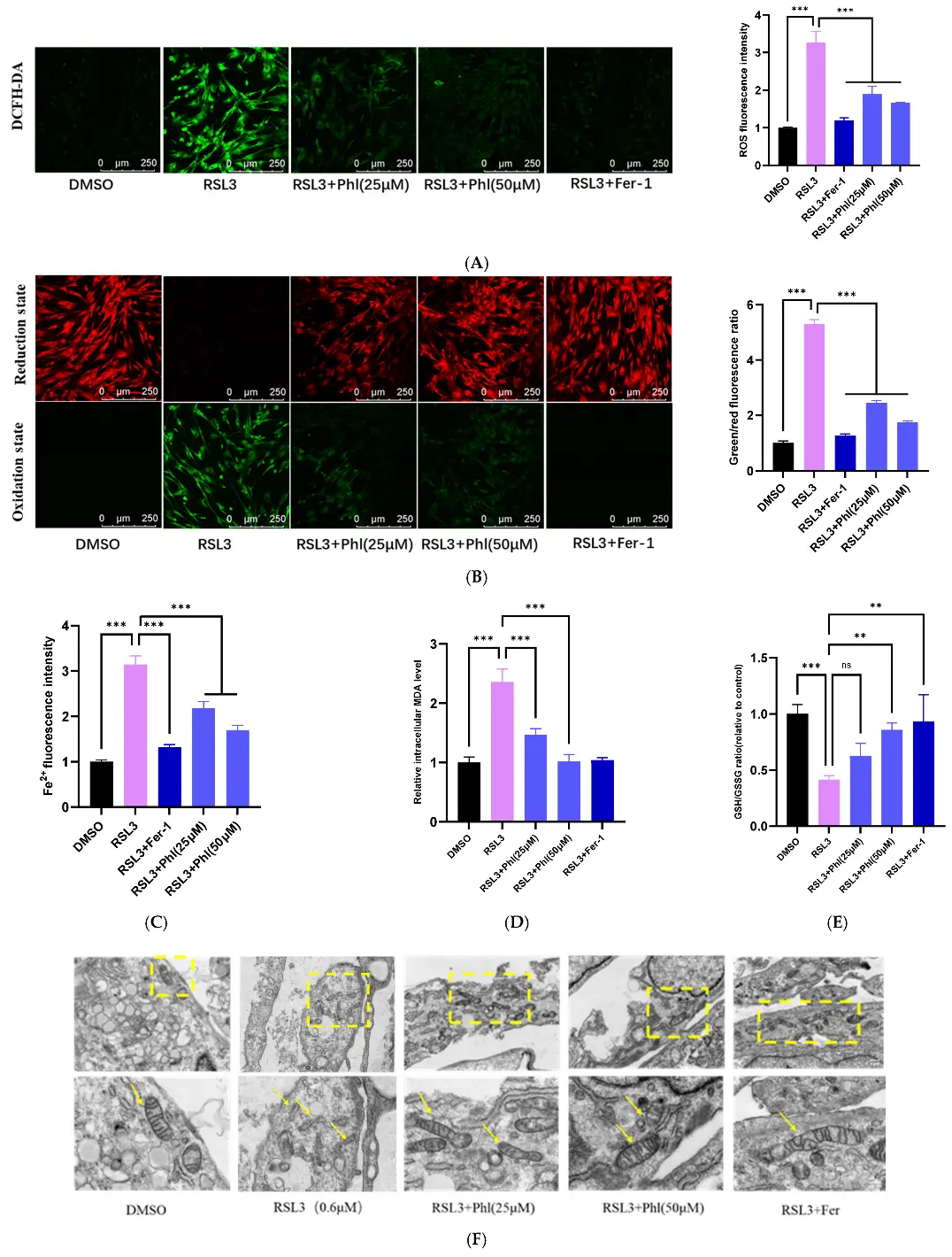
An in vitro ferroptosis model of goat adipose-derived mesenchymal stem cells (AD-MSCs) was constructed using RSL3. Cell viability, proliferation, migration, ferroptosis-related indexes and key protein expression were assessed. The results showed that phloretin (25 and 50 μM) dose-dependently inhibited ferroptosis in goat AD-MSCs, reducing intracellular ferrous ion (Fe2+), reactive oxygen species (ROS) and lipid peroxidation levels, restoring glutathione content, and ameliorating mitochondrial structural damage. Mechanistically, phloretin exerted its anti-ferroptosis effects through direct antioxidant activity, activation of the Nrf2/HO-1/GPX4 signaling pathway and Fe2+ chelation. These results provide preliminary in vitro evidence and a theoretical basis for the potential application of phloretin in future research related to meat goat production and ruminant breeding.
Ask a Question
Write your own review
- Adipose Tissue-Derived Stem Cells
- Human Neurons
- Mouse Probe
- Whole Chromosome Painting Probes
- Hepatic Cells
- Renal Cells
- In Vitro ADME Kits
- Tissue Microarray
- Tissue Blocks
- Tissue Sections
- FFPE Cell Pellet
- Probe
- Centromere Probes
- Telomere Probes
- Satellite Enumeration Probes
- Subtelomere Specific Probes
- Bacterial Probes
- ISH/FISH Probes
- Exosome Isolation Kit
- Human Adult Stem Cells
- Mouse Stem Cells
- iPSCs
- Mouse Embryonic Stem Cells
- iPSC Differentiation Kits
- Mesenchymal Stem Cells
- Immortalized Human Cells
- Immortalized Murine Cells
- Cell Immortalization Kit
- Adipose Cells
- Cardiac Cells
- Dermal Cells
- Epidermal Cells
- Peripheral Blood Mononuclear Cells
- Umbilical Cord Cells
- Monkey Primary Cells
- Mouse Primary Cells
- Breast Tumor Cells
- Colorectal Tumor Cells
- Esophageal Tumor Cells
- Lung Tumor Cells
- Leukemia/Lymphoma/Myeloma Cells
- Ovarian Tumor Cells
- Pancreatic Tumor Cells
- Mouse Tumor Cells