
SHK-1
Cat.No.: CSC-C9058H
Species: Salmo salar (Atlantic salmon)
Source: Head Kidney
Morphology: Fibroblast-like
Culture Properties: Adherent
- Specification
- Background
- Scientific Data
- Q & A
- Customer Review
SHK-1 is a spontaneously immortalized cell line derived from primary adherent cell cultures of Atlantic salmon (Salmo salar) head kidney, established by Birgit Helene Dannevig and colleagues at the National Veterinary Institute in Oslo. The head kidney is a hematopoietic organ containing a macrophage-enriched cell population, and SHK-1 proliferating cells appeared after several weeks in culture. Morphologically, SHK-1 cells exhibit a fibroblast-like, flattened and elongated shape, with a near-euploid karyotype, and have been successfully passaged more than 60 times.
The defining advantage of SHK-1 lies in its macrophage‑like phenotype and functional relevance for fish immunology and virology research. The cells express vimentin, react with monoclonal antibodies specific for Atlantic salmon peripheral blood leukocytes, and exhibit strong reactivity for acid phosphatase, non‑specific esterase, Mg²⁺‑dependent adenosine triphosphatase and 5' nucleotidase, while lacking alkaline phosphatase activity - an enzymatic profile characteristic of macrophages. SHK-1 cells also demonstrate limited phagocytic activity against the fish pathogen Aeromonas salmonicida, although no bactericidal activity was observed over a 72‑hour period. Furthermore, SHK-1 expresses major histocompatibility complex (MHC) class I and class II mRNA, the expression of which can be modulated by bacterial components, infectious viruses, and hormonal stimulation, indicating conserved regulatory pathways.
SHK-1 is highly susceptible to infectious salmon anaemia virus (ISAV), making it an indispensable tool for ISA virus propagation, detection, and pathogenesis studies. The cell line has been widely applied to determine the effects of nucleotide concentrations on cell viability, to study the impact of silymarin in aquaculture, and as a model system for investigating innate immunity, antiviral responses and comparative transcriptomics in salmonids. Collectively, SHK-1 represents a robust, renewable resource for fish immunology and virology research, circumventing the ethical and technical limitations of primary leukocyte culture.
Silybin Interferes with the Intracellular Replication of Piscirickettsia Salmonis in SHK-1 Cells and Confers Protection in Salmo Salar
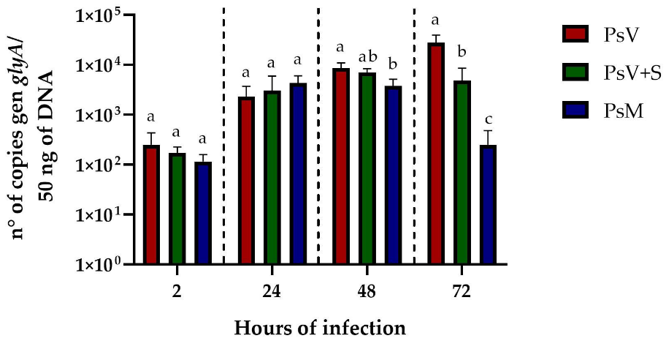
This article evaluates the effect of silybin on the immune response and oxidative stress of SHK-1 cells infected with P. salmonis, as well as the reduction in intracellular bacterial replication during the first 72 h of infection. Furthermore, we assess the ability of silybin administration to modulate the immune response in S. salar and protect against P. salmonis infection.
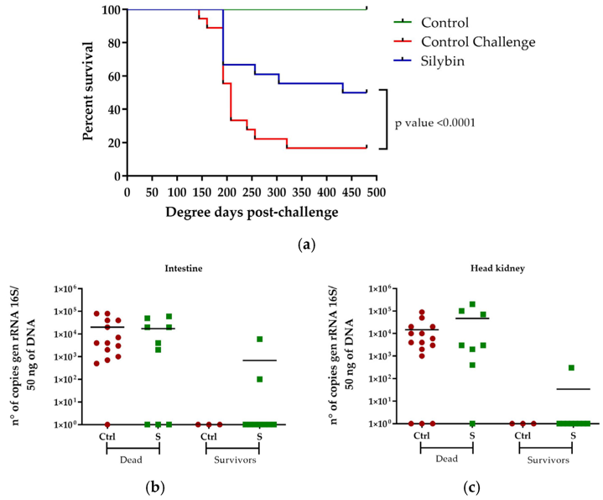
The results show that co-incubation of silybin during infection in SHK-1 cells modulates the expression levels of the genes gsh-px, cat, tnf-α, and il-1β and also decreases the levels of intracellular ROS generated by the infection. Furthermore, the mechanism of action of silybin in SHK-1 cells is related to interference with the intracellular replication of P. salmonis after 72 h of infection and not to adherence or internalization of the bacteria. Finally, silybin is able to generate protection in S. salar infected with P. salmonis independently of stimulation of the immune response.
In conclusion, silybin administration may be an effective treatment against P. salmonis in salmonids; however, further studies are needed to clarify the mechanism of action.
Ask a Question
Write your own review
- You May Also Need
Description: Derived from tissue posterior to the anus of normal adult minnows. Reported to be capable of growth over a wide temperature range from 4°C-36°C with maximum growth at 34°C. Support growth of the ...
Description: The fish cell line CSE-119 was initiated in 1963 from pooled embryos of Coho salmon (Oncorynchus kisutch). CSE-119, also known as Coho salmon embryo-119, are susceptible to infectious pancreatic ...
Description: The fish cell line PG has been initiated 1976 from ovarian tissue of 5 juvenile pike (Esox lucius). Cells grow at 4°C to 25°C with an optimum temperature of 20°C. PG cells are susceptible to various ...
Description: E11 is a clone of the cell line SSN-1 and is persistantly infected with a C-type retrovirus (SnRV). It is susceptible to piscine nodavirus strains belonging to different genotypes (SJNNV, RGNNV, ...
- Adipose Tissue-Derived Stem Cells
- Human Neurons
- Mouse Probe
- Whole Chromosome Painting Probes
- Hepatic Cells
- Renal Cells
- In Vitro ADME Kits
- Tissue Microarray
- Tissue Blocks
- Tissue Sections
- FFPE Cell Pellet
- Probe
- Centromere Probes
- Telomere Probes
- Satellite Enumeration Probes
- Subtelomere Specific Probes
- Bacterial Probes
- ISH/FISH Probes
- Exosome Isolation Kit
- Human Adult Stem Cells
- Mouse Stem Cells
- iPSCs
- Mouse Embryonic Stem Cells
- iPSC Differentiation Kits
- Mesenchymal Stem Cells
- Immortalized Human Cells
- Immortalized Murine Cells
- Cell Immortalization Kit
- Adipose Cells
- Cardiac Cells
- Dermal Cells
- Epidermal Cells
- Peripheral Blood Mononuclear Cells
- Umbilical Cord Cells
- Monkey Primary Cells
- Mouse Primary Cells
- Breast Tumor Cells
- Colorectal Tumor Cells
- Esophageal Tumor Cells
- Lung Tumor Cells
- Leukemia/Lymphoma/Myeloma Cells
- Ovarian Tumor Cells
- Pancreatic Tumor Cells
- Mouse Tumor Cells