
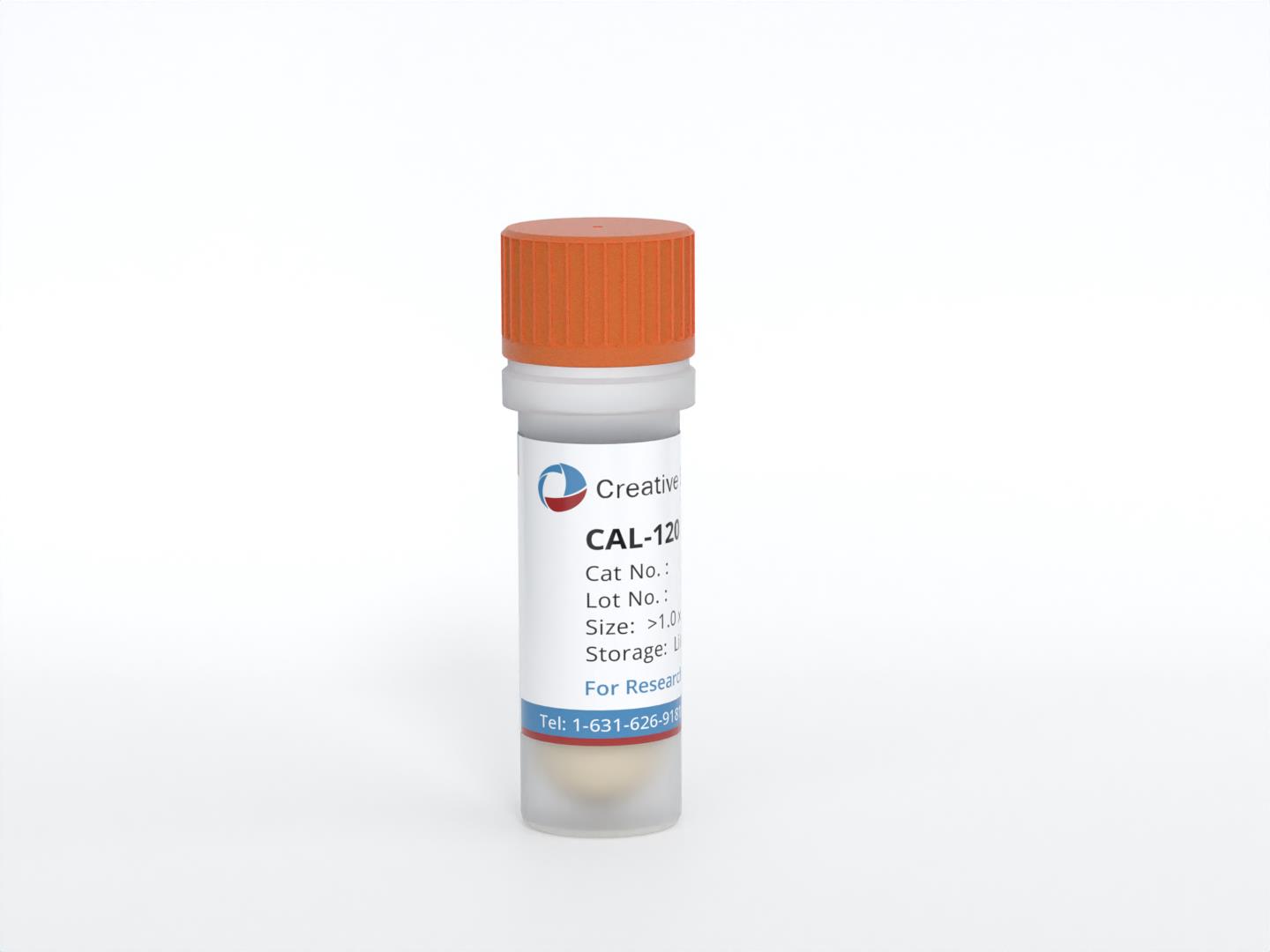
CAL-120
Cat.No.: CSC-C0488
Species: Homo sapiens (Human)
Source: Pleural Effusion Metastasis
Morphology: heterogenous population with epithelial-like and fibroblast-like adherent cells growing in monolayers
Culture Properties: monolayer
- Specification
- Background
- Scientific Data
- Q & A
- Customer Review
Immunology: cytokeratin +, cytokeratin-7 -, cytokeratin-8 +, cytokeratin-17 -, cytokeratin-18 +, cytokeratin-19 +, desmin -, endothel -, EpCAM +, GFAP -, neurofilament -, vimen
The CAL-120 cell line is a human breast carcinoma model isolated from a metastatic site (pleural effusion) of a primary ductal carcinoma. It holds significant niche value in oncology research as a well-characterized representative of triple-negative breast cancer (TNBC), the most aggressive and therapeutically challenging breast cancer subtype due to its lack of estrogen receptor (ER), progesterone receptor (PR), and HER2 amplification. This absence of classic hormonal and growth factor targets renders standard endocrine and HER2-targeted therapies ineffective, underscoring the critical need for models like CAL-120 to develop novel treatment strategies.
Key characteristics defining CAL-120 include its confirmed triple-negative status and basal-like phenotype, often expressing basal cytokeratins (CK5/6, CK14) and epidermal growth factor receptor (EGFR). Genomic studies indicate it carries typical genomic instability and mutational profiles associated with TNBC, making it a relevant system for studying the molecular drivers of this disease. Furthermore, it exhibits invasive and tumorigenic properties in vivo, capable of forming tumors in immunocompromised mouse models, which is essential for translational pre-clinical studies.
Fibroblast Growth Factor Receptor Signaling Modulates Cholesterol Storage in A SOAT1-Dependent Manner to Promote Mammary Tumor Cell Invasion
Signaling by fibroblast growth factor receptors (FGFRs) is active in up to 85% of breast cancers and results in enhanced proliferation, migration, and invasion of tumor cells. Here, we show that FGFR signaling regulates cholesterol metabolism in breast cancer. Specifically, we demonstrate that FGFR activation promotes cellular cholesterol storage by upregulating expression of the enzyme sterol O-acyltransferase 1 (SOAT1). Moreover, we show that inhibition of SOAT1 attenuates FGFR-mediated colony formation and invasion in tumor cells, which correlates with reduced expression of matrix metalloproteinase expression. Furthermore, we demonstrate that reducing the expression of SOAT1 in tumor cells slows the growth of mammary tumors in vivo. Taken together, the findings outline a novel metabolic function for FGFR signaling in breast cancer cells and offer additional therapeutic vulnerabilities that could be targeted in FGFR-driven cancers.


Ask a Question
Write your own review
- You May Also Need
Description: MCF10DCIS.com is a clonal breast cancer cell line derived from a xenograft originating from premalignant MCF10AT cells that were injected into severe combined immune-deficient mice. MCF10AT is ...
Description: Species: human, Caucasian female 69 years old; Tissue: breast; Tumor: adenocarcinoma; Transfected with ER-pBact, human estrogen receptor cDNA, under control of the human beta actin promotor, ...
Description: Human malignant mesothelioma. CA19-9, CA125, and hyaluronic acid producing. Cell growth is slow.
Description: Histopathology: breast cancerNote: NK (natural killer) cell resistant clone
Description: ZR-75-30 was derived from malignant ascites fluid from a 47-year-old premenopausal Black woman with infiltrating ductal carcinoma.
Description: Species: human - female, 74 years old, CaucasianTumorigenecity: yes, in nude miceIsoenzyme: G6PD, B; PGM3, 1; PGM1, 1; ES-D, 1; Me-2, 0; AK-1, 1; GLO-1, 1Histopathology: carcinoma, ductal
- Adipose Tissue-Derived Stem Cells
- Human Neurons
- Mouse Probe
- Whole Chromosome Painting Probes
- Hepatic Cells
- Renal Cells
- In Vitro ADME Kits
- Tissue Microarray
- Tissue Blocks
- Tissue Sections
- FFPE Cell Pellet
- Probe
- Centromere Probes
- Telomere Probes
- Satellite Enumeration Probes
- Subtelomere Specific Probes
- Bacterial Probes
- ISH/FISH Probes
- Exosome Isolation Kit
- Human Adult Stem Cells
- Mouse Stem Cells
- iPSCs
- Mouse Embryonic Stem Cells
- iPSC Differentiation Kits
- Mesenchymal Stem Cells
- Immortalized Human Cells
- Immortalized Murine Cells
- Cell Immortalization Kit
- Adipose Cells
- Cardiac Cells
- Dermal Cells
- Epidermal Cells
- Peripheral Blood Mononuclear Cells
- Umbilical Cord Cells
- Monkey Primary Cells
- Mouse Primary Cells
- Breast Tumor Cells
- Colorectal Tumor Cells
- Esophageal Tumor Cells
- Lung Tumor Cells
- Leukemia/Lymphoma/Myeloma Cells
- Ovarian Tumor Cells
- Pancreatic Tumor Cells
- Mouse Tumor Cells