

Immortalized Porcine Skeletal Muscle Satellite Cells
Cat.No.: CSC-I2067Z
Species: Porcine
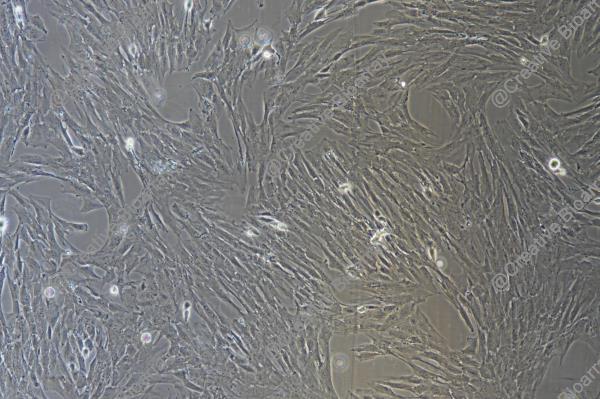
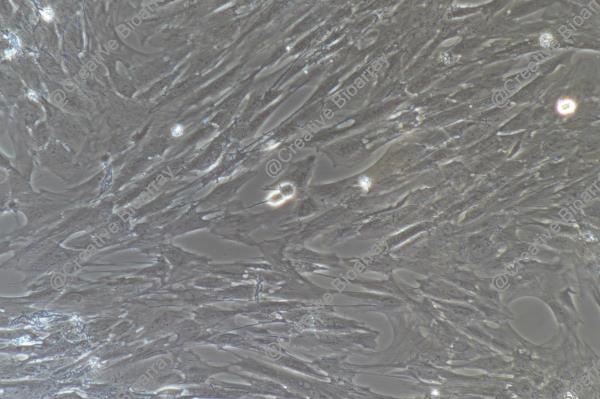
Morphology: Polygonal
Culture Properties: Adherent
- Specification
- Background
- Scientific Data
- Q & A
- Customer Review
Note: Never can cells be kept at -20°C.
Muscle satellite cells (MuSCs) are the major cell type involved in skeletal muscle regeneration and are essential for the growth, maintenance, and repair of skeletal muscle after birth. In mature resting muscle, MuSCs mainly remain in a quiescent state. However, upon muscle damage, these cells are activated and undergo self-renewal, proliferation, differentiation, and fusion. Ultimately, they will form new muscle fibers and repair damaged muscle tissue.
Pigs have many advantages in modeling human diseases due to their anatomical and physiological similarities to human beings. Porcine muscle satellite cells (pMuSCs) are crucial for studying skeletal muscle development and regeneration and can also be used to produce cultured meat. Like MuSCs from other species, porcine MuSCs also lose their proliferation and differentiation capabilities during long-term in vitro culture. Furthermore, the isolation of primary cells suffers from drawbacks such as time consumption, labor-intensive procedures, and significant inter-individual variability. Researches on porcine muscle is often limited by the use of primary muscle satellite cells. Therefore, it is necessary to establish porcine muscle satellite cells capable of long-term stable passaging in vitro. To address this challenge and maintain the normal function of pMuSCs during in vitro passage, we generated an Immortalized Porcine Skeletal Muscle Satellite Cells (SV40 T-pMuSCs) by stably expressing SV40 T-antigen using a lentiviral vector system. SV40 T-pMuSCs can provide a valuable source of cells for studying porcine skeletal muscle development and differentiation.
Establishment and Characterization of SV40 T-Antigen Immortalized Porcine Skeletal Muscle Satellite Cells
A common method to establish an immortalized cell line is to transfect the primary cells with SV40 T-antigen gene. In this study, primary muscle satellite cells (MuSCs) were isolated from a 1-day-old Western commercial pig's longissimus dorsi muscle using the differential adhesion method. Subsequently, an immortalized porcine skeletal muscle satellite cell line (SV40 T-pMuSCs) was established by transducing the SV40 T-antigen.
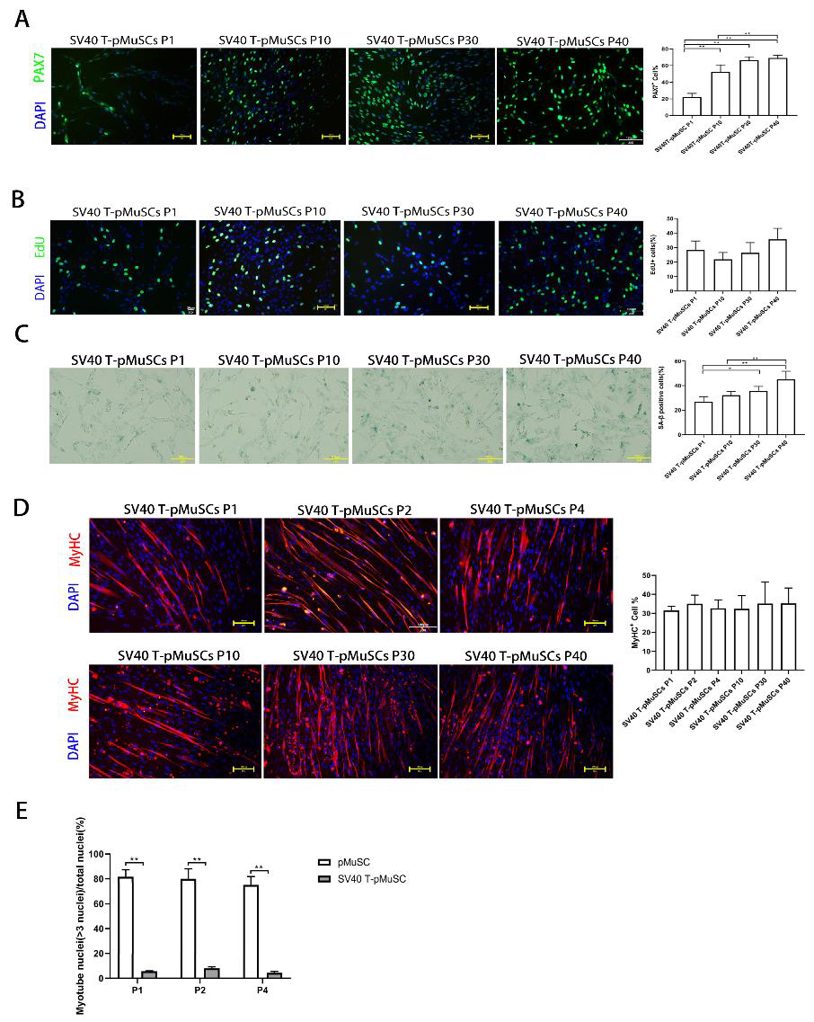
The SV40 T-pMuSCs can be stably sub-cultured for over 40 generations in vitro. An evaluation of SV40 T-pMuSCs was conducted through immunofluorescence staining, quantitative real-time PCR, EdU assay, and SA-β-gal activity. Their proliferation capacity was similar to that of primary pMuSCs at passage 1, and while their differentiation potential was slightly decreased. SiRNA-mediated interference of SV40 T-antigen expression restored the differentiation capability of SV40 T-pMuSCs. Taken together, the results provide a valuable tool for studying pig skeletal muscle development and differentiation.
These cells offer enhanced reliability, uniformity, and longevity, which are crucial for obtaining consistent and reproducible results. By using CSC-I2067Z cells, researchers can minimize variability and increase the robustness of their experimental outcomes.
Yes, Immortalized Porcine Skeletal Muscle Satellite Cells are highly suitable for high-throughput screening due to their consistent growth and predictable behavior. This makes them an excellent choice for large-scale drug screening and other high-throughput applications.
Every batch of Immortalized Porcine Skeletal Muscle Satellite Cells (Cat No.: CSC-I2067Z) undergoes rigorous quality control testing, including assessments of morphology, growth rate, genetic stability, and absence of contaminants. This ensures you receive high-quality cells for your research.
Our dedicated team of scientists and technical support staff are available to assist you with any questions or issues you may encounter. From initial setup to troubleshooting, we are here to support your research every step of the way.
Ask a Question
Write your own review
Description: Immortalized Cynomolgus Monkey Pulmonary Artery Smooth Muscle Cells-GFP provided by Creative Bioarray have been developed by immortalizing cynomolgus monkey pulmonary artery smooth muscle cells with ...
Description: Immortalized Monkey Spleen Fibroblasts-SV40T were developed from monkey tissues transduced with a lentiviral expression vector containing the SV40T gene. The cell line was continuously cultured for ...
Description: Immortalized Monkey Bronchial Fibroblasts-GFP provided by Creative Bioarray have been developed by immortalizing monkey bronchial fibroblasts with SV40 Large T antigen and transfecting with tGFP. The ...
Description: Immortalized Canine Kidney Fibroblasts-SV40 have been obtained immortalizing Canine Kidney Fibroblasts with Lenti-SV40 Lentivirus. Immortalized cells were controlled passaging side by side with the ...
Description: Immortalized Monkey Primary Aortic Endothelial Cells-GFP provided by Creative Bioarray have been developed by immortalizing primary monkey aortic endothelial cells with SV40 Large T antigen and ...

Description: Immortalized Monkey Pancreatic Epithelial Cells-SV40T were developed from monkey tissues transduced with a lentiviral expression vector containing the SV40T gene. The cell line was continuously ...
- Adipose Tissue-Derived Stem Cells
- Human Neurons
- Mouse Probe
- Whole Chromosome Painting Probes
- Hepatic Cells
- Renal Cells
- In Vitro ADME Kits
- Tissue Microarray
- Tissue Blocks
- Tissue Sections
- FFPE Cell Pellet
- Probe
- Centromere Probes
- Telomere Probes
- Satellite Enumeration Probes
- Subtelomere Specific Probes
- Bacterial Probes
- ISH/FISH Probes
- Exosome Isolation Kit
- Human Adult Stem Cells
- Mouse Stem Cells
- iPSCs
- Mouse Embryonic Stem Cells
- iPSC Differentiation Kits
- Mesenchymal Stem Cells
- Immortalized Human Cells
- Immortalized Murine Cells
- Cell Immortalization Kit
- Adipose Cells
- Cardiac Cells
- Dermal Cells
- Epidermal Cells
- Peripheral Blood Mononuclear Cells
- Umbilical Cord Cells
- Monkey Primary Cells
- Mouse Primary Cells
- Breast Tumor Cells
- Colorectal Tumor Cells
- Esophageal Tumor Cells
- Lung Tumor Cells
- Leukemia/Lymphoma/Myeloma Cells
- Ovarian Tumor Cells
- Pancreatic Tumor Cells
- Mouse Tumor Cells