
Peripheral Blood Mononuclear Cells
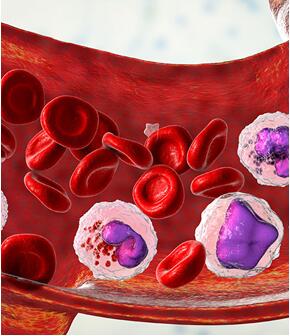

Peripheral blood serves as a readily accessible source of immune and hematopoietic cells that play essential roles in host defense, immune regulation, inflammation, and tissue homeostasis. Peripheral blood mononuclear cells (PBMCs), together with specialized immune cell subsets and progenitor populations, are widely used to investigate immune responses, disease mechanisms, and therapeutic interventions across diverse research fields.
Our peripheral blood cell portfolio includes PBMCs, purified lymphocyte and myeloid cell populations, mobilized progenitor cells, disease-derived immune cells, and hematologic malignancy-associated samples. These resources support applications in immunology, inflammation research, cancer immunotherapy, cell therapy development, biomarker discovery, and translational medicine.
Our Peripheral Blood Cell Portfolio Highlights

Comprehensive Immune Cell Resources
Our collection encompasses major immune cell populations, specialized subsets, and hematopoietic progenitor cells for advanced immunology and translational research.
-
Major Immune Cell Populations
- PBMCs, T cells, B cells, and NK cells
- Monocytes, macrophages, and dendritic cells
- Neutrophils, eosinophils, and basophils
-
Specialized Immune Cell Subsets
- CD4+, CD8+, and CD3+ T-cell populations
- Regulatory, naïve, and memory T-cell subsets
- Purified CD14+, CD19+, CD25+, and CD56+ cell populations
-
Stem and Progenitor Cell Resources
- Mobilized peripheral blood mononuclear cells
- CD34+ hematopoietic progenitor cells
- CD133+ stem and progenitor cell populations

Applications in Immunology and Translational Research
These resources support studies spanning immune regulation, inflammatory diseases, hematologic malignancies, and cell-based therapeutics.
-
Immunology and Inflammation Research
Suitable for investigating immune activation, cytokine responses, immune-cell interactions, and mechanisms underlying autoimmune and inflammatory diseases.
-
Cancer Immunotherapy Development
Support CAR-T research, NK-cell studies, immune checkpoint evaluation, immune profiling, and adoptive cell therapy development.
-
Disease-Specific Immune Models
Access to PBMCs and plasma samples derived from autoimmune disorders, metabolic diseases, inflammatory conditions, and hematologic cancers.
-
Stem Cell and Cell Therapy Research
Applicable for hematopoietic stem cell studies, gene engineering workflows, regenerative medicine, and translational therapeutic development.

40 +
Immune Cell Types
and Subsets

20 +
Disease and Cancer
Models

100 %
Mycoplasma-Free
Tested
Why are PBMCs widely used in immunology research?
PBMCs contain multiple immune cell populations, including T cells, B cells, NK cells, and monocytes, providing a physiologically relevant system for studying immune responses, cytokine signaling, antigen recognition, and immune regulation.
What purified immune cell subsets are available?
Our portfolio includes purified CD3+, CD4+, CD8+, CD14+, CD19+, CD25+, CD34+, and CD56+ cell populations, as well as regulatory T cells, memory T cells, naïve T cells, dendritic cells, macrophages, and additional specialized immune subsets.
How can disease-derived PBMCs support translational research?
Disease-specific PBMCs enable researchers to investigate patient-associated immune signatures, identify biomarkers, evaluate therapeutic responses, and better understand disease mechanisms in autoimmune disorders, inflammatory diseases, metabolic conditions, and hematologic malignancies.
What applications are supported by mobilized CD34+ progenitor cells?
Mobilized CD34+ cells are commonly used in hematopoietic stem cell biology, gene editing studies, regenerative medicine research, cell therapy development, and hematopoietic reconstitution investigations.
Can these cells be used for cancer immunotherapy research?
Yes. PBMCs and purified immune cell subsets are widely utilized in CAR-T development, NK-cell research, immune checkpoint studies, cytotoxicity assays, immune monitoring, and other immuno-oncology applications.
Filters Clear all filters
Species
- Human (797)
- Mouse (3)
- Rat (1)
Source
- Adipose (9)
- Adrenal Gland (4)
- Airway (7)
- Aorta (16)
- Artery (47)
- Bile Duct (1)
- Bladder (8)
- Blood (157)
- Bone (3)
- Bone Marrow (81)
- Brain (36)
- Breast (10)
- Bronchus (20)
- Cartilage (6)
- Chorion (2)
- Choroid (3)
- Ciliary Body (1)
- Colon (10)
- Conjunctiva (2)
- Cord Blood (24)
- Cornea (2)
- Dental Pulp (4)
- Dermis (43)
- Embryo (2)
- Endometrium (2)
- Epidermis (19)
- Esophagus (4)
- Eye (20)
- Foreskin (2)
- Gallbladder (1)
- Gingiva (2)
- Hair Follicle (5)
- Heart (14)
- Intestine (20)
- Iris (1)
- Kidney (31)
- Lens (1)
- Liver (34)
- Lung (56)
- Lymph Node (2)
- Mesentery (3)
- Nose (1)
- Oral Cavity (3)
- Ovary (10)
- Pancreas (8)
- Pancreatic Islet (1)
- Perineurium (1)
- Periodontal Ligament (2)
- Periodontium (4)
- Peripheral Blood (130)
- Peritoneal Cavity (2)
- Placenta (11)
- Prostate (8)
- Rectum (1)
- Retina (9)
- Seminal Vesicle (1)
- Skeletal Muscle (9)
- Skin (78)
- Small Intestine (5)
- Spinal Cord (1)
- Spleen (6)
- Stomach (3)
- Synovial Fluid (2)
- Synovium (8)
- Tendon (1)
- Testis (3)
- Thymus (3)
- Thyroid (4)
- Tongue (1)
- Tonsil (3)
- Tooth (4)
- Trabecular Meshwork (1)
- Trachea (6)
- Umbilical Cord (23)
- Uterus (7)
- Vas Deferens (1)
- Vein (30)
Cell Type
- Astrocyte (9)
- B Cell (22)
- Basophil (1)
- Cardiomyocyte (2)
- CD133+ Cell (6)
- CD34+ Cell (16)
- Cholangiocyte (1)
- Chondrocyte (4)
- Dendritic Cell (4)
- Endothelial Cell (133)
- Eosinophil (1)
- Epithelial Cell (84)
- Fibroblast (139)
- Glial Cell (14)
- Granule Cell (1)
- Granulocyte (3)
- Hepatic Stellate Cell (3)
- Hepatocyte (8)
- Interstitial Cell (1)
- Keratinocyte (14)
- Keratocyte (1)
- Kupffer Cell (1)
- Lymphocyte (55)
- Macrophage (4)
- Melanocyte (10)
- Meningeal Cell (1)
- Mesangial Cell (2)
- Mesothelial Cell (2)
- Microglia (1)
- Microvascular Cell (61)
- Monocyte (7)
- Mononuclear Cell (98)
- Myeloid Cell (2)
- Myoblast (5)
- Myosatellite Cell (1)
- Neuron (7)
- Neutrophil (2)
- NK Cell (5)
- Oligodendrocyte Progenitor Cell (3)
- Osteoblast (3)
- Pancreatic Stellate Cell (1)
- Pericyte (10)
- Podocyte (1)
- Preadipocyte (10)
- Progenitor Cell (4)
- Red Blood Cell (1)
- Satellite Cell (1)
- Schwann Cell (1)
- Sebocyte (1)
- Sertoli Cell (1)
- Skeletal Muscle Cell (2)
- Smooth Muscle Cell (48)
- Stromal Cell (16)
- Synoviocyte (6)
- T Cell (28)
- Tenocyte (1)
- Trabecular Meshwork Cell (1)
- Trophoblast (1)
Disease
- Acute Lymphocytic Leukemia (ALL) (15)
- Acute Myeloid Leukemia (AML) (13)
- Amyotrophic Lateral Sclerosis (ALS) (4)
- Aplastic Anemia (AA) (1)
- Arteriovenous Malformation (AVM) (1)
- Asthma (5)
- Astrocytoma (2)
- Autoimmune Hemolytic Anemia (AIHA) (1)
- Autoimmune Lymphoproliferative Syndrome (ALPS) (1)
- Breast Cancer (3)
- Cancer (121)
- Chronic Lymphocytic Leukemia (CLL) (19)
- Chronic Myeloid Leukemia (CML) (14)
- Chronic Obstructive Pulmonary Disease (COPD) (6)
- Colon Cancer (4)
- Crohn's Disease (3)
- Cystic Fibrosis (CF) (7)
- Diabetes (35)
- Diabetes Type 1 (16)
- Diabetes Type 2 (18)
- Diffuse Large B-Cell Lymphoma (4)
- Dilated Cardiomyopathy (DCM) (1)
- Duchenne Muscular Dystrophy (DMD) (5)
- Essential Thrombocythemia (ET) (1)
- Glioblastoma (3)
- Guillain-Barre Syndrome (GBS) (1)
- Hypertension (27)
- Idiopathic Thrombocytopenic Purpura (ITP) (1)
- Inflammatory Bowel Disease (IBD) (5)
- Iron-Deficiency Anemia (1)
- Kidney Cancer (3)
- Legg–Calvé–Perthes Disease (LCPD) (2)
- Leukopenia (1)
- Liver Cancer (3)
- Lung Cancer (6)
- Mantle Cell Lymphoma (MCL) (8)
- Melanoma (2)
- Mucopolysaccharidosis (2)
- Multiple Myeloma (MM) (12)
- Multiple Sclerosis (MS) (3)
- Muscular Dystrophy (MD) (1)
- Myelodysplastic Syndrome (MDS) (3)
- Neurofibromatosis (NF) (3)
- Non-Hodgkin Lymphoma (NHL) (10)
- Normal (524)
- Osteoarthritis (OA) (5)
- Ovarian Cancer (6)
- Pancreatic Cancer (1)
- Pancytopenia (1)
- Parkinson's Disease (PD) (2)
- Plasmacytoma (1)
- Polycythemia (1)
- Prostate Cancer (3)
- Psoriasis (4)
- Rheumatoid Arthritis (RA) (7)
- Robertsonian Translocation (ROB) (1)
- Sickle Cell Anemia (2)
- Systemic Lupus Erythematosus (SLE) (4)
- Thrombocytopenia (1)
- Transverse Myelitis (TM) (1)
- Ulcerative Colitis (UC) (2)
- Waldenström Macroglobulinemia (WM) (2)
Description: Origin: HumanDesease: Acute Lymphoblastic Leukemia (ALL)Application: These cells can be used to ...
Description: Origin: HumanDesease: Acute Myeloid Leukemia (AML)Application: These cells can be used to ...
Description: Origin: HumanDesease: Chronic Lymphocytic Leukemia (CLL)Application: These cells can be used to ...
Description: Origin: HumanDesease: chronic myeloid leukemia, Philadelphia negative (CML(-))Application: These ...
Description: Origin: HumanDesease: Multiple Myeloma (MM)Application: These cells can be used to investigate stem ...
Description: Origin: HumanDesease: Non-Hodgkin's Lymphoma (NHL)Application: These cells can be used to ...
Description: Human Peripheral Blood CD25+ Regulatory T Cells are isolated from peripheral blood of healthy ...
Description: Myeloid Dendritic Cells are Antigen Presenting Cells (APCs) that process foreign antigens and ...