
Mouse Tumor Cells

Mouse tumor cell lines are one of the most commonly used experimental models in cancer biology, immuno-oncology, and preclinical drug development. These models, derived from spontaneous, chemically produced or genetically modified mouse tumors, are excellent tools to study tumor initiation, development, metastasis, immune modulation and treatment response.

We have a large variety of well-characterized mouse tumor cell models available for a number of different forms of cancer such as melanoma, breast cancer, lung cancer, colon cancer, lymphoma, leukaemia, liver cancer, and sarcoma. These cell lines are extensively used for syngeneic malignant studies, immunotherapy evaluation, molecular mechanism research, and anticancer drug screening applications.

Well-Established Immunocompetent-Compatible Research-Validated Supported
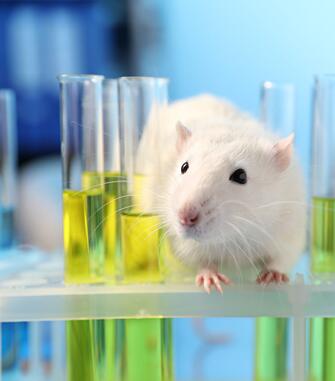
Mouse Tumor Cells
Product List

Key Features & Expertise

Our mouse tumor cell models support a wide range of oncology and immunology research applications

Broad Coverage of Mouse Cancer Models

  • Includes commonly used models across solid tumors and hematologic malignancies
  • Suitable for studies of tumor growth, invasion, metastasis, and angiogenesis
  • Reflect diverse genetic and biological characteristics of murine cancers

Ideal for Immuno-Oncology & Syngeneic Studies

  • Compatible with immunocompetent mouse models for syngeneic tumor experiments
  • Widely used in immune checkpoint, CAR-T, and combination therapy research
  • Support investigations into tumor microenvironment and immune response mechanisms

Reliable Quality & Experimental Consistency

  • Quality controlled for reproducible research performance
  • Mycoplasma-free and maintained using standardized culture procedures
  • Cryopreserved stocks with stable supply and technical support available

FAQ

Why mouse tumor cell lines are so popular in cancer research?

Mouse tumor cell lines are very useful since they are compatible with syngeneic mice models and immunocompetent systems. This makes them very valuable for researching in vivo tumor-immune interactions, immunotherapy response and tumour development.

What is the benefit of employing mouse tumor cells in syngeneic models?

Unlike xenograft models that need immunodeficient mice, syngeneic models use mouse tumor cells transplanted in genetically matched immunocompetent mice. This enables researchers to study immune responses, checkpoint inhibitors and immunotherapies in a more physiologically appropriate environment.

What cancer types are commonly represented in mouse tumor cell collections?

Mouse tumor collections typically include models for melanoma, breast cancer, colorectal cancer, lung cancer, lymphoma, leukemia, liver cancer, pancreatic cancer, and sarcoma. These models support a broad range of oncology research applications.

Can we use mouse tumor cells for immunotherapy research?

Yes. Mouse tumor cell lines are widely employed in immuno-oncology studies, including checkpoint blocking, CAR-T therapy, tumor microenvironment analysis, cytokine research, and combination treatment evaluation.

Do mouse tumor cell lines maintain stable tumorigenicity over time?

Many mouse tumor cell lines retain stable tumorigenic potential when properly maintained. However, prolonged passaging may alter growth characteristics or immune-related phenotypes. Researchers are generally advised to use low-passage cells and establish working cell banks for consistency.

Are these cell lines suitable for both in vitro and in vivo studies?

Absolutely. Mouse tumor cells are commonly used in standard in vitro assays such as proliferation, migration, invasion, and drug sensitivity testing, as well as in vivo tumorigenicity and metastasis studies in syngeneic mouse models.

Filters Clear all filters

Species

  • African clawed frog (1)
  • American mink (1)
  • Asian tiger mosquito (1)
  • Atlantic salmon (1)
  • Bluegill (2)
  • Bluestriped grunt (1)
  • Bovine (7)
  • Brazilian free-tailed bat (1)
  • Brown bullhead (2)
  • Cabbage looper (1)
  • Cabbage moth (6)
  • Cat (3)
  • Central mudminnow (1)
  • Chicken (3)
  • Chinese hamster (5)
  • Chinook salmon (2)
  • Chum salmon (1)
  • Coho salmon (1)
  • Common carp (2)
  • Cotton-top tamarin (1)
  • Dog (2)
  • Fall armyworm (3)
  • Fathead minnow (2)
  • Fruit fly (1)
  • Gilthead sea bream (2)
  • Golden hamster (7)
  • Goldfish (6)
  • Gray dwarf hamster (1)
  • Green monkey (2)
  • Gypsy moth (1)
  • Horse (1)
  • Japanese eel (1)
  • Japanese rice fish (7)
  • Koi carp (1)
  • Mouse (310)
  • Mouse x Gray dwarf hamster (1)
  • Mouse x Rat (20)
  • Northern pike (1)
  • Pig (3)
  • Rabbit (2)
  • Rainbow trout (3)
  • Rat (114)
  • Rhesus macaque (1)
  • Salt marsh moth (1)
  • Sheep (2)
  • Snakehead murrel (2)
  • Sockeye salmon (1)
  • Vervet monkey (2)
  • Zebrafish (2)

Source

  • Abdomen (1)
  • Adipose (2)
  • Adrenal Gland (1)
  • Aorta (4)
  • Artery (1)
  • Ascites (5)
  • Ascites Metastasis (5)
  • Bladder (11)
  • Bladder Metastasis (1)
  • Blastocyst (1)
  • Blastula (1)
  • Blood (7)
  • Bone (6)
  • Bone Marrow (14)
  • Brain (24)
  • Brain Metastasis (1)
  • Breast (22)
  • Caudal Peduncle (1)
  • Caudal Trunk (2)
  • Colon (6)
  • Connective Tissue (7)
  • Dermis (1)
  • Embryo (29)
  • Fetus (2)
  • Fin (9)
  • Glomerulus (2)
  • Head Kidney (2)
  • Heart (4)
  • Hemolymph (1)
  • Ileum (1)
  • Intestine (9)
  • Jejunum (1)
  • Kidney (18)
  • Liver (22)
  • Lung (16)
  • Lymph Node (2)
  • Lymph Node Metastasis (1)
  • Muscle (3)
  • Ovary (8)
  • Pancreas (9)
  • Peripheral Blood (7)
  • Peripheral Nervous System (21)
  • Pituitary Gland (7)
  • Prostate (3)
  • Rectum (2)
  • Skeletal Muscle (4)
  • Skin (10)
  • Small Intestine (3)
  • Smooth Muscle (2)
  • Soft Tissue (1)
  • Spinal Cord (2)
  • Testis (6)
  • Thymus (5)
  • Thyroid Gland (1)
  • Trachea (1)
  • Uterus (1)

Disease

  • Bovine Leukemia (2)
  • Canine Histiocytic Sarcoma (1)
  • Chicken Bursal Lymphoma (2)
  • Goldfish Erythrophoroma (4)
  • Hamster Kidney Tumor (1)
  • Hamster Pancreatic Ductal Adenocarcinoma (1)
  • Hamster Uterine Leiomyosarcoma (1)
  • Medaka Hepatoma (2)
  • Mouse Bladder Transitional Cell Carcinoma (1)
  • Mouse Chondrosarcoma (1)
  • Mouse Colon Adenocarcinoma (3)
  • Mouse Ependymoma (2)
  • Mouse Erythroid Leukemia (13)
  • Mouse Fibrosarcoma (5)
  • Mouse Glioblastoma (1)
  • Mouse Hemangioendothelioma (1)
  • Mouse Hepatocellular Carcinoma (1)
  • Mouse Insulinoma (3)
  • Mouse Islet Cell Adenoma (1)
  • Mouse Kidney Carcinoma (1)
  • Mouse Leukemia (10)
  • Mouse Leydig Cell Tumor (1)
  • Mouse Lymphoma (8)
  • Mouse Mammary Gland Malignant Neoplasm (21)
  • Mouse Melanoma (9)
  • Mouse Multiple Myeloma (5)
  • Mouse Myeloid Leukemia (3)
  • Mouse Neoplasm (1)
  • Mouse Neuroblastoma (21)
  • Mouse Oral Cavity Squamous Cell Carcinoma (1)
  • Mouse Osteosarcoma (3)
  • Mouse Pituitary Gland Neoplasm (1)
  • Mouse Precursor T Cell Lymphoblastic Lymphoma/Leukemia (2)
  • Mouse Pulmonary Adenoma (1)
  • Mouse Pulmonary Malignant Tumor (3)
  • Mouse Pulmonary Squamous Cell Carcinoma (1)
  • Mouse Rectum Carcinoma (2)
  • Mouse Reticulum Cell Sarcoma (2)
  • Mouse Sarcoma (1)
  • Mouse Teratocarcinoma (8)
  • Mouse Thymic Lymphoma (3)
  • Rat C-Cell Carcinoma (1)
  • Rat Cholangiocarcinoma (1)
  • Rat Colon Adenocarcinoma (5)
  • Rat Digestive System Neoplasm (1)
  • Rat Fibrosarcoma (1)
  • Rat Hepatocellular Carcinoma (20)
  • Rat Histiocytic Sarcoma (1)
  • Rat Insulinoma (2)
  • Rat Leukemia (1)
  • Rat Leydig Cell Adenoma (1)
  • Rat Lung Carcinoma (1)
  • Rat Malignant Glioma (4)
  • Rat Malignant Meningioma (1)
  • Rat Malignant Oligodendroglioma (2)
  • Rat Malignant Thymoma (3)
  • Rat Mammary Gland Adenocarcinoma (10)
  • Rat Neuroblastoma (3)
  • Rat Osteosarcoma (2)
  • Rat Pituitary Gland Neoplasm (6)
  • Rat Prostate Adenocarcinoma (3)
  • Rat Rhabdomyosarcoma (1)
  • Rat Sarcoma (2)
  • Rat Squamous Cell Carcinoma (1)
  • Rat Urinary Bladder Transitional Cell Carcinoma (2)
  • Rat Urinary System Neoplasm (6)

Description: CLONE NA is a subclone of Neuro-2a, a clonal line of C1300 mouse neuroblastoma cells. The cells ...

Cat#: CSC-C9369J INQUIRY

Description: ND-C hybrid cells were derived after fusion of primary neonatal-rat dorsal-root-gauglion (DRG) ...

Cat#: CSC-C9370J INQUIRY

Description: Cloned from the C1300 mouse neuroblastoma line. Adapted to culture by alternate in vivo and in ...

Cat#: CSC-C9376J INQUIRY

Description: Virus Susceptibility: polyomavirusHistopathology: carcinomaNote: Tested and found negative for ...

Cat#: CSC-C9376L INQUIRY

Description: Adrenergic clone derived from the mouse neuroblastoma C1300 tumour.

Cat#: CSC-C9377J INQUIRY
CAD
CAD

Description: CAD cells (Cath.-a-differentiated) are a variant of a CNS catecholaminergic cell line established ...

Cat#: CSC-C9383J INQUIRY

Description: A bromodeoxyuridine-resistant mutant of N1E-115. The cell line N1E-115 is an adrenergic cell line ...

Cat#: CSC-C9390J INQUIRY

Description: A bromodeoxyuridine-resistant mutant of N1E-115. The cell line N1E-115 is an adrenergic cell line ...

Cat#: CSC-C9391J INQUIRY

Description: A bromodeoxyuridine-resistant mutant of N1E-115. The cell line N1E-115 is an adrenergic cell line ...

Cat#: CSC-C9392J INQUIRY

Description: A bromodeoxyuridine-resistant mutant of N1E-115. The cell line N1E-115 is an adrenergic cell line ...

Cat#: CSC-C9393J INQUIRY

Description: A bromodeoxyuridine-resistant mutant of N1E-115. The cell line N1E-115 is an adrenergic cell line ...

Cat#: CSC-C9407J INQUIRY

Description: A 6-thioguanine-resistant mutant of NS20Y The cell line NS20Y is a cholinergic cell line derived ...

Cat#: CSC-C9408J INQUIRY

Description: A subclone of the cell line N1E-115 established by Amano et al. The cell line N1E-115 is an ...

Cat#: CSC-C9409J INQUIRY

Description: A bromodeoxyuridine-resistant mutant of NS20Y The cell line NS20Y is a cholinergic cell line ...

Cat#: CSC-C9410J INQUIRY

Description: A bromodeoxyuridine-resistant mutant of NS20Y The cell line NS20Y is a cholinergic cell line ...

Cat#: CSC-C9411J INQUIRY

Description: A bromodeoxyuridine-resistant mutant of NS20Y The cell line NS20Y is a cholinergic cell line ...

Cat#: CSC-C9412J INQUIRY

Description: A bromodeoxyuridine-resistant mutant of NS20Y. The cell line NS20Y is a cholinergic cell line ...

Cat#: CSC-C9413J INQUIRY

Description: A bromodeoxyuridine-resistant mutant of NS20Y The cell line NS20Y is a cholinergic cell line ...

Cat#: CSC-C9414J INQUIRY

For research use only. Not for any other purpose.