
Bone Cells
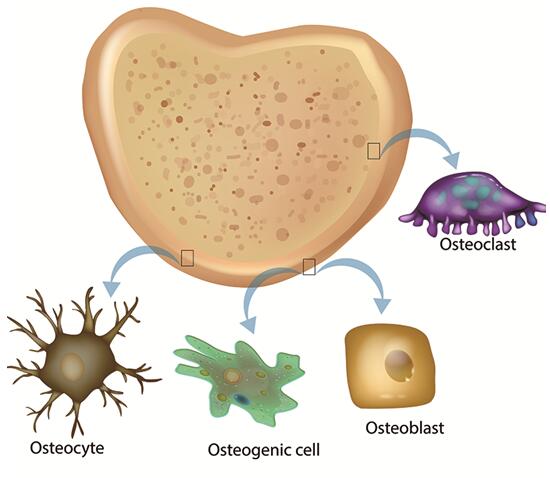

Our bone cell portfolio features primary human osteoblast models derived from anatomically distinct skeletal tissues, including femoral and calvarial bone. These cells provide physiologically relevant in vitro systems for studying bone formation, mineralization, skeletal development, and bone remodeling processes.
Widely used in orthopedic research, regenerative medicine, biomaterials evaluation, and osteoporosis-related studies, our osteoblast resources support investigations into osteogenic differentiation, extracellular matrix production, and bone tissue responses to therapeutic interventions.

4 +
Research
Application

100 %
Mycoplasma-Free
Tested

24-72 h
Rapid
Delivery
Filter By:
Our Bone Cell Portfolio Highlights

Primary Osteoblast Resources
Our collection includes primary osteoblasts isolated from different skeletal sites, supporting a broad range of bone biology applications.
-
Anatomically Distinct Osteoblast Models
- Human femoral osteoblasts
- Human calvarial osteoblasts
- Primary human osteoblast cultures
-
Bone Formation Research Tools
- Osteogenic differentiation studies
- Bone matrix synthesis investigations
- Mineralization and bone remodeling research
-
Research-Ready Cell Resources
- Cryopreserved primary cell formats
- Suitable for routine and advanced bone research workflows

Bone Research Support
We support research projects focused on skeletal biology, bone regeneration, and musculoskeletal disease mechanisms.
-
Osteogenesis Studies
Suitable for evaluating osteoblast proliferation, differentiation, matrix deposition, and mineralization capacity.
-
Biomaterial and Implant Evaluation
Applicable for assessing cellular responses to bone graft materials, orthopedic implants, and tissue-engineering scaffolds.
-
Bone Disease Research
Support for investigations involving osteoporosis, fracture healing, bone defects, and skeletal regeneration.
-
Customized Project Support
Flexible solutions for academic research, preclinical studies, and regenerative medicine programs.
What is the difference between femoral and calvarial osteoblasts?
Femoral and calvarial osteoblasts originate from different skeletal regions and may exhibit distinct growth characteristics, gene expression profiles, and mineralization behavior. Researchers often select a specific osteoblast source based on the biological context of their study.
Can these cells be used for osteogenic differentiation and mineralization assays?
Yes. Human osteoblasts are commonly used to evaluate osteogenic activity through alkaline phosphatase expression, matrix deposition, calcium accumulation, and mineralized nodule formation assays.
Are these cells suitable for bone biomaterial testing?
Yes. Osteoblasts are widely used to assess biocompatibility, cellular attachment, proliferation, differentiation, and osteointegration potential of bone grafts, scaffolds, coatings, and implant materials.
Which endpoints are commonly evaluated using osteoblast cultures?
Common endpoints include cell viability, alkaline phosphatase activity, collagen production, osteogenic marker expression, extracellular matrix formation, and calcium mineralization.
What research areas commonly utilize primary human osteoblasts?
Primary human osteoblasts are frequently used in studies of bone development, osteoporosis, fracture repair, skeletal regeneration, orthopedic biomaterials, tissue engineering, and bone-targeted drug discovery.