
Leukemia/Lymphoma/Myeloma Cells

Leukemia, lymphoma, and myeloma represent a diverse group of malignancies originating from the blood-forming tissues and cells of the immune system. Characterized by the uncontrolled proliferation of hematopoietic cells, these diseases range from acute, rapidly progressing leukemias to chronic lymphomas and plasma cell dyscrasias like multiple myeloma.

Our comprehensive collection of leukemia, lymphoma, and myeloma cell lines provides essential in vitro models for hematologic oncology. These lines are indispensable for studying liquid tumor biology, exploring signal transduction in immune cells, and developing novel targeted therapies or immunotherapies.

Hematopoietic Authentic Characterized Validated
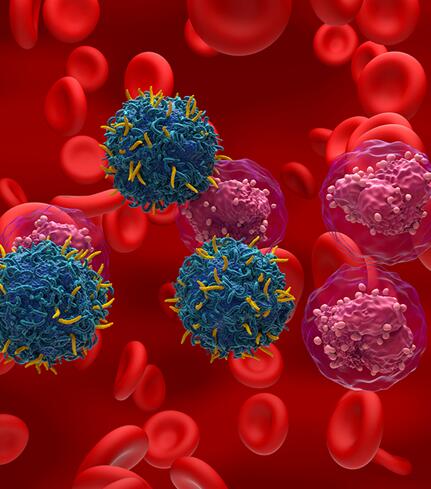
Leukemia Lymphoma Myeloma Cells
Product List

Key Features & Expertise

Our hematologic malignancy cell lines are optimized for high-performance research in blood cancers:

Broad Disease Representation

  • Extensive range covering AML, ALL, CML, and various B-cell and T-cell lymphomas.
  • Multiple myeloma models representing different stages of plasma cell malignancy.
  • Inclusion of rare subtypes and cell lines with specific lineage markers.

Cytogenetic & Molecular Profiling

  • Documented chromosomal translocations such as BCR-ABL1 (Philadelphia chromosome).
  • Characterized mutations in key genes including FLT3, NPM1, and TP53.
  • Verified immunophenotypes (CD markers) consistent with original clinical diagnoses.

Research-Ready Reliability

  • STR-authenticated to ensure the highest standards of identity and purity.
  • Certified Mycoplasma-free and quality controlled for consistent suspension growth.
  • Ideal for flow cytometry, apoptosis assays, and drug sensitivity profiling.

FAQ

What are the primary differences between leukemia and lymphoma cell lines?

Leukemia cell lines generally represent malignancies originating in the bone marrow and blood, often showing suspension growth in culture. Lymphoma cell lines typically derive from solid tumor masses in the lymphatic system, though many also adapt to suspension culture in vitro.

How do I handle the suspension growth of these cell lines?

Most leukemia and myeloma cells grow in suspension or form loose clusters. They require regular monitoring of cell density and viability, with subculturing typically performed by dilution or centrifugation rather than enzymatic detachment.

Are these cell lines suitable for studying targeted therapies like Imatinib?

Yes. Many of our lines, particularly CML models with the BCR-ABL1 translocation, are standard tools for studying tyrosine kinase inhibitors (TKIs) and mechanisms of drug resistance.

Do you provide information on the CD markers expressed by these cells?

Yes, for many leukemia and lymphoma cell lines, we provide data on key surface markers (e.g., CD19, CD20, CD3, CD33) which is crucial for immunophenotyping and antibody-based drug research.

How should I preserve the genetic stability of my hematologic cell lines?

To minimize genetic drift and phenotypic changes, it is recommended to maintain a low-passage cell bank in liquid nitrogen and routinely verify the culture's characteristics.

Filters Clear all filters

Species

  • Cat (1)
  • Human (989)
  • Mouse (5)
  • Rat (1)

Source

  • Abdomen Metastasis (2)
  • Adrenal Gland (7)
  • Adrenal Gland Metastasis (2)
  • Ascites (23)
  • Ascites Metastasis (32)
  • Bile Duct (3)
  • Bladder (12)
  • Blood (120)
  • Bone (21)
  • Bone Marrow (43)
  • Bone Marrow Metastasis (18)
  • Bone Metastasis (6)
  • Brain (31)
  • Brain Metastasis (6)
  • Breast (8)
  • Bronchus (1)
  • Cecum (3)
  • Cerebrospinal Fluid (1)
  • Cerebrospinal Fluid Metastasis (1)
  • Cervix (32)
  • Colon (83)
  • Cornea (3)
  • Cutaneous Metastasis (1)
  • Dermis (1)
  • Duodenum (1)
  • Endometrium (17)
  • Esophagus (44)
  • Eye (12)
  • Eye Socket (5)
  • Fetus (1)
  • Foreskin (4)
  • Gallbladder (1)
  • Gingiva (2)
  • Globe (2)
  • Groin (1)
  • Hypodermis Metastasis (5)
  • Intestine (84)
  • kidney (1)
  • Kidney (9)
  • Liver (13)
  • Liver Metastasis (17)
  • Lung (42)
  • Lung Metastasis (8)
  • Lymph Node (5)
  • Lymph Node Metastasis (56)
  • Muscle (4)
  • Muscle Metastasis (2)
  • Nose (2)
  • Omentum Metastasis (2)
  • Oral Cavity (10)
  • Ovary (13)
  • Ovary Metastasis (2)
  • Pancreas (10)
  • Pelvic Wall Metastasis (1)
  • Pelvis (1)
  • Perianal Space Metastasis (1)
  • Pericardial Effusion (1)
  • Pericardial Effusion Metastasis (1)
  • Perineus (1)
  • Peripheral Blood (119)
  • Peritoneal Effusion (2)
  • Peritoneum (1)
  • Peritoneum Metastasis (1)
  • Pharynx (3)
  • Pleural Effusion (54)
  • Pleural Effusion Metastasis (44)
  • Prostate (4)
  • Rectum (13)
  • Renal Pelvis (1)
  • Retroperitoneal Space (2)
  • Salivary Gland (2)
  • Skeletal Muscle (1)
  • Skin (22)
  • Skin Metastasis (3)
  • Small Intestine (1)
  • Small Intestine Metastasis (1)
  • Soft Tissue Metastasis (1)
  • Stomach (4)
  • Testis (9)
  • Thoracic Cavity Metastasis (6)
  • Thyroid Gland (15)
  • Thyroid Gland Metastasis (1)
  • Tongue (5)
  • Umbilical Cord (1)
  • Umbilical Cord Blood (1)
  • Urachus (1)
  • Ureter (1)
  • Uterus (53)
  • Uvea (2)
  • Vagina (2)
  • Vulva (1)

Disease

  • Acute Biphenotypic Leukemia (1)
  • Acute Erythroid Leukemia (4)
  • Acute Megakaryoblastic Leukemia (4)
  • Acute Monocytic Leukemia (9)
  • Acute Myeloid Leukemia (25)
  • Acute Promyelocytic Leukemia (2)
  • Adrenal Gland Neuroblastoma (11)
  • Adult B Acute Lymphoblastic leukemia (1)
  • Adult B Acute Lymphoblastic Leukemia (6)
  • Adult T Acute Lymphoblastic Leukemia (6)
  • Adult T Lymphoblastic Lymphoma (2)
  • Adult T-Cell Leukemia/Lymphoma (1)
  • Alveolar Rhabdomyosarcoma (4)
  • Alveolar Ridge Squamous Cell Carcinoma (1)
  • Amelanotic Melanoma (3)
  • Ampulla of Vater Adenocarcinoma (1)
  • Ampulla of Vater Adenosquamous Carcinoma (3)
  • Anaplastic Astrocytoma (3)
  • Anaplastic Large Cell Lymphoma (7)
  • Askin Tumor (1)
  • Astrocytoma (5)
  • B Acute Lymphoblastic Leukemia (2)
  • B-Cell Non-Hodgkin Lymphoma (5)
  • Bare Lymphocyte Syndrome Type 2 (1)
  • Barrett Adenocarcinoma (2)
  • Benign Prostatic Hyperplasia (1)
  • Bladder Carcinoma (12)
  • Bladder Squamous Cell Carcinoma (1)
  • Breast Adenocarcinoma (1)
  • Breast Carcinoma (9)
  • Breast Ductal Carcinoma (2)
  • Burkitt Lymphoma (17)
  • Canavan Disease (1)
  • Cecum Adenocarcinoma (3)
  • Central Nervous System Lymphoma (2)
  • Cervical Adenocarcinoma (2)
  • Cervical Adenosquamous Carcinoma (2)
  • Cervical Small Cell Carcinoma (1)
  • Cervical Squamous Cell Carcinoma (2)
  • Childhood B Acute Lymphoblastic Leukemia (13)
  • Childhood T Acute Lymphoblastic Leukemia (16)
  • Childhood T Lymphoblastic Lymphoma (1)
  • Cholangiocarcinoma (2)
  • Chronic Eosinophilic Leukemia (1)
  • Chronic Lymphocytic Leukemia (2)
  • Chronic Myeloid Leukemia (23)
  • Clear Cell Renal Cell Carcinoma (2)
  • Colon Adenocarcinoma (53)
  • Colon Carcinoma (33)
  • Colorectal Adenocarcinoma (1)
  • Colorectal Carcinoma (1)
  • Congenital Pure Red Cell Aplasia (1)
  • Cutaneous Melanoma (10)
  • Dedifferentiated Chondrosarcoma (1)
  • Desmoplastic Melanoma (1)
  • Diffuse Large B-Cell Lymphoma (28)
  • Down Syndrome (2)
  • EBV-Related Burkitt Lymphoma (12)
  • Embryonal Carcinoma (3)
  • Embryonal Rhabdomyosarcoma (3)
  • Endometrial Adenocarcinoma (13)
  • Endometrial Adenosquamous Carcinoma (2)
  • Endometrial Carcinoma (2)
  • Endometrioid Stromal Sarcoma (1)
  • Epithelioid Hemangioendothelioma (1)
  • Epithelioid Sarcoma (3)
  • Esophageal Adenocarcinoma (6)
  • Esophageal Squamous Cell Carcinoma (41)
  • Essential Thrombocythemia (1)
  • Ewing Sarcoma (2)
  • Extraskeletal Myxoid Chondrosarcoma (1)
  • Fanconi Anemia (1)
  • Fibrosarcoma (1)
  • Follicular Lymphoma (2)
  • Gallbladder Carcinoma (2)
  • Gallbladder Undifferentiated Carcinoma (2)
  • Gastric Adenocarcinoma (6)
  • Gastric Adenosquamous Carcinoma (1)
  • Gastric Carcinoma (5)
  • Gastric Choriocarcinoma (1)
  • Gastric Fundus Carcinoma (1)
  • Gastric Signet Ring Cell Adenocarcinoma (1)
  • Gastric Small Cell Carcinoma (2)
  • Gastric Tubular Adenocarcinoma (5)
  • Gastroesophageal Junction Adenocarcinoma (1)
  • Gestational Choriocarcinoma (1)
  • Gingival Squamous Cell Carcinoma (2)
  • Glioblastoma (18)
  • Gliosarcoma (1)
  • Hairy Cell Leukemia (1)
  • Hepatoblastoma (2)
  • Hepatocellular Carcinoma (6)
  • Hepatosplenic T-Cell Lymphoma (2)
  • Hereditary Thyroid Gland Medullary Carcinoma (1)
  • High Grade B-Cell Lymphoma (1)
  • High Grade Ovarian Serous Adenocarcinoma (8)
  • Hodgkin Lymphoma (9)
  • Hypopharyngeal Squamous Cell Carcinoma (2)
  • Infectious Mononucleosis (1)
  • Intrahepatic Cholangiocarcinoma (6)
  • Invasive Breast Carcinoma of No Special Type (12)
  • Kidney Neoplasm (1)
  • Kidney Rhabdoid Tumor (1)
  • Krukenberg Tumor (1)
  • Liposarcoma (1)
  • Lung Adenocarcinoma (17)
  • Lung Giant Cell Carcinoma (8)
  • Lung Large Cell Carcinoma (9)
  • Lung Mucoepidermoid Carcinoma (1)
  • Lung Non-Small Cell Carcinoma (2)
  • Lung Small Cell Carcinoma (25)
  • Lung Squamous Cell Carcinoma (9)
  • Lymphoblastic Lymphoma (1)
  • Malignant Peripheral Nerve Sheath Tumor (1)
  • Mantle Cell Lymphoma (5)
  • Mature Gastric Teratoma (1)
  • Maxillary Sinus Squamous Cell Carcinoma (1)
  • Medulloblastoma (3)
  • Melanoma (24)
  • Meningioma (2)
  • Minimally Invasive Lung Adenocarcinoma (1)
  • Monophasic Synovial Sarcoma (1)
  • Mouse Intestinal Tract Neuroendocrine Adenoma (1)
  • Mouse Mammary Gland Malignant Neoplasm (2)
  • Mouse Plasmacytoma (1)
  • Mycosis Fungoides (1)
  • Myelodysplastic Syndrome (1)
  • Myxofibrosarcoma (1)
  • Natural Killer Cell Lymphoblastic Leukemia/Lymphoma (2)
  • Neuroblastoma (26)
  • Oral Cavity Squamous Cell Carcinoma (15)
  • Osteoid Osteoma (1)
  • Osteosarcoma (15)
  • Ovarian Carcinoma (1)
  • Ovarian Clear Cell Adenocarcinoma (1)
  • Ovarian Endometrioid Adenocarcinoma (4)
  • Ovarian Granulosa Cell Tumor (1)
  • Ovarian Mucinous Adenocarcinoma (2)
  • Ovarian Serous Adenocarcinoma (2)
  • Ovarian Serous Cystadenocarcinoma (2)
  • Ovarian Small Cell Carcinoma (1)
  • Pancreatic Adenocarcinoma (13)
  • Pancreatic Carcinoma (5)
  • Pancreatic Ductal Adenocarcinoma (12)
  • Papillomavirus-Independent Cervical Squamous Cell Carcinoma (1)
  • Papillomavirus-Related Cervical Adenocarcinoma (7)
  • Papillomavirus-Related Cervical Squamous Cell Carcinoma (4)
  • Papillomavirus-Related Endocervical Adenocarcinoma (16)
  • Paroxysmal Nocturnal Hemoglobinuria (3)
  • Pharyngeal Squamous Cell Carcinoma (1)
  • Plasma Cell Myeloma (15)
  • Pleural Epithelioid Mesothelioma (5)
  • Pleural Sarcomatoid Mesothelioma (2)
  • Poorly Differentiated Thyroid Gland Carcinoma (1)
  • Primary Cutaneous T-Cell Non-Hodgkin Lymphoma (1)
  • Primary Effusion Lymphoma (7)
  • Primitive Neuroectodermal Tumor (1)
  • Prostate carcinoma (1)
  • Prostate Carcinoma (9)
  • Rectal Adenocarcinoma (13)
  • Rectosigmoid Adenocarcinoma (1)
  • Recurrent Bladder Carcinoma (1)
  • Renal Cell Carcinoma (7)
  • Renal Pelvis Urothelial Carcinoma (1)
  • Retinoblastoma (11)
  • Sacral Chordoma (1)
  • Sacrococcygeal Teratoma (1)
  • Salivary Gland Squamous Cell Carcinoma (1)
  • Sezary Syndrome (1)
  • Shwachman-Diamond Syndrome (1)
  • Skin Squamous Cell Carcinoma (2)
  • Splenic Marginal Zone Lymphoma (1)
  • Testicular Embryonal Carcinoma (8)
  • Testicular Teratoma (2)
  • Testicular Yolk Sac Tumor (1)
  • Thyroid Gland Anaplastic Carcinoma (10)
  • Thyroid Gland Follicular Carcinoma (4)
  • Thyroid Gland Papillary Carcinoma (3)
  • Thyroid Gland Sarcoma (1)
  • Thyroid Gland Squamous Cell Carcinoma (2)
  • Tongue Adenosquamous Carcinoma (1)
  • Tongue Squamous Cell Carcinoma (6)
  • Type I Endometrial Adenocarcinoma (1)
  • Ureter Urothelial Carcinoma (1)
  • Uterine Carcinosarcoma (2)
  • Uterine Corpus Leiomyosarcoma (1)
  • Uterine Corpus Sarcoma (2)
  • Uveal Melanoma (2)
  • Vaginal Melanoma (2)
  • Vulvar Melanoma (1)
  • Vulvar Squamous Cell Carcinoma (1)

Description: Established from the peripheral blood of a 56-year-old Caucasian man with Burkitt lymphoma after ...

Cat#: CSC-C0621 INQUIRY

Description: Established from the liquor of a 28-year-old man with European Burkitt lymphoma at second relapse ...

Cat#: CSC-C0622 INQUIRY

Description: Established in 1996 from the ascites of a 29-year-old woman with diffuse large B cell lymphoma, who ...

Cat#: CSC-C0624 INQUIRY

Description: Established in 1991 from the pleural effusion of a 18-year-old woman with diffuse large B-cell ...

Cat#: CSC-C0625 INQUIRY

Description: Established in 2006 from the peripheral blood of a 42-year-old Caucasian man with mature B-cell ...

Cat#: CSC-C0627 INQUIRY

Description: Established in 2005 from the bone marrow of a 35-year-old Chinese man with AML-M2 after ...

Cat#: CSC-C0628 INQUIRY

Description: Established in 2003 from the pleural fluid of a 49-year-old woman with B-cell non-Hodgkin lymphoma ...

Cat#: CSC-C0629 INQUIRY

Description: Established in 2002 from the bone marrow of a 37-year-old male with relapsed acute monocytic ...

Cat#: CSC-C0630 INQUIRY

Description: Established from the pleural effusion of a 28-year-old man with American-type Burkitt lymphoma in ...

Cat#: CSC-C0631 INQUIRY

Description: Established at diagnosis from the pleural effusion of a 26-year-old Caucasian HIV + man with ...

Cat#: CSC-C0632 INQUIRY

Description: Established in 2007 from the bone marrow mononuclear cells of an 82-year-old Japanese man with ...

Cat#: CSC-C0633 INQUIRY

Description: Established in 2008 post-mortem from the ascites of a 63-year-old Japanese woman with diffuse large ...

Cat#: CSC-C0634 INQUIRY

Description: Established from the peritoneal effusion of a 40-year-old man (HIV+) with B-NHL (primary effusion ...

Cat#: CSC-C0665 INQUIRY

Description: Established from the bone marrow of a Caucasian woman with EBV-negative Burkitt lymphoma with ...

Cat#: CSC-C0666 INQUIRY

Description: Established in 1977 from the pleural effusion of a 20-year-old man with a recurrent T-lymphoblasic ...

Cat#: CSC-C0667 INQUIRY

Description: Established from the bone marrow of a 73-year-old woman with acute myeloid leukemia at relapse in ...

Cat#: CSC-C0672 INQUIRY

Description: Established from the peripheral blood of a 46-year-old man with acute myeloid leukemia (AML M1) at ...

Cat#: CSC-C0673 INQUIRY

Description: Established 1988 from a 41-year-old man with acute myeloid leukemia (AML-M7) during refractory ...

Cat#: CSC-C0674 INQUIRY

For research use only. Not for any other purpose.