
Animal Hybridoma Cells
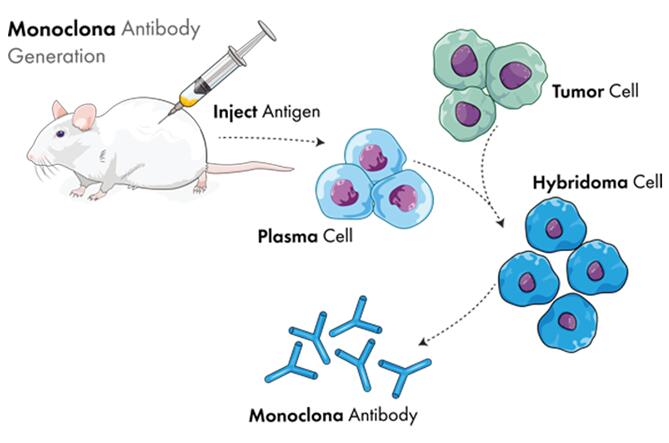
Animal hybridoma cells are essentially "antibody factories" made by fusing immune and myeloma cells. This combo gives you the best of both worlds: the ability to make specific antibodies (from the immune cell) and the endless growth potential of cancer cells (from the myeloma). That makes them an essential component for the production of monoclonal antibodies that are used in all kinds of applications, from basic research to diagnostic kits..
Our collection of animal hybridoma cell lines provides a ready source for making these specific antibodies. Instead of going through the labour-intensive process of immunising animals and screening for antibodies, you can jump right in with these pre-existing cell lines that have already been shown to produce high quality mAbs against specific targets.
High-Specificity Ready-to-Culture Diverse Targets Stable Secretion
Key Features & Expertise
These hybridoma cell lines are selected for their reliability and specific applications

Targeted Against Key Toxins
- Proven efficacy against bacterial threats like Clostridium perfringens Alpha-toxin
- Specific clones available for Pertussis Toxin subunits (S-1, S-2, S-3, S-4)
- Ideal for developing sensitive detection assays for food and water safety

Specialized for Glycan Research
- Produces antibodies against complex carbohydrates and gangliosides
- Clones like OMR5 and BMR26 recognize specific neutral oligosaccharides
- Essential tools for scientists studying cell surface markers and glycoliology

Versatile Protein Recognition
- Reliable binding to viral proteins, such as the SV40 Large T-antigen
- Includes antibodies against bacterial proteins like recA and FHA
- Supports a wide range of immunoassays including ELISA and Western Blot
FAQ
What exactly do these hybridoma cells do?
Think of them as tiny, living factories. Once you culture them, they continuously secrete a single type of antibody (monoclonal antibody) that is pre-programmed to find and bind to a very specific target, like a toxin or a protein. You just need to grow the cells and collect the antibody from the liquid they are growing in.
I see many different clones for Pertussis Toxin. Which one should I pick?
It really depends on what part of the toxin you want to detect. We offer specific clones like Anti-PT-S1-1A12, Anti-PT-S2-5A11, Anti-PT-S3-1B4, and Anti-PT-S4-7F2. If you need to study the structure-function relationship, picking individual subunit-specific antibodies is crucial. If you just need a general detector for the whole toxin, any of them would likely work.
Can I use these for detecting toxins in food samples?
Yes, absolutely. Several of our hybridomas are perfect for this. For example, the Anti-α(7)C9A10 clone is specific for Clostridium perfringens Alpha-toxin, making it a reliable tool for developing rapid tests for food safety monitoring.
How do I get the antibodies from these cells?
It's straightforward. You culture the hybridoma cells in their recommended medium. As they grow, they release the antibodies into the surrounding fluid (the supernatant). You can then collect this fluid and purify the antibody out using standard protein purification techniques like Protein A/G chromatography.
Are these cell lines difficult to maintain?
Not at all. They are quite robust. They grow in standard cell culture media with serum, similar to other immortalized cell lines. We provide the specific culture conditions for each line to ensure they keep producing high levels of antibody for you.
Do you provide the purified antibodies or just the cells?
This listing is for the hybridoma cell lines themselves. This gives you the flexibility to produce and purify the antibodies in your own lab according to your specific experimental needs. However, since these lines are so well-characterized, the purification process is usually very efficient.