
Epidermal Cells

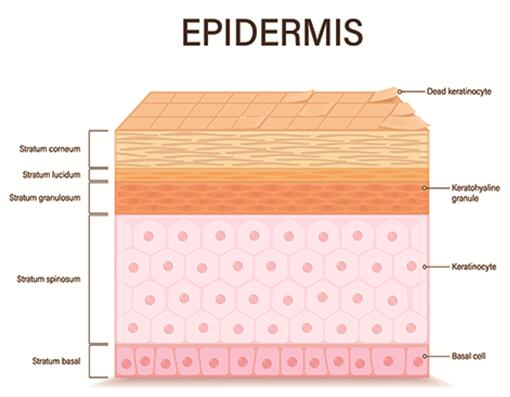
Epidermal cells are the main cellular components of the outermost epidermal layer and are vital for barrier integrity, pigmentation, immunological defence, and epidermal homeostasis. Keratinocytes are the structural foundation of  the epidermis and play important roles in epidermal development, wound healing, and inflammatory responses, whereas melanocytes regulate melanin production and protect the skin from UV-induced damage. Dysfunction of these cell populations is connected with skin ageing, pigmentation problems, inflammatory skin illnesses and skin carcinogenesis.

Our collection of skin cells includes keratinocytes and melanocytes from neonatal, juvenile and adult donors representing diverse backgrounds including both light and dark pigmentation types. These physiologically relevant primary human epidermal cells are reliable in vitro systems for dermatology research, pigment investigations, cosmetic and toxicological testing, wound healing research, tissue engineering and skin biology applications.

Product List

Our Epidermal Cell Portfolio Highlights

Comprehensive Epidermal Cell Resources

Our epidermal cell collection covers major epidermal cell populations involved in skin structure, barrier maintenance, and pigmentation regulation.

  • Diverse Epidermal Cell Types
    • Human epidermal keratinocytes from juvenile, adult, and neonatal sources
    • Human epidermal melanocytes with different pigmentation backgrounds
  • Specialized Skin Models
    • Age-specific epidermal cell models for developmental and aging studies
    • Light and dark pigmentation melanocyte models
    • Primary epidermal cells for barrier and regeneration research
  • Flexible Supply Options
    • Ready-to-use cryopreserved primary cells
    • Custom sourcing based on donor characteristics and research needs

Skin Research Support

Beyond primary cell supply, we provide epidermal models supporting diverse skin research and product development applications.

  • Skin Barrier Research

    Keratinocyte models support studies of epidermal differentiation, barrier formation, wound healing, and environmental stress responses.

  • Dermatology & Cosmetic Applications

    Primary epidermal cells support evaluation of skincare ingredients, irritation responses, and skin rejuvenation strategies.

  • Customized Project Support

    Flexible cell sourcing options are available for specific donor age, pigmentation type, and experimental requirements.

2 +
Core Epidermal
Cell Types

100 %
Quality
Tested

24- 72 h
Rapid
Delivery

Frequently
Asked
Questions

Find your question here or ask us

Ask Question

What types of epidermal cells are available?

Our epidermal cell portfolio includes human epidermal keratinocytes and epidermal melanocytes from different donor backgrounds, including juvenile, adult, and neonatal sources. Melanocyte models with different pigmentation characteristics are also available for skin biology research.

What applications are supported by epidermal cells?

These primary cells support studies in epidermal differentiation, skin barrier function, pigmentation mechanisms, wound healing, dermatology research, cosmetic ingredient evaluation, and regenerative medicine.

Do you provide melanocytes with different pigmentation backgrounds?

Yes. We provide epidermal melanocyte models with different pigmentation characteristics, including light and dark pigmentation types, supporting research on melanin production and pigmentation regulation.

Are epidermal cells available from different developmental stages?

Yes. Our collection includes juvenile, adult, and neonatal epidermal cells, allowing researchers to select appropriate models for developmental biology, aging studies, and tissue regeneration research.

What quality control tests are performed?

All epidermal cells undergo quality assessment including cell identity confirmation, viability evaluation, morphology examination, sterility testing, and mycoplasma detection to ensure reliable research applications.

Filters Clear all filters

Species

  • Human (797)
  • Mouse (3)
  • Rat (1)

Source

  • Adipose (9)
  • Adrenal Gland (4)
  • Airway (7)
  • Aorta (16)
  • Artery (47)
  • Bile Duct (1)
  • Bladder (8)
  • Blood (157)
  • Bone (3)
  • Bone Marrow (81)
  • Brain (36)
  • Breast (10)
  • Bronchus (20)
  • Cartilage (6)
  • Chorion (2)
  • Choroid (3)
  • Ciliary Body (1)
  • Colon (10)
  • Conjunctiva (2)
  • Cord Blood (24)
  • Cornea (2)
  • Dental Pulp (4)
  • Dermis (43)
  • Embryo (2)
  • Endometrium (2)
  • Epidermis (19)
  • Esophagus (4)
  • Eye (20)
  • Foreskin (2)
  • Gallbladder (1)
  • Gingiva (2)
  • Hair Follicle (5)
  • Heart (14)
  • Intestine (20)
  • Iris (1)
  • Kidney (31)
  • Lens (1)
  • Liver (34)
  • Lung (56)
  • Lymph Node (2)
  • Mesentery (3)
  • Nose (1)
  • Oral Cavity (3)
  • Ovary (10)
  • Pancreas (8)
  • Pancreatic Islet (1)
  • Perineurium (1)
  • Periodontal Ligament (2)
  • Periodontium (4)
  • Peripheral Blood (130)
  • Peritoneal Cavity (2)
  • Placenta (11)
  • Prostate (8)
  • Rectum (1)
  • Retina (9)
  • Seminal Vesicle (1)
  • Skeletal Muscle (9)
  • Skin (78)
  • Small Intestine (5)
  • Spinal Cord (1)
  • Spleen (6)
  • Stomach (3)
  • Synovial Fluid (2)
  • Synovium (8)
  • Tendon (1)
  • Testis (3)
  • Thymus (3)
  • Thyroid (4)
  • Tongue (1)
  • Tonsil (3)
  • Tooth (4)
  • Trabecular Meshwork (1)
  • Trachea (6)
  • Umbilical Cord (23)
  • Uterus (7)
  • Vas Deferens (1)
  • Vein (30)

Cell Type

  • Astrocyte (9)
  • B Cell (22)
  • Basophil (1)
  • Cardiomyocyte (2)
  • CD133+ Cell (6)
  • CD34+ Cell (16)
  • Cholangiocyte (1)
  • Chondrocyte (4)
  • Dendritic Cell (4)
  • Endothelial Cell (133)
  • Eosinophil (1)
  • Epithelial Cell (84)
  • Fibroblast (139)
  • Glial Cell (14)
  • Granule Cell (1)
  • Granulocyte (3)
  • Hepatic Stellate Cell (3)
  • Hepatocyte (8)
  • Interstitial Cell (1)
  • Keratinocyte (14)
  • Keratocyte (1)
  • Kupffer Cell (1)
  • Lymphocyte (55)
  • Macrophage (4)
  • Melanocyte (10)
  • Meningeal Cell (1)
  • Mesangial Cell (2)
  • Mesothelial Cell (2)
  • Microglia (1)
  • Microvascular Cell (61)
  • Monocyte (7)
  • Mononuclear Cell (98)
  • Myeloid Cell (2)
  • Myoblast (5)
  • Myosatellite Cell (1)
  • Neuron (7)
  • Neutrophil (2)
  • NK Cell (5)
  • Oligodendrocyte Progenitor Cell (3)
  • Osteoblast (3)
  • Pancreatic Stellate Cell (1)
  • Pericyte (10)
  • Podocyte (1)
  • Preadipocyte (10)
  • Progenitor Cell (4)
  • Red Blood Cell (1)
  • Satellite Cell (1)
  • Schwann Cell (1)
  • Sebocyte (1)
  • Sertoli Cell (1)
  • Skeletal Muscle Cell (2)
  • Smooth Muscle Cell (48)
  • Stromal Cell (16)
  • Synoviocyte (6)
  • T Cell (28)
  • Tenocyte (1)
  • Trabecular Meshwork Cell (1)
  • Trophoblast (1)

Disease

  • Acute Lymphocytic Leukemia (ALL) (15)
  • Acute Myeloid Leukemia (AML) (13)
  • Amyotrophic Lateral Sclerosis (ALS) (4)
  • Aplastic Anemia (AA) (1)
  • Arteriovenous Malformation (AVM) (1)
  • Asthma (5)
  • Astrocytoma (2)
  • Autoimmune Hemolytic Anemia (AIHA) (1)
  • Autoimmune Lymphoproliferative Syndrome (ALPS) (1)
  • Breast Cancer (3)
  • Cancer (121)
  • Chronic Lymphocytic Leukemia (CLL) (19)
  • Chronic Myeloid Leukemia (CML) (14)
  • Chronic Obstructive Pulmonary Disease (COPD) (6)
  • Colon Cancer (4)
  • Crohn's Disease (3)
  • Cystic Fibrosis (CF) (7)
  • Diabetes (35)
  • Diabetes Type 1 (16)
  • Diabetes Type 2 (18)
  • Diffuse Large B-Cell Lymphoma (4)
  • Dilated Cardiomyopathy (DCM) (1)
  • Duchenne Muscular Dystrophy (DMD) (5)
  • Essential Thrombocythemia (ET) (1)
  • Glioblastoma (3)
  • Guillain-Barre Syndrome (GBS) (1)
  • Hypertension (27)
  • Idiopathic Thrombocytopenic Purpura (ITP) (1)
  • Inflammatory Bowel Disease (IBD) (5)
  • Iron-Deficiency Anemia (1)
  • Kidney Cancer (3)
  • Legg–Calvé–Perthes Disease (LCPD) (2)
  • Leukopenia (1)
  • Liver Cancer (3)
  • Lung Cancer (6)
  • Mantle Cell Lymphoma (MCL) (8)
  • Melanoma (2)
  • Mucopolysaccharidosis (2)
  • Multiple Myeloma (MM) (12)
  • Multiple Sclerosis (MS) (3)
  • Muscular Dystrophy (MD) (1)
  • Myelodysplastic Syndrome (MDS) (3)
  • Neurofibromatosis (NF) (3)
  • Non-Hodgkin Lymphoma (NHL) (10)
  • Normal (524)
  • Osteoarthritis (OA) (5)
  • Ovarian Cancer (6)
  • Pancreatic Cancer (1)
  • Pancytopenia (1)
  • Parkinson's Disease (PD) (2)
  • Plasmacytoma (1)
  • Polycythemia (1)
  • Prostate Cancer (3)
  • Psoriasis (4)
  • Rheumatoid Arthritis (RA) (7)
  • Robertsonian Translocation (ROB) (1)
  • Sickle Cell Anemia (2)
  • Systemic Lupus Erythematosus (SLE) (4)
  • Thrombocytopenia (1)
  • Transverse Myelitis (TM) (1)
  • Ulcerative Colitis (UC) (2)
  • Waldenström Macroglobulinemia (WM) (2)

Description: Melanocytes are melanin-producing neural crest-derived cells located in the bottom layer (the ...

Cat#: CSC-C4001X INQUIRY

Description: Keratinocytes are the primary type of cell found in the epidermis, the outermost layer of the skin. ...

Cat#: CSC-C4003X INQUIRY

Description: Keratinocytes are the primary type of cell found in the epidermis, the outermost layer of the skin. ...

Cat#: CSC-C4005X INQUIRY

Description: Keratinocytes are the primary type of cell found in the epidermis, the outermost layer of the skin. ...

Cat#: CSC-C4006X INQUIRY

Description: Creative Bioarray's normal Human Epidermal Keratinocytes (HEK), when grown in Creative Bioarray's ...

Cat#: CSC-C4071X INQUIRY

Description: Creative Bioarray's normal Human Epidermal Melanocytes neonatal (HEMn), when grown in Creative ...

Cat#: CSC-C4117X INQUIRY

Description: Creative Bioarray's normal Human Epidermal Melanocytes adult (HEMa), when grown in Creative ...

Cat#: CSC-C4118X INQUIRY

Description: Creative Bioarray's normal Human Epidermal Keratinocytes neonatal (HEKn), when grown in Creative ...

Cat#: CSC-C4119X INQUIRY

Description: Neonatal Human Epidermal Keratinocytes (NHEK) are cultured by first, isolating the keratinocytes ...

Cat#: CSC-C4439X INQUIRY

For research use only. Not for any other purpose.